Motherhood and Governance: A Swedish Minister’s EU Meeting Signals a Shift in Regional Work-Life Norms
The Report
As reported by Channels Television, Sweden’s Environment Minister, Romina Pourmokhtari, arrived at an EU ministerial meeting in Luxembourg on Thursday with her three-month-old son, Adam, in a sling, accompanied by an aide pushing a pram. The 30-year-old minister described the moment as an example of not having to choose between being “a present minister and a present mother.” An EU official noted that this is believed to be the first time a baby has been brought to a bloc ministerial meeting. Her French counterpart, Monique Barbut, presented a baby gift. The European Parliament recently amended its internal rules to allow new mothers the right to vote by proxy, reflecting broader institutional efforts to address childcare challenges faced by female lawmakers.
“Happy also to be an example of not having to choose between being a present minister and a present mother.”
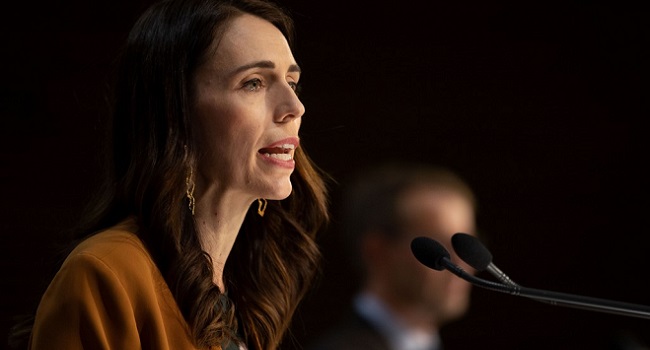
The report also references historical precedents, including former New Zealand Prime Minister Jacinda Ardern bringing her infant to the United Nations General Assembly in 2018, and Australian Senator Larissa Waters nursing her baby in parliament in 2017.
WANA Regional Analysis
While the event occurred in Luxembourg, its implications resonate deeply across West Africa, where the intersection of governance, motherhood, and institutional norms remains a pressing and often under-addressed issue. The Swedish minister’s action challenges a global paradigm that has long penalized women for visible caregiving roles in public office—a paradigm that is particularly entrenched in many West African political systems.
From a regional policy perspective, the incident underscores a critical governance gap: the absence of formal accommodations for breastfeeding, childcare, and parental leave within West African legislative and executive bodies. In ECOWAS member states, women hold a disproportionately low share of ministerial and parliamentary seats—averaging around 15-20% in most countries, according to recent UN Women data. The lack of institutional support for working mothers is a significant, though often unquantified, barrier to female political participation and retention.
The broader implications for the ECOWAS region suggest that visible acts of normalizing motherhood in high-level governance could serve as powerful catalysts for policy reform. If a Swedish minister can bring her infant to an EU meeting without disrupting proceedings, it raises the question: why should West African parliaments and ministries not adopt similar protocols? The European Parliament’s proxy voting rule for new mothers offers a concrete model that ECOWAS could adapt for its own institutions, potentially increasing the number of women willing to serve in demanding roles.
Against this backdrop, the economic and social consequences are also significant. Studies consistently show that women who take career breaks for childbirth face reduced lifetime earnings and slower career progression. In West Africa, where informal economies dominate and formal childcare is scarce, the penalty is even steeper. By normalizing the presence of infants in professional settings, governments can signal a shift in cultural expectations, potentially encouraging private sector employers to adopt more family-friendly policies. This, in turn, could improve female labor force participation rates, which remain among the lowest globally in parts of the region.
From a diplomatic standpoint, the Swedish minister’s action also highlights a soft power dimension. Sweden, long a champion of gender equality, uses such gestures to reinforce its international brand. For West African nations seeking to attract foreign investment and development partnerships, demonstrating progressive governance on gender issues can enhance their standing. ECOWAS, as a bloc, could leverage this moment to advocate for a regional charter on parental leave and childcare accommodations for public officials, aligning with Sustainable Development Goal 5 on gender equality.
Historically, West African governments have often treated motherhood as a private matter, separate from public duty. The examples of Ardern, Waters, and now Pourmokhtari challenge this dichotomy. They provide a template for how female leaders in the region—such as Liberia’s former President Ellen Johnson Sirleaf or Nigeria’s current female ministers—could normalize caregiving without sacrificing authority. The key takeaway for WANA readers is that institutional change often begins with individual acts of defiance against outdated norms. The Swedish minister’s baby at the EU table is not merely a feel-good story; it is a policy signal with global relevance.
Regional Backdrop
West Africa has a mixed record on female political representation. While countries like Senegal and Cabo Verde have achieved near-parity in local councils, others, such as Nigeria and Ghana, lag significantly. Cultural norms around motherhood and caregiving remain deeply patriarchal, with many women expected to prioritize family over career. The absence of formal maternity leave policies for parliamentarians in several ECOWAS states means that women who give birth while in office often face an impossible choice: neglect their infant or resign. The European Parliament’s proxy voting rule, adopted in 2022, offers a practical solution that could be replicated regionally. Additionally, the African Union’s Agenda 2063 includes commitments to gender equality, but implementation at the national level remains uneven. The Swedish minister’s action provides a timely reminder that small, visible changes in protocol can have outsized symbolic and practical effects.
Original Reporting By:
Channels Television


Comments