
Nigeria’s Presidency Dismisses ‘Project True Federation’ as Disinformation Ahead of 2027 Elections
The Report
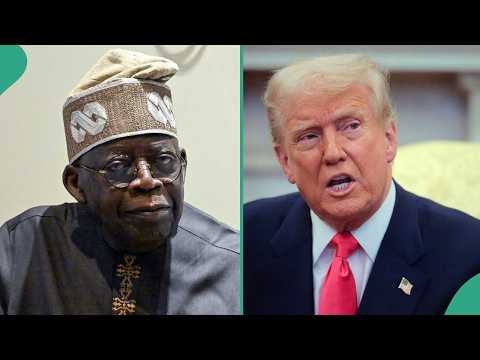
As reported by [[PEAI_MEDIA_X]], the Nigerian presidency has categorically denied a viral report alleging that President Bola Tinubu intends to initiate constitutional amendments to change the country’s name to the “United States of Nigeria” and abolish Sharia law in the northern region. The denial was issued in a statement on Thursday by the Special Adviser to the President on Information and Strategy, Bayo Onanuga.
The presidency described the story, which it said cited anonymous sources, as “fake and divisive.” The statement further characterized the purveyors of the report as “agents of destabilisation and merchants of disorder,” warning that such disinformation is likely to proliferate as Nigeria approaches the campaign period for the general elections scheduled for January 2027.
“President Tinubu has no plan whatsoever to send any bill code-named Project True Federation to the National Assembly by December 15, a few weeks before the general election.”
The statement also clarified that constitutional amendments in Nigeria require a rigorous legislative process, including a two-thirds majority in both chambers of the National Assembly and the concurrence of 24 state Houses of Assembly, and are not subject to presidential whim.
WANA Regional Analysis
The swift and emphatic denial from the presidency underscores a broader regional concern: the weaponization of disinformation to destabilize political processes in West Africa. As Nigeria—the region’s largest economy and most populous nation—approaches the 2027 electoral cycle, the spread of unverified, identity-based narratives poses a direct threat to social cohesion and democratic stability.
From a regional policy perspective, the alleged “Project True Federation” story taps into two deeply sensitive fault lines in Nigerian society: national identity and religious jurisprudence. The suggestion of abolishing Sharia law, in particular, carries the potential to inflame tensions in the northern states, where Sharia has been integrated into the legal system since the early 2000s. Historically, West African governments have grappled with the challenge of managing ethno-religious pluralism within secular constitutional frameworks, and Nigeria’s experience offers a cautionary tale for neighbours such as Ghana, Côte d’Ivoire, and Benin.
The broader implications for the ECOWAS region suggest that disinformation campaigns targeting constitutional or religious matters are not isolated to Nigeria. As the region prepares for multiple elections in 2027—including in Senegal, Sierra Leone, and Liberia—the Nigerian case serves as a reminder of how easily fabricated reports can be used to undermine public trust in democratic institutions. ECOWAS protocols on democracy and good governance emphasize the need for transparent electoral processes, but the rise of digital disinformation presents a new challenge that existing frameworks may not adequately address.
Against this backdrop, the presidency’s decision to issue a detailed rebuttal—citing specific legislative procedures—reflects an awareness that silence could be interpreted as complicity. However, the reliance on anonymous sources in the original viral report highlights a persistent vulnerability in the region’s information ecosystem: the difficulty of tracing and countering false narratives once they gain traction on social media platforms.
From an economic standpoint, political instability driven by disinformation could deter foreign investment at a time when Nigeria is pursuing critical economic reforms, including the unification of exchange rates and the removal of fuel subsidies. Investors in the ECOWAS zone closely monitor political risk indicators, and any perception of heightened instability in Nigeria could have spillover effects on regional capital flows and trade.
In sum, while the specific claims of “Project True Federation” have been debunked, the incident reveals a deeper governance challenge: the need for West African states to develop robust, coordinated mechanisms for identifying and neutralizing disinformation that targets constitutional and religious sensitivities. The 2027 electoral cycle will test whether Nigeria and its ECOWAS partners can meet this challenge effectively.
Regional Backdrop
Nigeria’s constitutional history is marked by periodic debates over federalism, state creation, and the role of religion in public life. The 1999 Constitution, which ushered in the Fourth Republic, established a secular federal government while allowing states to adopt Sharia law for civil matters. This dual system has been a source of periodic tension, particularly during electoral cycles. The current denial by the presidency fits a pattern of pre-election disinformation aimed at exploiting these historical fault lines.
Across West Africa, similar dynamics have played out in countries such as Côte d’Ivoire, where identity-based narratives were used to fuel post-election violence in 2010-2011, and in Mali, where religious and ethnic grievances have been exploited by armed groups. The ECOWAS Commission has increasingly prioritized media literacy and fact-checking initiatives, but the scale of the challenge continues to grow with the proliferation of digital platforms.
Original Reporting By:
[[PEAI_MEDIA_X]]

Comments