
Spain’s World Cup Campaign Bolstered by Yamal and Williams Fitness: Implications for West African Football Diplomacy
The Report
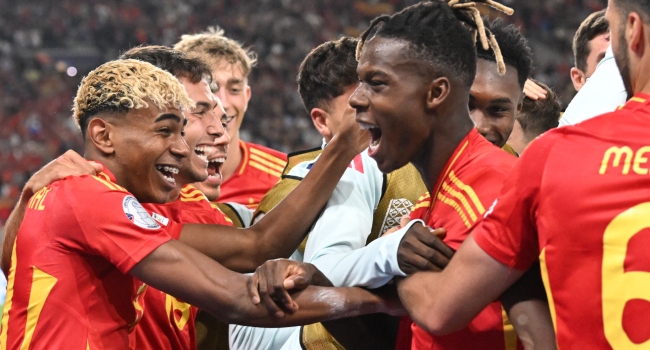
As reported by AFP, Spain’s national football coach Luis de la Fuente confirmed on Sunday that teenage Barcelona star Lamine Yamal and Athletic Bilbao winger Nico Williams will be available for Spain’s World Cup opener against debutants Cape Verde on June 15. Both players missed the end of the club season with hamstring injuries but are progressing well in their recovery. Osasuna winger Victor Munoz is also expected to be fit for the match in Atlanta. The trio remained at Spain’s training camp in the United States rather than travelling to Mexico for Monday’s friendly with Peru.
“We regret that they are not here with us, but the medical and physical conditioning staff advised them to stay there. All three should be available for the next match… they are progressing well in their recovery and are doing very well.”
Spain, European champions and one of the tournament favourites, will face Cape Verde, Saudi Arabia, and Uruguay in Group stage matches across Canada, Mexico, and the United States.
WANA Regional Analysis
For West African football stakeholders, the fitness of Yamal and Williams carries significance beyond Spain’s tactical setup. Cape Verde, a Lusophone West African nation making its World Cup debut, now faces a Spanish side at full strength—a daunting prospect for the island nation’s first appearance on football’s biggest stage. The confirmed availability of Yamal, an 18-year-old phenom of Moroccan descent, and Williams, a Ghanaian-heritage winger, underscores the deep transnational ties between European football and West African diaspora communities.
From a regional football diplomacy perspective, Cape Verde’s debut is a milestone for small West African states. The country’s qualification, achieved through a disciplined defensive system and rapid counter-attacks, will now be tested against a Spanish attack featuring two players with direct West African lineage. This match-up highlights the growing influence of West African football heritage in global tournaments—a trend that ECOWAS member states have increasingly leveraged for soft power and cultural diplomacy.
Economically, Cape Verde’s participation in the World Cup generates significant revenue through broadcasting rights, tourism promotion, and diaspora engagement. A competitive performance against Spain, even in defeat, could boost the nation’s international profile and attract investment in its football infrastructure. Conversely, a heavy loss might dampen the momentum that Cape Verdean football has built since its independence.
Politically, the match serves as a reminder of the uneven playing field in global football. Spain, with its deep talent pool and institutional resources, contrasts sharply with Cape Verde’s modest football budget. Yet, the Blue Sharks’ qualification itself is a testament to the potential of West African football development when supported by strategic planning and diaspora talent identification.
Security and logistics also merit attention. The match in Atlanta, a major U.S. city with a significant West African diaspora community, will draw large crowds. Cape Verdean and Spanish fans, alongside neutral supporters, will gather in a city with complex security dynamics. Local authorities and FIFA will need to coordinate closely to ensure safe and orderly conduct, particularly given the heightened profile of the tournament.
Looking ahead, Spain’s group also includes Saudi Arabia and Uruguay. For West African observers, the Saudi Arabia match offers a glimpse into the growing football investment in the Gulf region, while Uruguay represents a traditional South American powerhouse. Cape Verde’s ability to secure points against these opponents will determine whether their debut is a one-off or the beginning of sustained continental representation.
Regional Backdrop
Cape Verde’s qualification for the 2026 World Cup is the culmination of a decade-long football development strategy. The country, an archipelago of about 560,000 people, has invested in youth academies, coaching education, and diaspora recruitment. Their success mirrors that of other small West African nations like Equatorial Guinea and Guinea-Bissau, which have also punched above their weight in African football. However, the gap between debutants and established European champions remains vast, and Cape Verde’s performance will be closely watched by football federations across the ECOWAS region as a benchmark for progress.
Original Reporting By:
Channels Television

Comments