
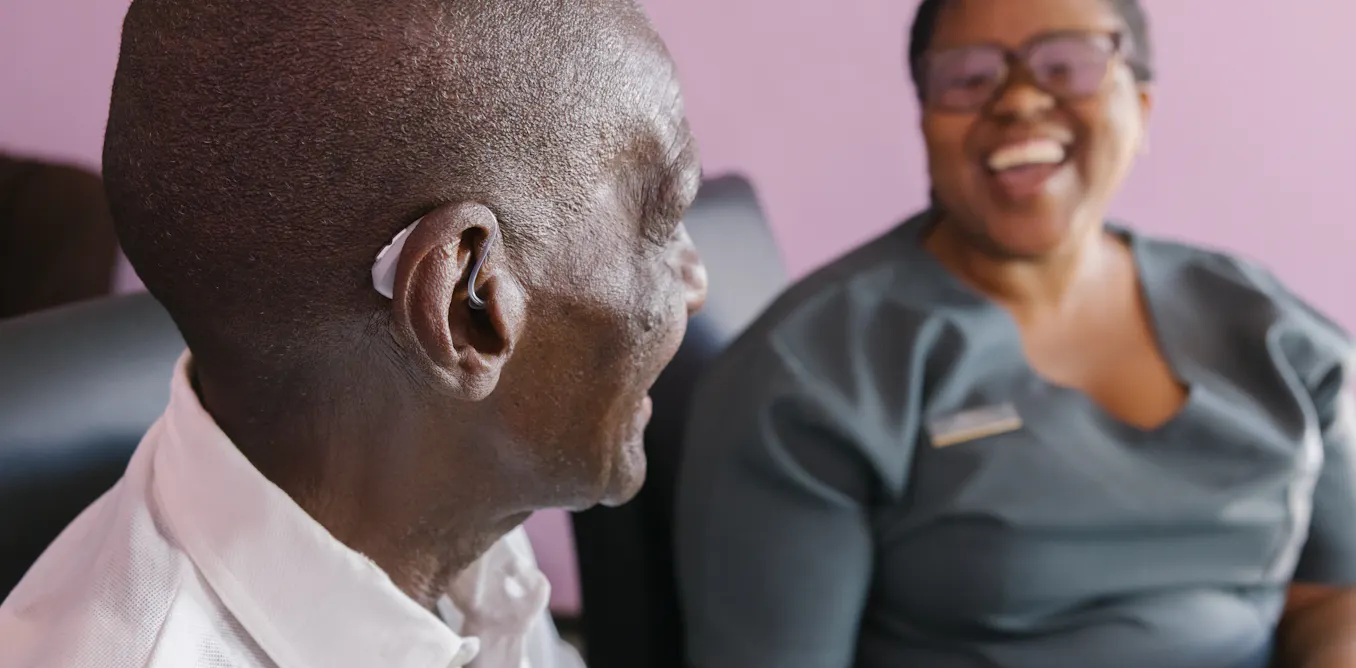





For the vast majority of Africans living with hearing loss, a hearing aid remains out of reach.
While the exact number of affected individuals on the continent is difficult to pin down, projections suggest the figure could more than double to 337 million by 2050.
Yet, as De Wet Swanepoel, a professor at the University of Pretoria, points out in a recent analysis for The Conversation, fewer than 2% of those who need a device actually have one.
This gap represents a significant public health challenge. The consequences of unaddressed hearing loss extend beyond the individual, affecting education, productivity, and healthcare systems.
A 2024 Lancet Commission report has even identified it as a major modifiable risk factor for dementia, and the World Health Organization (WHO) estimates the global annual cost of unaddressed hearing loss at close to a trillion US dollars.
The barriers to care are well-documented. In many African nations, there are fewer than one audiologist for every million people.
The cost of a hearing aid can exceed a year’s income for many households, and services are often concentrated in urban areas. Furthermore, stigma associated with hearing loss can prevent people from seeking help even when it is available.
Swanepoel, who heads the WHO Collaborating Centre for the Prevention of Deafness and Hearing Loss at the University of Pretoria, argues that a new model of care is emerging.
His team’s research, conducted over the past decade, suggests that hearing care can be delivered effectively outside of traditional clinic settings by non-specialists.
This “high-tech, soft-touch” approach involves training community health workers to use smartphones and tablets with validated apps.
The process includes a hearing test, an ear examination using a small camera, a trial of a hearing aid, fitting of an affordable, rechargeable device, and follow-up support via text message or WhatsApp.
A remote audiologist can review the results without being physically present.
This model is already being implemented in three low-income communities in South Africa: Khayelitsha and Mbekweni in the Western Cape, and Atteridgeville in Gauteng.
The work is being carried out in partnership with the hearX Foundation, a non-profit led by audiologist Tersia de Kock, which trains and manages the community health workers.
Rethinking who provides frontline community care
Results from these programmes are encouraging. Community health workers have fitted hearing aids for hundreds of adults, and outcomes related to device use, satisfaction, and quality of life are broadly comparable to those achieved in clinic-based care.
In several studies, more than 70% of people were still using their devices six months after fitting, a retention rate that compares favourably with specialist-led programmes in wealthier countries.
Two key technological developments have made this possible. The first is the rise of affordable digital tools for ear and hearing assessment that rely on automated testing.
The second is the availability of low-cost, preset hearing aids that do not require individual programming by an audiologist and increasingly use rechargeable batteries, removing the barrier of finding disposable batteries in poorer communities.
Does it actually work?
Despite this progress, the model is not without its limitations. Most of the evidence comes from small studies conducted by research teams rather than from health systems delivering care at scale.
However, countries like Brazil and India offer examples of how hearing care can be integrated into national public health systems.
There are also unanswered questions about long-term outcomes when people select their own hearing aid programme rather than having one fitted to a clinical audiogram.
Stigma remains a persistent challenge that technology cannot solve. Swanepoel’s review of stigma in low- and middle-income countries found that generic awareness campaigns developed for wealthier nations have little impact.
More effective are education efforts delivered by trusted local figures, such as community leaders and religious institutions, that are grounded in local beliefs and language.
The economic case for investment is strong.
The WHO estimates that scaling up ear and hearing care globally would cost less than US$1.40 per person per year, while returning nearly $16 for every dollar invested over a decade through gains in health, productivity, and broader societal benefits.
What needs to happen now
The missing element, according to Swanepoel, is political will. He argues that governments need to incorporate hearing care into national health insurance schemes, remove import tariffs that inflate hearing aid prices, and invest in training and supporting community health workers.
The limited number of audiologists should be deployed to train, support, and oversee these community-based services.
The path to expanding hearing care for the hundreds of millions of people still waiting will require more than just good technology.
As Swanepoel’s research consistently indicates, it will depend on having someone in the community who is equipped and trusted to help.
Source: The Conversation