
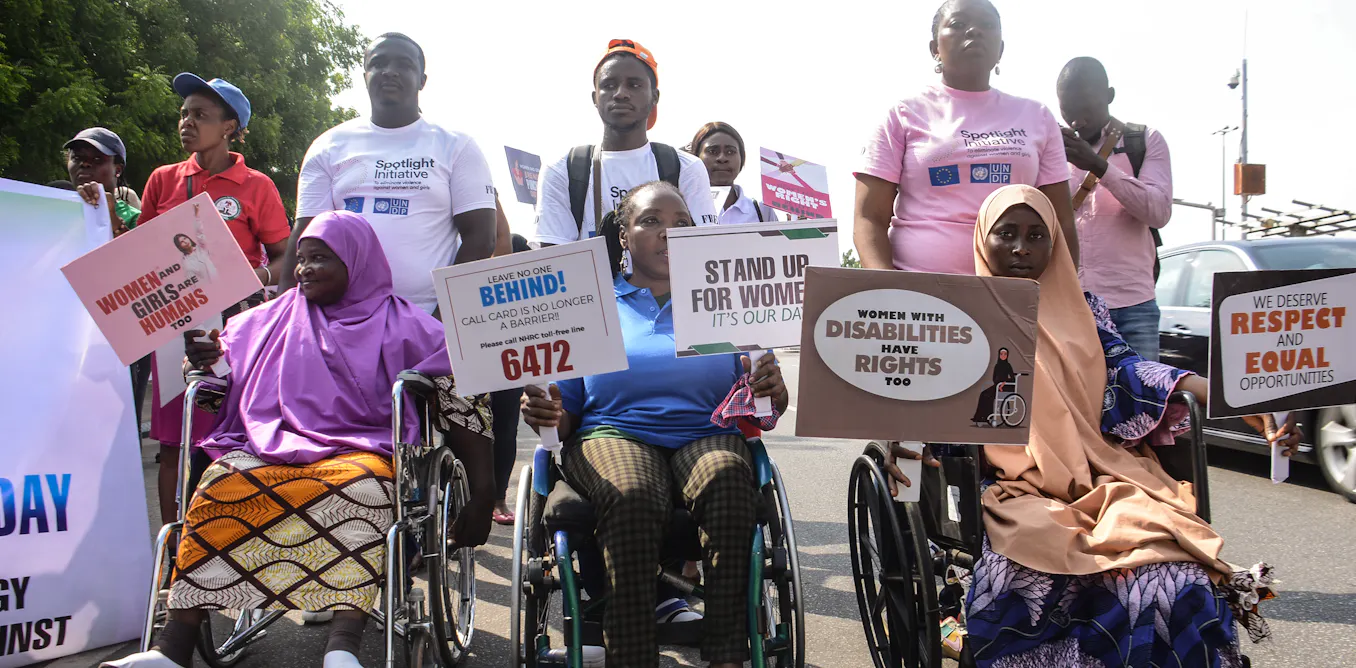




Maternal health services in Lagos reach most women with physical or visual disabilities, but a survey shows postcode, education, marital status and income still determine care access.
The findings come from a study by public health researchers Obasanjo Bolarinwa and Abdul-Aziz Seidu, who interviewed 250 women with physical or visual disabilities in Alimosho and Ikorodu, two large local government areas in Lagos State.
The survey, conducted in late 2024, focused on women who had given birth in the previous 12 months.
The researchers asked whether the women had attended antenatal care, given birth in a health facility, and received postnatal care. They also examined how education, wealth, marital status and place of residence influenced service use.
Overall, the results appear encouraging. More than eight in ten women attended antenatal care, seven in ten gave birth in a health facility, and nearly eight in ten received postnatal care.
These figures are higher than those reported for women with disabilities in several other low- and middle-income countries, including Ethiopia, Nepal and Pakistan, according to the researchers.
They are also higher than the national averages for all women in Nigeria’s 2018 and 2024 Demographic and Health Surveys.
But the researchers argue that these aggregate numbers hide significant inequalities.
Women living in Ikorodu, a rapidly growing area outside the main city, were much more likely to use all three services than those in Alimosho, a densely populated urban area within metropolitan Lagos.
Education also made a major difference. Women with secondary or tertiary education were more likely to attend antenatal care, give birth in a health facility, and receive postnatal care than those with no formal education.
Married women consistently had better maternal healthcare use than unmarried women, possibly due to greater financial, practical and social support from partners. Household wealth also played a role, with women from wealthier households more likely to use essential services.
What we did
The study adds nuance to a broader picture of barriers. Women with disabilities are reported to face obstacles to maternal healthcare, including inaccessible facilities, discrimination and communication difficulties.
The Lagos research suggests that while many women with disabilities are using services, access remains uneven and is shaped by wider social and economic circumstances.
Our findings
The authors say this means improving maternal health is not simply about increasing the number of health facilities. It also requires tackling the social and economic inequalities that prevent some women from benefiting from available services.
Why these findings matter
Nigeria has committed to reducing maternal deaths to fewer than 70 per 100,000 live births by 2030, down from an estimated 1,047 per 100,000 in 2020.
To achieve this, the researchers argue, maternal healthcare must become more inclusive for women with disabilities.
They recommend reviewing maternal health programmes to ensure they meet the needs of these women, training healthcare workers to provide respectful and appropriate care, reducing financial barriers, and helping women with transport to reach health facilities.
What should happen next?
The authors point to lessons from other countries. Rwanda has trained nurses and midwives in disability inclusion and sign language.
They also call for more research across different parts of Nigeria, especially areas experiencing conflict and displacement, to better understand how women with disabilities experience pregnancy, childbirth and postnatal care.
Source: The Conversation