


High Court’s Ruling Paves Way for Prosecution to Resume
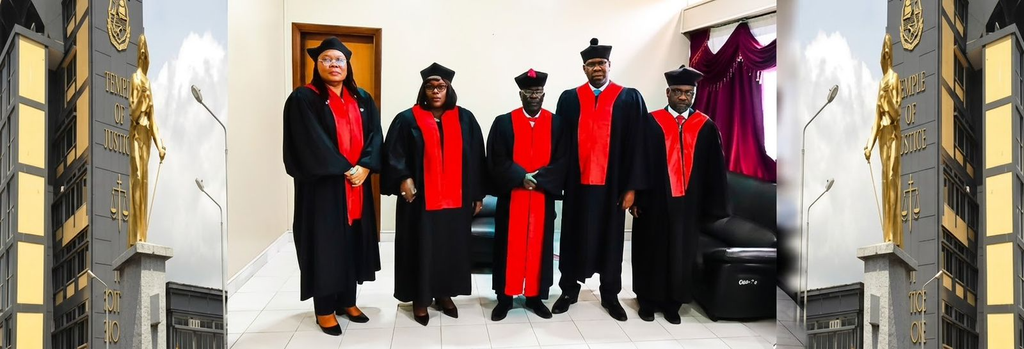
The Supreme Court of Liberia has cleared the way for the Capitol Building arson trial to move forward, denying a petition for a Writ of Prohibition filed by former House Speaker J. Fonati Koffa and eight co-defendants. The ruling, issued in Monrovia, upholds the authority of Resident Judge Roosevelt Z. Willie to disband the jury that had been empaneled for the case, a decision that had become a major procedural flashpoint.
The petitioners—Koffa, Dixon W. Seboe, Abu B. Kamara, K. Jacob C. B. Debee, Christian Kofa, John Nyanti, Eric Susay, Thomas Isaac Etheridge, and Stephen Broh—had sought to restrain Judge Willie from proceeding after he dissolved the jury amid allegations of juror misconduct. The Supreme Court found no sufficient legal basis for the extraordinary writ, concluding that Judge Willie acted within his lawful authority.
Importantly, the ruling does not address the guilt or innocence of the defendants. It resolves only the immediate legal question of whether the trial judge overstepped his bounds in disbanding the jury, allowing Criminal Court “A” to resume the prosecution.
Why the Jury Was Disbanded
The controversy began when prosecutors moved to dissolve the entire jury, arguing that the panel had become compromised and could no longer adjudicate the case fairly and independently. They cited specific incidents during witness testimony, including questions raised by jurors about evidence presented by the state.
One notable incident occurred during the testimony of LNP Chief Superintendent Rafael A. Wilson. A juror questioned how photographs had been obtained when Wilson had earlier indicated there was no CCTV camera inside the Capitol Building. The juror then asked for a photograph to be produced and, after it was exhibited, raised a question about whether a person in the image resembled defendant Thomas Isaac Etheridge.
Prosecutors argued that such questioning suggested the juror had already begun evaluating evidence and forming opinions about a defendant before the trial concluded. They also alleged that some jurors had consulted among themselves before posing questions to witnesses, which they said demonstrated a loss of impartiality.
Defense Challenges the Allegations
Koffa and his co-defendants strongly contested the prosecution’s claims. Their legal team argued that prosecutors had failed to identify specific jurors who committed misconduct and had, in some instances, mischaracterized or misquoted the jurors’ remarks. The defense maintained that jurors asking questions about evidence did not, by itself, constitute misconduct, and that even if an individual juror had erred, such conduct could not automatically be attributed to the entire panel.
According to the defense, there was no sufficient evidence that jurors had received outside influence, improperly communicated with outsiders, or reached conclusions about the defendants’ guilt before deliberations. They therefore argued there was no legal basis to dissolve the jury or declare a mistrial.
Political Affiliation and Juror Challenges
The jury controversy was further complicated by the removal of one juror after the court determined she had failed to disclose during jury selection that she held a leadership position within the Congress for Democratic Change (CDC). The prosecution raised concerns about potential bias because some defendants have political associations with the CDC.
Another juror was challenged after prosecutors presented photographs they claimed showed her among supporters at an event associated with defendant Abu B. Kamara. Judge Willie, however, rejected that challenge, finding that the photographs had not been sufficiently authenticated to establish that the person depicted was the juror. The juror denied being the woman in the photograph, maintaining that the person shown was her mother.
Supreme Court’s Decision
The defendants then turned to the Supreme Court, arguing that Judge Willie’s decision to disband the jury was unlawful. The High Court had previously intervened, including ordering a stay of proceedings while the petition was considered. After reviewing the arguments, the Supreme Court declined to grant the requested relief, effectively determining that the trial judge had acted within the authority vested in him.
The petition for prohibition was therefore denied, and the case can now proceed.
Background of the Case
The case stems from the December 18, 2024 fire at Liberia’s Capitol Building, which damaged portions of the legislative complex and triggered a major criminal investigation. The government subsequently charged Koffa and several others in connection with an alleged conspiracy surrounding the fire. The defendants have pleaded not guilty to all charges and have consistently challenged the prosecution’s allegations and evidence.
The proceedings have involved contentious disputes over witness testimony, photographs, videos, audio recordings, and other evidence. The jury controversy became one of the most consequential procedural battles in the trial, and its resolution now allows the prosecution to move forward.
As the trial resumes, the focus will shift back to the evidence and arguments in the case, with the defendants maintaining their innocence and the prosecution seeking to prove its allegations.