Skip to content

West Africa News Agency

Agence de Presse Ouest-Africaine

West Africa News Agency

Agence de Presse Ouest-Africaine

Search news

Type to search stories, topics and pages.

Latest

Nigeria

Tag: Nigeria

Breaking Nigeria news and analysis — politics, the economy, security and business across Abuja, Lagos and the 36 states, from West Africa News Agency.

Business & Economy

NGX Group Reports 170% Profit Surge, Declares N1.30 Interim Dividend for H1 2026

By Kabir Isa

NGX Group declared an interim dividend of N1.30 per share, signaling strong earnings and management’s confidence in sustained growth. Revenue surged 118% to N17.6 billion, driven by a 169% spike in transaction fees and a 59% rise in listing fees, reflecting a dramatic uptick in market activity. Operating profit soared 155% to N10.62 billion, demonstrating powerful operating leverage as income growth far outpaced expense increases. The dividend is strategically calibrated to reward shareholders while preserving capital for continued investment in technology and market expansion.

Climate & Environment

NiMet Predicts Mixed Sunshine and Thunderstorms Across Nigeria Through Tuesday

By Kabir Isa

NiMet forecasts a widespread shift from sunny skies to moderate thunderstorms and rainfall across Nigeria from Sunday to Tuesday, impacting all three major regions. The North and North Central zones face the highest risk of thunderstorms with moderate rains, particularly in the afternoons and evenings, while the southern region expects more consistent moderate rains, especially later in the day. Key states to watch include Taraba, Adamawa, Kaduna, Borno, and the Federal Capital Territory for the North, and Ondo, Lagos, Rivers, and Bayelsa for the South. This outlook provides actionable intelligence for logistics, agriculture, and event planning, signaling a need for rain preparedness and potential disruptions in these specific areas.

Health Care Programmes

Renovated Kaduna PHC Restores Trust, Draws Pregnant Women Back to Antenatal Care

By Kabir Isa

The renovated Sabon Tasha Primary Healthcare Centre in Kaduna State demonstrates that upgrading facilities, staffing, and patient-centered care can directly restore public trust in primary healthcare, reversing deep-seated fears of neglect and mistreatment. By transforming the patient experience from one of terror and isolation to one of warmth, education, and respect, the centre has successfully drawn more pregnant women to antenatal care, skilled deliveries, and immunizations. The core insight is that infrastructure alone is insufficient; the culture of care—where nurses patiently answer questions and prepare mothers mentally—is what truly rebuilds confidence and drives health-seeking behavior. This model proves that addressing emotional and psychological barriers through compassionate, reliable service is as critical as clinical upgrades for improving maternal and child health outcomes.

West African Diaspora

Navigating the U.S. EB-5 Green Card: Key Requirements for Wealthy Nigerian Investors

By Kabir Isa

For wealthy Nigerians, the EB-5 program offers a direct path to a U.S. green card without employer or family sponsorship, but it demands a high-stakes, legally rigorous investment. The core requirement is a minimum $800,000 investment in a high-unemployment or rural area, which must directly create at least 10 full-time U.S. jobs. Crucially, the program’s most stringent condition is not the investment amount itself, but the mandatory, airtight proof that every dollar was obtained through entirely lawful means. Therefore, the true value proposition hinges on having both significant liquid capital and a meticulously documented, legally clean source of funds.

Sports & Entertainment

Sam Omatseye on Messi, Argentina’s World Cup Loss, and a Photo That Foretold a Changing of the Guard

By Kabir Isa

Here is the high-value executive summary: This narrative transcends a simple match report to reveal a profound, symbolic collision of national identity, racial history, and generational destiny. The core insight is that Argentina’s defeat was not a failure of skill but a failure of a collective "chi" (spirit), poisoned by a deep-seated national racism that dehumanized the very people whose footballing heir—Lamine Yamal—would ultimately dethrone them. The prophetic photo of a young, uncomfortable Messi bathing a Black baby serves as the central metaphor: a nation that "rid their blood of that black blood" was destined to be overcome by the very humanity it rejected. The practical takeaway is that a team’s cultural and moral foundation is as critical as its tactics; Spain’s unity and clinical dominance (conceding only one goal) were the inevitable result of a cohesive identity, while Argentina’s resilience ultimately crumbled under the weight of its own historical contradictions.

Defense and Security

US State Department Issues Updated Travel Advisory, Flags 23 Nations at Highest Risk Level

By Kabir Isa

The U.S. State Department has elevated 23 countries to its highest "Level 4: Do Not Travel" advisory, citing armed conflict, violent crime, and limited U.S. emergency assistance capacity, with the list spanning Afghanistan, Russia, Haiti, North Korea, and 11 African nations. While Nigeria remains at Level 3 nationally, the advisory specifically flags 23 of its states—including Borno, Kaduna, and parts of the Southeast—as Level 4 zones due to terrorism, banditry, and civil unrest, creating a critical distinction between national and subnational risk. The key practical takeaway is that travelers and businesses cannot rely on a country’s overall advisory level; they must scrutinize regional breakdowns, as high-risk pockets exist even within nations deemed safer. Nigeria’s government downplays the warning as routine, but the granular detail underscores that security threats are highly localized, making location-specific intelligence essential for any travel or operational decision.

West African Politics

Nigeria’s Top News: School Kidnap Trial, Judge Housing Dispute, and Asset Forfeiture Rulings

By Kabir Isa

Nigeria’s current news cycle reveals a nation caught between systemic corruption and performative governance, where the government prosecutes kidnappers while simultaneously facing legal threats over luxury housing for judges and appeals against asset forfeitures. The core value proposition is that Nigeria’s persistent poverty is not due to a lack of resources but a failure to harness them, a claim starkly contradicted by the ongoing legal battles over stolen properties and the use of old footage to fabricate security successes. The unique insight is that the country’s leadership is actively undermining its own stated goals, as seen in the Supreme Court restoring forfeiture of a central bank governor’s assets while a former attorney general fights to keep 48 properties. The practical takeaway is that until the judiciary and executive consistently enforce accountability—rather than rewarding or protecting the elite—Nigeria will remain poor despite its potential.

West African Politics

Supreme Court Upholds Final Forfeiture of $2.045 Million, Seven Properties Linked to Ex-CBN Governor Emefiele

By Kabir Isa

The Supreme Court of Nigeria has definitively upheld the final forfeiture of over $2 million and seven prime real estate assets—including multiple high-value properties in Lagos and an industrial complex in Delta State—from former Central Bank Governor Godwin Emefiele, ruling them proceeds of unlawful activity. This landmark judgment overturns a Court of Appeal decision that had ordered a retrial, establishing that the lower court erred in nullifying the original forfeiture order granted under the Advance Fee Fraud Act. The practical takeaway is that the EFCC’s strategic use of civil forfeiture proceedings, which require a lower burden of proof than criminal conviction, has been validated as an effective and irreversible tool for asset recovery against high-profile public officials. The core insight is that Nigeria’s apex court has signaled a zero-tolerance stance on corruption by prioritizing the swift return of illicit assets to the state over procedural delays, setting a powerful precedent for future anti-corruption enforcement.

West African Politics

Court Upholds INEC’s Recognition of Abdulrahman Mohammed-Led PDP National Working Committee

By Kabir Isa

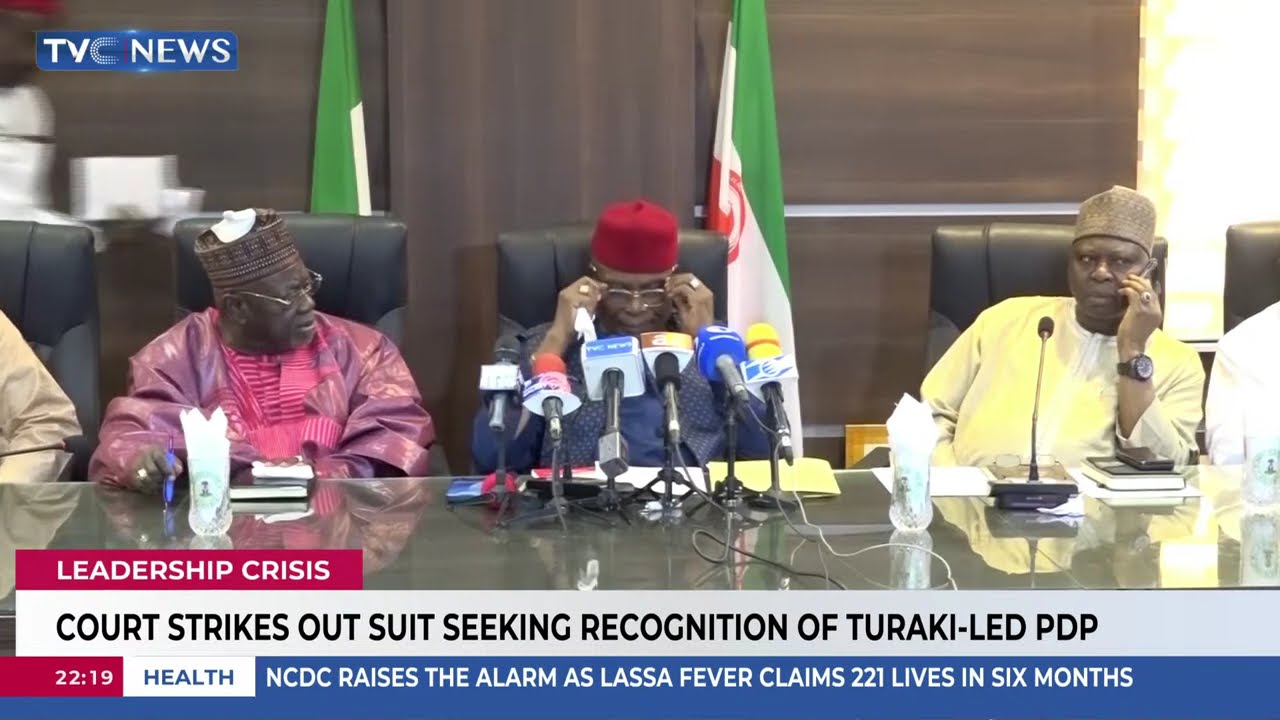
The Federal High Court has decisively dismissed a suit by PDP Board of Trustees members seeking to compel INEC to recognize the Kabir Tanimu Turaki-led interim leadership, thereby solidifying the legal standing of the Abdulrahman Mohammed and Senator Samuel Anyanwu-led National Working Committee. The court struck out the PDP as a plaintiff, ruling the suit was unauthorized by the party, and granted rival faction members the right to join proceedings, effectively validating INEC’s current recognition of the Wike-backed leadership. This judgment ends a major round of the PDP’s leadership litigation at the Federal High Court, leaving the Abdulrahman Mohammed-led NWC firmly in control and recognized by INEC ahead of the 2027 general election. The core takeaway is that the court has rejected the BoT’s claim to interim authority following the Supreme Court’s nullification of the 2025 convention, reinforcing that INEC’s recognition of the existing NWC is legally unassailable for now.

Business & Economy

Nigeria’s 2026 Auto Summit Draws Major Manufacturers, Regulators as EV and CNG Push Intensifies

By Kabir Isa

The 2026 Nigeria Auto Industry Summit (NAISU) marks a pivotal shift from policy discussion to concrete execution, with major manufacturers and regulators confirming participation to accelerate Nigeria’s dual-fuel transition to EVs and CNG. The summit’s core value lies in bridging the gap between government clean mobility mandates (under the Tinubu administration) and private sector investment, directly addressing the nation’s urgent need to decarbonize transport while slashing fuel costs. Key takeaways include the strategic focus on CNG as an immediate, practical bridge fuel alongside long-term EV adoption, and the direct involvement of the FRSC to tackle regulatory and safety frameworks for new vehicle technologies. The unique conclusion is that Nigeria is not simply importing a green agenda but forging a hybrid, cost-driven mobility strategy that leverages both local gas resources and global EV trends to reshape its automotive future.