





Rare Bundibugyo Ebola in Democratic Republic of Congo is spreading fast enough to become a global epidemic, says an epidemiologist who helped manage the 2014-2016 West Africa outbreak.
Jia B. Kangbai, who draws on his experience in Sierra Leone, argues that the current outbreak’s speed, scale, and scope make it a serious international concern.
Writing in The Conversation, he says the virus has already affected an area the size of France by September 2026, and that its rapid spread is driven by factors including super-spreaders, a lack of data, and the absence of approved treatments or vaccines for this strain.
Kangbai notes that the outbreak took less than two months to reach 1,000 cumulative cases after official declaration, compared with an average of four months for the 2013-2016 West Africa outbreak in Guinea, Liberia, and Sierra Leone.
He stresses that these figures only capture cases that presented after the official declaration, meaning the true scale of transmission and deaths is likely higher.
Possible reasons for rapid spread
The epidemiologist points to several interlocking factors behind the rapid spread. He highlights the role of super-spreaders, who were responsible for more than 60% of sustained onward transmission in a study from the West Africa outbreak.
In the current DRC outbreak, the age group of 18-49 years accounts for the bulk of infections, while a quarter of deaths are children below 15 years.
He explains that children are often unfamiliar with Ebola symptoms and delay seeking treatment, while younger adults may engage in high-risk activities that increase transmission.
The role of super-spreaders
The rarity of the Bundibugyo strain complicates diagnosis. Unlike the more common Ebola Zaire strain, which has an early wet phase with vomiting and diarrhoea, Bundibugyo’s early symptoms are dry: fever, fatigue, muscle pain, headache, and sore throat.
These can easily be mistaken for other tropical infections, giving patients false hope and delaying treatment.
Kangbai also cites the prevailing insecurity in eastern DRC, where the outbreak is spreading, as a major obstacle.
He notes that attacks on health and aid workers by families of affected patients reached their highest number in August 2026, driven by deep mistrust of authorities and clashes between cultures and medical protocols.
Data gaps, resistance and insecurity
Data gaps are another challenge. With less than 20% of Bundibugyo incidences in some health zones traced to recognised contacts, the disease can easily spread to unaffected regions.
The sheer size of the DRC, porous borders, and the government’s difficulty in providing basic services across the country all contribute to the problem.
The lack of registered therapeutics and vaccines for Bundibugyo is, in Kangbai’s view, a catastrophic oversight. He argues that given localised outbreaks had occurred several times in the DRC, preparedness should have started much earlier.
While potential diagnostic kits and vaccine candidates are in trials, he says this should have been done before the current crisis.
Preventing a global Bundibugyo epidemic
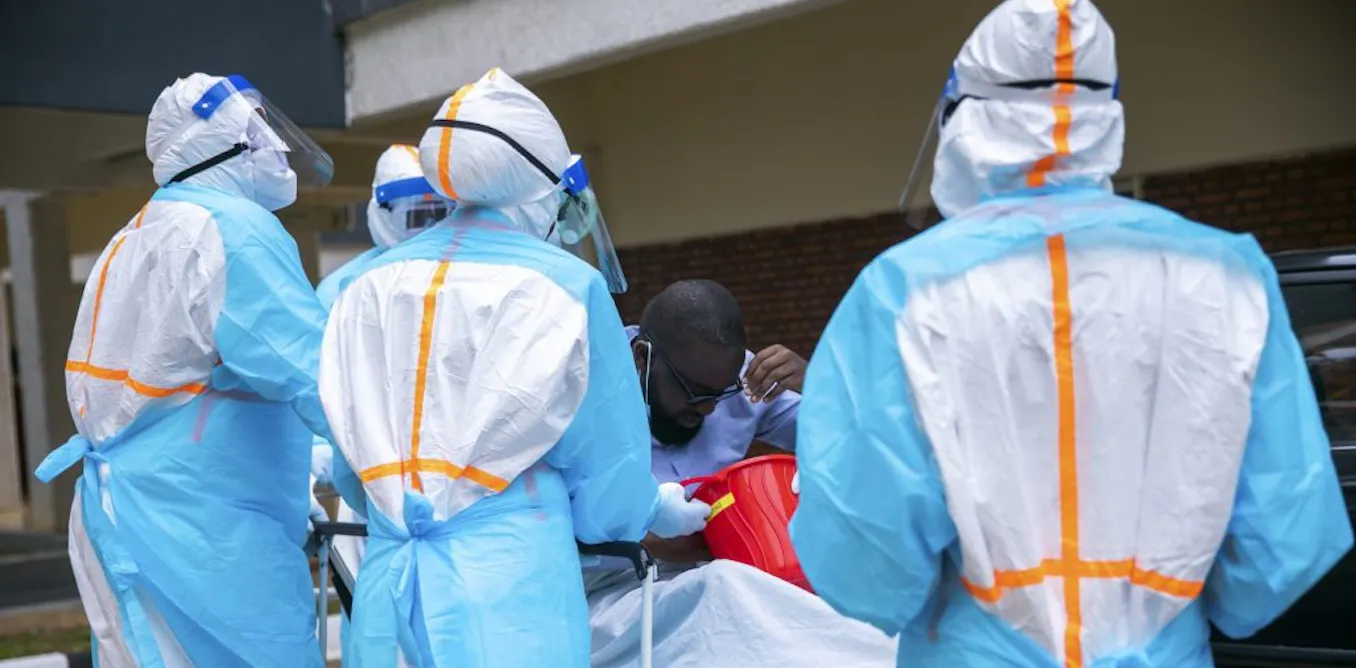
Kangbai welcomes the deployment of the Ervebo Ebola Zaire vaccine in the DRC, but stresses that stopping an epidemic relies on strong public health interventions and total community engagement.
He warns that the dissolution of USAID and cuts in public health funding will create more global health problems, and that ad hoc funding during a crisis cannot fill gaps in preparedness.
He calls for sustained multi-month funding for frontline workers, lab consumables, and protective equipment, as well as rigorous anti-infection measures at health facilities and border posts.
He also urges active involvement of community members through trusted local leaders, religious leaders, youth groups, and community health workers.
Kangbai notes that over US$500 million has reportedly moved into the DRC since the outbreak was declared, and says there should be no reason for frontline workers to go unpaid.
He points to strike actions by workers as a sign that public health activities must work in tandem with financial accountability and thorough administrative policies.
The most urgent action, he concludes, is to double down on real-time testing, which depends on robust disease surveillance. In a country as vast as the DRC, that requires huge logistics and human resources.
Source: The Conversation