
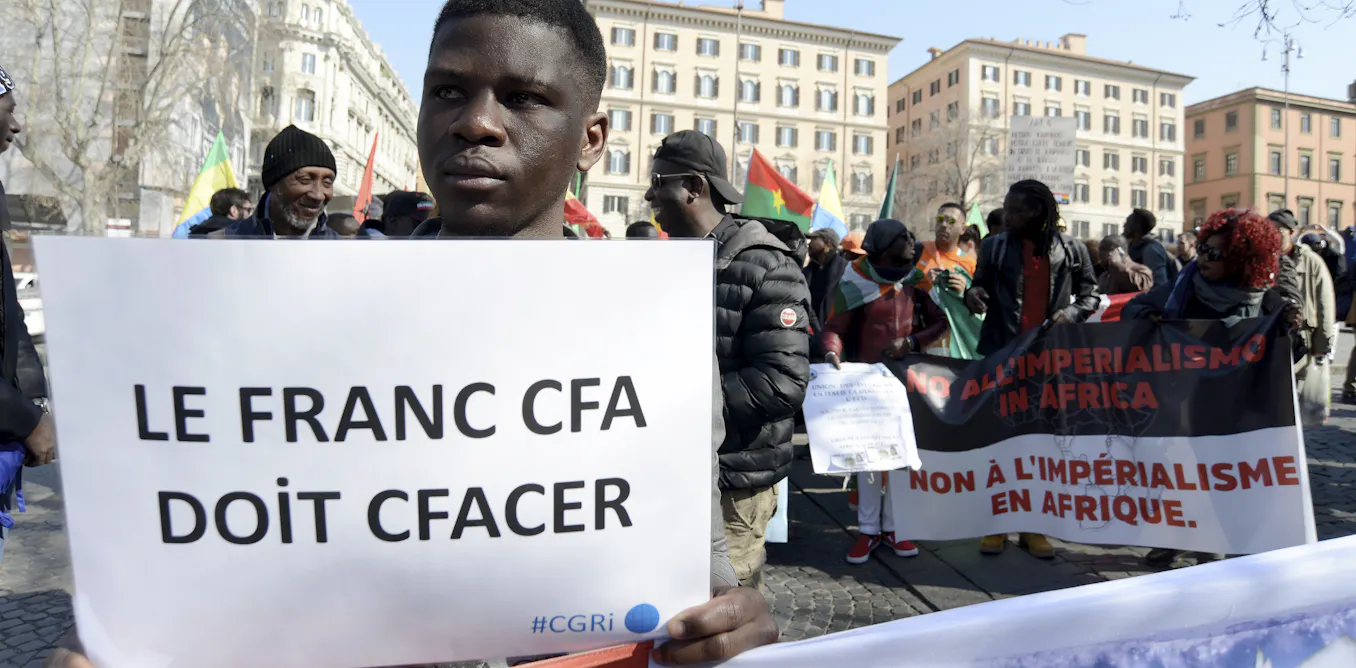
Senegalese financier proposes replacing the CFA franc with a new national currency, the Kopar, saying the current arrangement limits interest-rate, exchange-rate and credit control.
Dr Babo Amadou Ba makes the case in a new book, Souveraineté monétaire pour un développement endogène et durable – Du franc CFA au Kopar, and expands on it in an interview with The Conversation Africa.
The Kopar takes its name from the Wolof word for money, which the book traces to the English word copper.
Ba defines monetary sovereignty as a state’s effective capacity to decide its currency, exchange-rate regime, interest rates and the direction of credit.
In Senegal’s case, he distinguishes between independence, which he calls juridical and political; sovereignty, which he calls economic; and autonomy, which he describes as the concrete ability to exercise that decision-making.
Under the current system, Ba argues, Senegal is a sovereign state politically but does not control its policy rate, its exchange parity or the full set of monetary financing instruments.
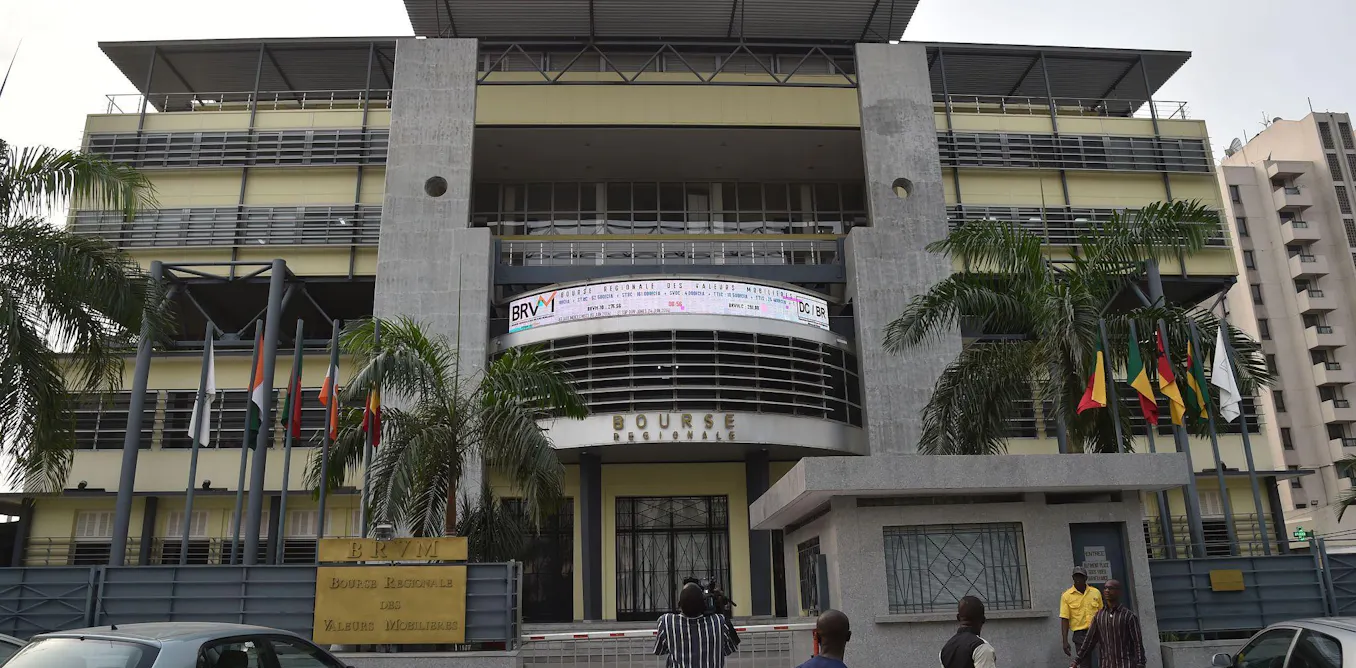
Those decisions sit with a regional architecture built around the Central Bank of West African States (BCEAO), which he says is constrained by the defence of external stability — the CFA’s fixed link to the euro — and internal stability, meaning inflation control.
He stresses that monetary sovereignty does not mean isolation.
It does not mean Senegal should cut itself off from the West African Economic and Monetary Union (UEMOA), the Economic Community of West African States (ECOWAS) or the international financial system, he says.
Rather, the country should be able to enter regional cooperation from a position of national decision-making capacity.
That is the logic behind the Kopar: a sovereign national currency within a regional cooperation organised around a common currency rather than a single one.
Sovereignty also carries responsibility, Ba adds. A state with its own currency must assume budgetary discipline, financial stability, inflation control, adequate reserves and the credibility of its central bank.
Sovereignty, in his account, is not the freedom to create money without limit but the capacity to decide and to bear the consequences of those decisions.
Que signifie concrètement la souveraineté monétaire pour un pays comme le Sénégal ?
The main obstacle, according to the analysis in the book, is the loss of monetary policy autonomy caused by the combination of a fixed parity with the euro and free capital movement.
Ba describes this as the core of the triangle of incompatibilities — a principle holding that a country cannot simultaneously choose a fixed exchange rate, free capital mobility and an independent monetary policy.
When a country maintains a fixed rate and allows capital mobility within UEMOA, he writes, it largely gives up an autonomous monetary policy.
For Senegal, that means monetary policy cannot be calibrated exclusively to domestic needs such as unemployment, SME financing, industrialisation, agricultural transformation or infrastructure, Ba argues.
The BCEAO must first preserve the CFA franc’s external stability and defend its parity, a priority he says influences rates, reserves, liquidity management and the general direction of credit in the zone.
The result he highlights is chronic underfinancing of the productive economy.
The book cites a ratio of credit to the private sector to GDP of around 23 to 25 per cent in UEMOA and Senegal, which it says is well below levels seen in several comparable economies.
Ba does not argue that credit should be distributed without discernment. His point is that money creation and refinancing are not sufficiently directed toward sectors that genuinely transform the economy: industry, productive agriculture, SMEs, innovation, energy, housing, infrastructure and exports.
A fixed parity can also become a brake when it keeps a currency relatively strong compared with the country’s productive structure, he writes.
An overvalued currency makes imports cheaper and exports more expensive, which can discourage import substitution and weaken the competitiveness of local producers.
The book does not claim that all of Senegal’s economic problems stem from the CFA franc. Ba lists other factors including governance, budgetary discipline, infrastructure, taxation and the business climate, and the economic model itself.
But he maintains that the monetary regime acts as a cross-cutting constraint on all those levers.
Money is not the whole economy, he writes, but it is its circulatory system: a productive economy with a poorly organised currency remains fragile, while a sovereign currency without real production quickly loses value.
Quel est, selon vous, le principal obstacle que le système monétaire actuel impose au développement du Sénégal ?
The Kopar is not presented in the book as a magic solution. Having one’s own currency does not automatically guarantee development, Ba writes, but it is a necessary condition for holding the full set of economic policy tools.
It would provide instruments Senegal could use more coherently with its economic priorities.
Productive credit: A Central Bank of Senegal could set up targeted refinancing mechanisms for strategic sectors including agriculture, agri-food processing, industry, energy, SMEs and small and medium industries, innovation, housing and infrastructure.
The aim would be to reduce the cost of long-term financing and direct more savings toward production rather than only liquid investments or short-term public securities.
The exchange-rate regime: The book proposes a managed float for the Kopar based on the basket of Special Drawing Rights (SDRs).
Created by the IMF in 1969, SDRs are an international reserve asset whose value rests on five major currencies: the US dollar, the euro, the Chinese renminbi, the Japanese yen and the pound sterling.
This architecture aims to avoid two extremes — the rigidity of a fixed parity and the instability of a fully free float.
It would allow the exchange rate to absorb some shocks and better reflect the competitiveness of the Senegalese economy, according to the book.
Natural resources: Revenue from Sangomar and Grand Tortue Ahmeyim — with Sangomar’s reserves estimated at 630 million barrels and GTA’s at 1,400 billion cubic metres of gas — is envisaged as a way to strengthen foreign-exchange reserves and support the new currency’s external credibility.
But the challenge is also to turn those resources into productive capacity: cheaper energy, infrastructure, human capital, industrialisation and export diversification. A sovereign currency only makes sense, Ba writes, if it serves a productive strategy.
Coordination between monetary and budgetary policy: The Central Bank of Senegal proposed in the book would have a broader mandate than price stability alone — monetary stability, support for employment and economic development.
That does not mean monetising deficits without limit. The book instead proposes strict rules, ceilings, impact assessments and parliamentary transparency for any direct financing of productive public investment.
The Kopar, in this framing, is only worthwhile if it turns monetary sovereignty into productive sovereignty: more useful credit, more investment, more industrialisation and more jobs.
Comment votre proposition de monnaie souveraine pourrait-elle favoriser un développement endogène et durable ?
The first condition Ba sets out is preparation. A monetary reform of this kind cannot be improvised, and the book explicitly rejects the logic of a brutal break.
It proposes an organised transition with discreet preparation, a complete legal basis, an operational Central Bank of Senegal, a substitution timetable and a period of dual CFA-Kopar circulation.
That preparation would provide institutional credibility. The Central Bank of Senegal would need to be independent in carrying out its functions but also democratically accountable.
The second condition is macroeconomic discipline. Senegal would need to avoid three drifts: excessive money creation, uncontrolled deficit financing and loss of confidence in the currency.
Budgetary and monetary policy would have to remain coordinated but framed by rules, ceilings and public transparency.
The third condition is communication and confidence.
A currency rests on collective trust, so the transition would have to be explained to the public in French and in national languages, with a public timetable, appeal mechanisms, dual price display and transparent statistical monitoring.
Without popular ownership, Ba writes, the reform would remain technically fragile. It would also need to be embedded in an overall economic strategy.
If Senegal creates a national currency without transforming its agriculture, industry, energy, banking system and exports, it will have changed currency without changing its economic model.
Monetary sovereignty is therefore not an end in itself, in his account: it should be one of the instruments of a productive transformation strategy. A sovereign currency is not decreed, he writes; it is prepared.
Its success depends on reserves, institutions, discipline, confidence and, above all, a credible productive strategy.
The real guarantee of the Kopar, Ba concludes, will be the combination of five elements: a productive economy, controlled inflation, a disciplined budget, sufficient reserves and a credible central bank.
Source: The Conversation
“,
“excerpt”: “Dr Babo Amadou Ba proposes replacing the CFA franc with a new Senegalese currency called the Kopar in a new book, arguing that the current arrangement limits Senegal’s control over interest rates, exchange parity and credit direction. He sets out conditions for the transition, including preparation, macroeconomic discipline and public communication.”
}
Comments