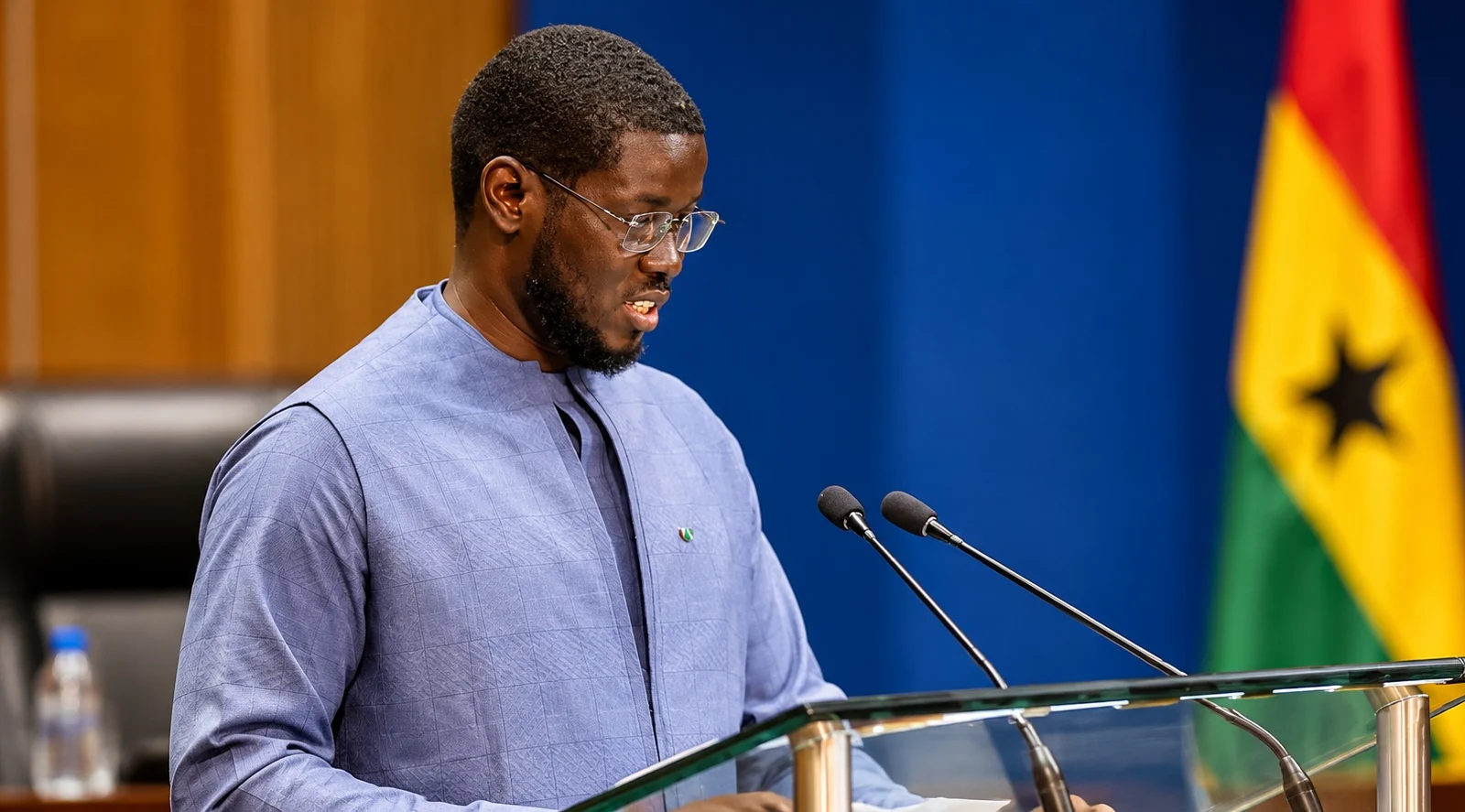
Senegal’s President Bassirou Diomaye Faye is no longer a member of Pastef, the party that brought him to power in 2024.
The party’s National Council announced on Tuesday, November 17, 2026, that Faye and 31 other people had lost their membership, a decision Pastef described as an automatic consequence of its statutes rather than an exclusion.
The rupture lands at a moment of open institutional conflict. Pastef, which dominates the National Assembly under the leadership of Ousmane Sonko, rejected the 2026 revised finance bill on November 18.
The presidency responded with a communique on Thursday announcing that the revised budget would be brought into force, and Faye signed a decree to that effect on November 19.
A party divorce, formally recorded
Pastef said the measure is not an exclusion but an automatic loss of membership under Article 6 of its statutes. The same provision was cited in the party communique announcing the expulsions.
Among the 31 others affected are six ministers from Pastef who remained in government after Sonko left the premiership in May.
Sonko, a former prime minister and now president of the National Assembly, remains head of Pastef. Speaking before party officials in Dakar on Saturday, November 14, he said the political divorce was consummated.
He also said he had had no physical or telephone contact with Faye since June. A Pastef official, speaking anonymously, said no meeting between the two figures was currently planned.
How the break was built
The formal removal follows a sequence of moves on both sides. Faye dismissed Sonko as prime minister in May.
In September, the president dismissed around a hundred directors-general and board chairpersons, most of them Pastef members or officials. Faye replaced the dismissed officials with allies, notably from his own political movement.
On July 25, Faye founded a new party, Kiraay, Les Patriotes Républicains. Pastef’s decision to strike him and the others from its membership list followed.
The party has framed the step as statutory, not political.

Budget blocked, then decreed
The revised 2026 finance bill was rejected twice in committee and once in plenary at the National Assembly before the November 18 rejection.
The budget is judged crucial for Senegal, a heavily indebted country in negotiations with the IMF for financial assistance.
A dissolution of the National Assembly by Faye, opening the way to early legislative elections, is not excluded.
The financial expert Mamadou Manizor Thiam warns that the country is entering a spiral that could lead to a status quo and to chaos at the start of next year.
An unresolved standoff
Since 2024, significant gaps have been revealed between the debt and deficit figures published by the Macky Sall administration and those established by audit.
Sonko could not run in the 2024 presidential election because of a court decision. He resigned as prime minister before taking the presidency of the National Assembly.
What happens next between the presidency and the parliamentary majority is not settled in the public record. The censure threat and the possibility of dissolution are both live, and neither has been carried out.


Comments