Skip to content
AdvertisementAdvertisement

Search news

Type to search stories, topics and pages.

Uncategorized

Uncategorized

NANS President Calls for Equal Opportunity as Nigeria Marks International Youth Day

By Kabir Isa

Nigerian students, regardless of geography or economic background, share one dominant aspiration: equal opportunity to build a prosperous future through quality education, decent work, and talent development. The NANS president argues that government policies must actively dismantle barriers favoring elites, ensuring equitable access for all youth rather than designing interventions around privileged needs. A key practical takeaway is that programs like the Nigerian Education Loan Fund (NELFUND) represent a concrete step toward widening educational access, but they must be scaled and complemented by broader systemic reforms. The core conclusion is that true progress hinges on treating equity as a policy foundation, not an afterthought, so that every young Nigerian can realize their potential regardless of starting point.
Uncategorized

Guinea’s Central Bank Chief Backs Keeping the Franc, Citing Risks in ECOWAS Single Currency Plan

By Kabir Isa

The Central Bank Governor of Guinea has taken a definitive stance against adopting the proposed ECO currency, arguing that the project's foundational criteria are not yet met and that abandoning the Guinean Franc (GNF) would pose significant economic risks. The core insight is that monetary sovereignty is a strategic asset, and Guinea should prioritize domestic stability and institutional readiness over regional integration timelines. The practical takeaway for policymakers is to focus on strengthening national economic fundamentals and convergence criteria before considering any future currency union. Ultimately, the article concludes that a cautious, national-interest-first approach is superior to a rushed regional monetary experiment.

Uncategorized

US Army Opens Fire on Panama-Flagged Vessel Near Iranian Port Amid Strait of Hormuz Tensions

By Kabir Isa

The U.S. military has escalated its confrontation with Iran by firing on a Panamanian-flagged vessel attempting to breach the American-imposed blockade near an Iranian port, signaling a direct enforcement of sanctions that risks open conflict. President Trump has doubled down on this aggressive posture, asserting "total control" over the strategic Strait of Hormuz, a claim that underscores Washington's willingness to use lethal force to dominate global oil chokepoints. This incident marks a critical inflection point where economic warfare has transitioned into kinetic military action, raising the immediate stakes for global energy security and regional stability. The core takeaway is that the U.S. is now actively enforcing its blockade with live fire, making the Strait of Hormuz the flashpoint where any miscalculation could trigger a broader war.

Uncategorized

BRVM Publishes August 10, 2026 Official Bulletin: Bond Payments, a Suspension, and Dividend News

By Kabir Isa

This bulletin provides critical, time-sensitive financial data for the BRVM (Bourse Régionale des Valeurs Mobilières), including official notices on bond interest payments, capital repayments, and dividend distributions. Key actionable items include the scheduled payments for TPBJ 6.50% 2020-2028 and ETAT DU MALI 6.20% 2022-2032 bonds, the suspension of the TPCI.O77 bond, and the dividend payment for CFAO MOBILITY for the 2025 fiscal year. The document also serves as a central repository for the dividend payment calendar and the latest Net Asset Values (NAVs) for OPCVM funds as of August 6, 2026. Investors and market participants should use the provided link to access the full official bulletin and attached notices for precise execution dates and amounts.

Uncategorized

Kwara’s Universities Urged to Act as State’s ‘Developmental Brain Box’ at KU8+ Conference

By Kabir Isa

Here is a high-value executive summary of the content: Universities must act as the "developmental brain box" of their regions, remaining apolitical and providing objective, research-driven solutions to governments rather than merely reacting to events. The core challenge for Kwara State's KU8+ consortium is to leverage its collective expertise to revive collapsed industries (like Bacita Sugar) and transform agriculture by collaborating with federal agencies, thereby reinventing the state's economy. A key leadership principle is institutional neutrality, demonstrated by the refusal to take partisan roles to preserve the university's ability to mediate political disputes. Ultimately, the consortium's value lies in its mandate to proactively generate fresh ideas and practical innovations that prepare the state for the future, not just critique its present.

Uncategorized

FESMA 2026 Kicks Off in Lomé After a Farm-Fresh Prelude in Badja

By Kabir Isa

The "Ma Journée à la Ferme" event is a strategic agritourism initiative that bridges the urban-rural divide in Togo by offering immersive, hands-on experiences at local farms like "Agri Plaisir" in Badja. Its core value lies in its multi-sensory approach, combining local culinary tastings (breakfast specialties) with guided educational tours of fruit and vegetable cultivation, effectively making agricultural heritage accessible and engaging for all ages, including international visitors. The event serves as a powerful prelude to the FESMA festival, successfully generating excitement and cultural connection by transforming a simple farm visit into a curated journey of discovery. Ultimately, this model demonstrates how agritourism can be a potent tool for cultural preservation, local economic stimulation, and reconnecting urban populations with the origins of their food.

Uncategorized

Nigeria’s Tier-2 Banks Shift from Capital Raising to Lending as Loan Books Expand 6.5%

By Kabir Isa

Tier-2 Nigerian banks have shifted from balance-sheet consolidation to aggressive capital deployment, growing combined loans by 6.5% to N6.23 trillion in H1 2026, with Wema Bank leading at 21.7% growth by targeting retail and SME lending, while Sterling Bank leveraged a successful public offer to expand credit and deposits. FCMB deliberately sacrificed loan growth for asset quality, front-loading N85.9 billion in impairments to cut its NPL ratio to 5.2%, which paradoxically drove a 99% profit surge, while ETI contracted its loan book by 6% to rebalance pan-African portfolios against currency volatility. The core strategic insight is that recapitalisation has created divergent playbooks: aggressive market-share capture in higher-yield segments versus conservative balance-sheet clean-up, with the latter proving more profitable in the short term. The key takeaway for investors is that loan growth alone does not drive value—the quality of deployment and willingness to take upfront write-offs determine earnings resilience in a high-rate, volatile currency environment.

Uncategorized

Kano Rejects Divisive Remarks by Cleric, Kwankwaso Says

By Kabir Isa

This report highlights a critical flashpoint in Nigeria’s religious and political tensions, triggered by cleric Sheikh Jingir’s claims that Nigeria is an Islamic state and that Christians were behind a mosque bombing. In response, NDC VP candidate Kwankwaso has issued a forceful rebuke, explicitly distancing the people of Kano from the remarks and framing them as a dangerous threat to national cohesion. The core takeaway is that inflammatory religious rhetoric is being weaponized ahead of the 2027 elections, forcing political leaders to navigate a volatile landscape where they must publicly reject divisive narratives to protect their legitimacy. The incident underscores the urgent need for national leaders to actively promote unity and reconciliation, as unchecked statements from influential figures risk deepening sectarian divides and destabilizing the nation.

Uncategorized

Nigeria’s B’Odogwu Customs Platform Selected for AfCFTA’s Continental Modernisation Drive

By Kabir Isa

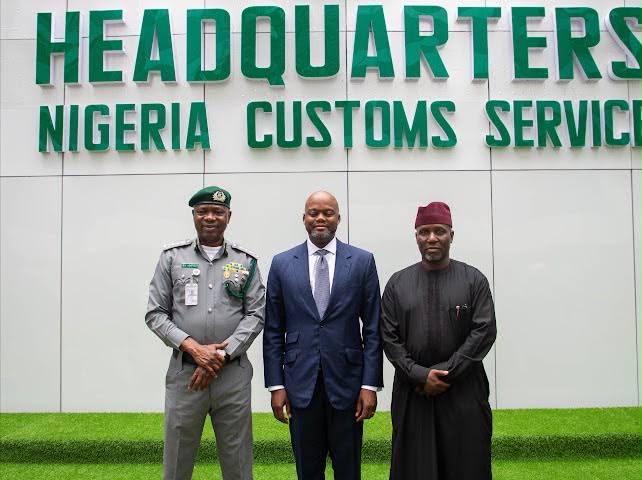
Nigeria has achieved a landmark continental victory as its indigenous customs system, B'Odogwu, was selected by the AfCFTA to lead a 20-year, multi-billion-dollar modernization project across Africa, positioning Nigerian technology as the backbone of the continent's single market. This move validates President Tinubu's "Nigeria First" policy by proving that solutions built and tested domestically can now be exported to solve continental challenges, shifting Nigeria's role from a participant in African trade to a primary architect of its infrastructure. The project, implemented by AfriTrade CMP Limited, will deploy digital and physical infrastructure for customs, cargo tracking, and border management, effectively turning a national solution into the standard for African economic integration. The core takeaway is a strategic pivot: Nigeria is leveraging its homegrown expertise to lead the continent's digital trade revolution, demonstrating that African integration is most effective when driven by African-built solutions.

Uncategorized

Ukrainian Drone Strike in Tatarstan Kills 12, Injures 39, Russia Says

By Kabir Isa

A Ukrainian drone strike on August 10, 2026, killed 12 and wounded 39 in Russia's Tatarstan region, targeting both industrial and civilian sites, while Russia claimed to have intercepted 456 drones overnight. This attack marks a significant escalation in the conflict's reach, striking deep into Russian territory far from the front lines. The high interception count alongside confirmed casualties indicates that even massive air defenses cannot fully neutralize the threat, underscoring the vulnerability of Russian rear areas. The incident signals a strategic shift toward long-range strikes on economic infrastructure, with profound implications for the war's trajectory and civilian safety.