

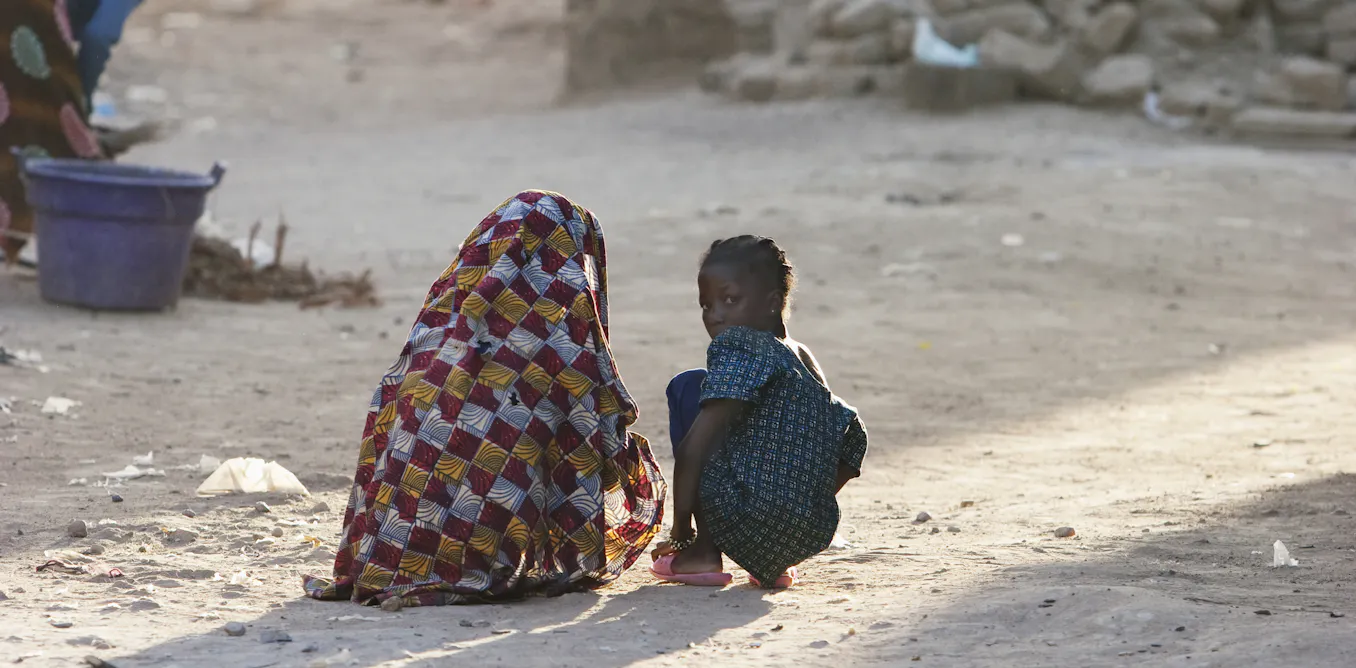
Mali launched the operational phase of its national strategy against begging on 24 September 2026, built on four pillars: socio-economic alternatives and reintegration, parental responsibility, Quranic school supervision, and integrating religious teaching into national education.
For the researcher Drahmane Fondo, whose fieldwork on child fostering and street children in Mali ran from 2017 to 2025 in Bamako and villages in the Ségou and Tombouctou regions, the strategy raises a question that its four pillars do not answer on their own: who these children are, and how they reached the street.
His study, based on interviews and observation with children and families, public services, NGOs and traditional authorities, is qualitative and carries no national figures. Its central finding is that the large majority of street children are not abandoned.
They have a home to return to in the evening. Only a portion, those without a household, live outside day and night.
The distinction matters for policy. A child who finds an adult waiting each evening and a child with no contact with family cannot be protected in the same way.
Fostering, and a gap in the law
Many of these children come through confiage, a practice in which a child belongs to the wider kin group and may be entrusted to a relative settled in the city, most often because household incomes are weak.
Mali’s law does not recognise the arrangement. The 2011 Code of Persons and the Family provides, for a child whose parents are known and who lives with a third party, only guardianship and adoption-protection.
Texts governing the movement of children exist, but violations are not sanctioned, according to the research. The provisions are also poorly known.
The UN Committee on the Rights of the Child raised concern about this as early as 1999, and Mali itself acknowledged it in a report.
Six routes to the same pavement
Behind the presence of children and women in the street lie different realities: fostering, economic survival, exploitation and flight from violence.
- Talibé children, entrusted by their father to a marabout from the same village, spend the day seeking food and money around markets, bus stations and traffic lights.
- Isolated itinerant workers, often out of school and far from their family of origin, sell small services year-round.
- Girls working as domestic helpers, sent to the city from the age of 12, work inside households. Their departure is sometimes encouraged by their mothers. Their pay is irregular and ranges from 10,000 to 20,000 CFA francs a month (17 to 34 US dollars). They work from four in the morning until midnight, without leave or weekends. The labour code, which applies to private households, requires twelve hours of rest for children, a weekly rest of twenty-four hours, and in principle prohibits employment before the age of fifteen.
Intermediaries and employers sometimes withhold their wages under false accusations of theft.
- Children assisting dependent people accompany an elderly or disabled person in begging.
- Women who beg with very young children, sometimes presented as twins, seek in the street, by their own account, enough to survive amid extreme poverty.
- Children who have fled punishment or abusive fostering sleep outside and avoid their families for fear of being sent back.
These routes share the street, extreme poverty and above all begging, but they call for different responses.
What a 13-year-old described
A 13-year-old boy told the researcher: “It was my father who brought me to the marabout. He went back to the village, and my mother did not agree.”
Without stable income, the marabout takes in many children whose parents can barely feed them.
The children go to the population for their ration, a practice inherited from a traditional context that no longer holds, and one that exposes them to abuses the law does not tolerate.
The absence of state supervision of these schools has contributed to their begging.
Acting at the point of departure
Fondo argues that a durable response has to work at the source of the departures, regulate more tightly the practices that expose minors to exploitation, and prepare their return under conditions that prevent a fresh rupture.
That means mapping the routes, not only the places where children are found, and acting in the regions they leave: Sikasso, Ségou, Tombouctou and Mopti.
Children should be kept in the village, he writes, through income support, schooling and nearby Quranic teaching.
He proposes tying the accreditation of Quranic schools to registration in a register, accreditation of teachers and local instruction, first for new openings and then progressively for existing schools.
In his account, such a measure would help prevent the exodus of further marabouts to Bamako. A Nigerian study, he notes, already argued for regulating rather than abolishing these schools.
On domestic workers, he calls for applying the labour code: a contract, a minimum wage, and monitoring by the labour inspectorate. Minors below the legal age should be returned to their village, but only once those conditions exist there.
Returns, he adds, must be prepared before any operation by authorities to remove children from the street. A 2025 study in Burundi concluded that unprepared returns did not stop children going back to the street.
He also argues that the formalities of adoption-protection should be eased. It is the only protection the law offers a fostered child, and modest families avoid it.
Poverty is not exploitation
Fondo draws a line between poverty and exploitation. Mali’s penal code punishes begging and inciting a minor to beg (article 242-91), and more severely the trafficking of minors, including exploitation of their begging (article 324-29, ten years’ imprisonment).
Fragile families, such as a mother in distress begging with her children, belong to a support response, he writes.
Those who profit from a child, such as an adult using a child who is not his own, should answer for their acts.
He further calls for associating authorities and traditional legitimacies, recognised by the 2023 Constitution, along with researchers, for a prior diagnosis and independent monitoring.
He points to Senegal, where a bill on the status of daara, or Quranic schools, approved by religious leaders, had still not been sent to the Assembly as of November 2024.
An approved text, he writes, is not an applied text.
The useful question, in his framing, is not only how to remove a child from the street, but at what moment it could have been prevented.
For many children, he writes, the answer lies in the village, with a marabout or a guardian family, well before the crossroads.
Drahmane Fondo is president of the Réseau EnfanceAfrique.org / AMAPISE and an associate researcher at LIRCES (Université Côte d’Azur). He receives no funding linked to this article.
Source: The Conversation

Comments