Guinea’s Sports Journalism Training Signals Broader Investment in Media Capacity Ahead of 2026 World Cup
The Report
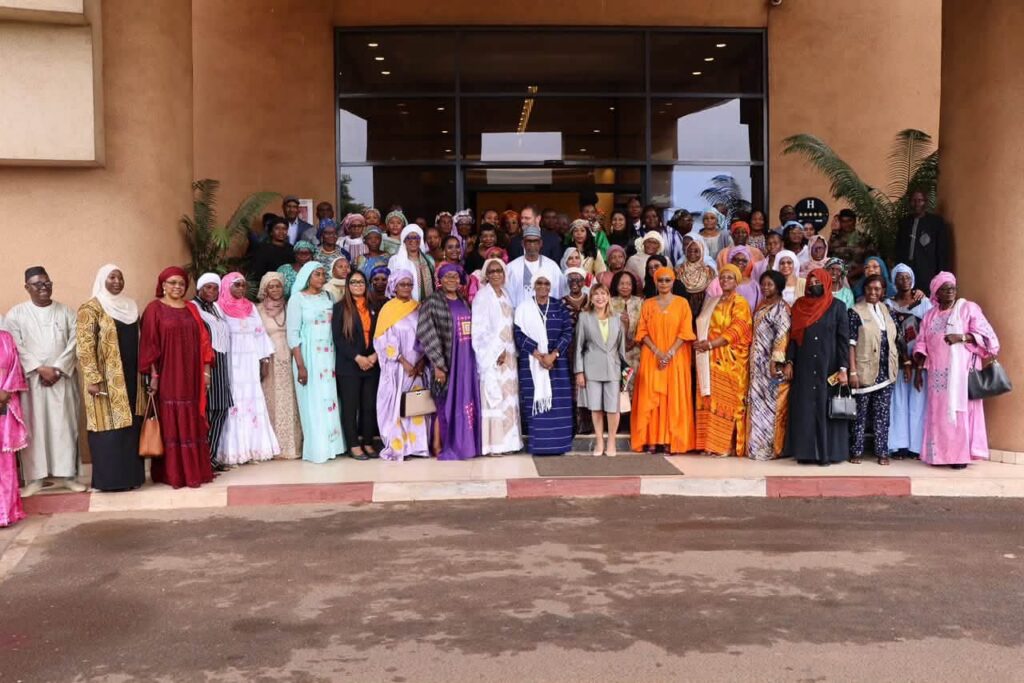
As reported by journalist Sadjo Bah, a four-day sports journalism training session organized by Guinea’s Ministry of Communication, Digital Economy, and Innovation (MCENI), in partnership with TV Media Sport (TVMS), concluded on Thursday, June 11, in Conakry. The training, held at the Center for Training and Professional Development in Information and Communication Technologies, brought together approximately sixty journalists from public and private media outlets.
The curriculum covered journalistic writing, sports commentary, interview techniques, and the use of artificial intelligence in content production. Speaking on behalf of participants, Kadiatou 6 Camara described the initiative as a turning point for the profession, stating:
“During these four days of intensive learning, we had the privilege of strengthening our knowledge, acquiring new skills, and exchanging ideas with top-level professionals.”
Trainer Pascal Ferré praised the participants’ commitment, while Director General Abdoulaye Djibril Diallo emphasized the need for a measured approach to artificial intelligence, calling it a “necessary evil” in modern journalism. Minister Mourana Soumah framed the training within Guinea’s broader Simandou 2040 development program, which prioritizes human capital, and announced that similar sessions would continue nationwide. The training comes as Guinea prepares for the 2026 FIFA World Cup, with 44 matches set to be broadcast on the state broadcaster RTG.
WANA Regional Analysis
This training initiative, while focused on sports journalism, carries significant implications for media professionalism and governance across West Africa. The decision by Guinea’s Ministry of Communication to invest in specialized journalism training—particularly with a module on artificial intelligence—reflects a growing recognition across the region that media capacity must evolve alongside technological and sporting developments.
From a regional policy perspective, the timing is strategic. With the 2026 FIFA World Cup approaching, West African nations are increasingly aware that international sporting events offer a platform for soft power projection and tourism promotion. However, the quality of sports journalism directly influences how these events are perceived domestically and globally. Guinea’s investment in training its journalists to produce credible, professional coverage positions the country to better leverage the World Cup for national branding—a lesson other ECOWAS members may observe closely.
The inclusion of artificial intelligence in the curriculum is particularly noteworthy. Across West Africa, media houses are grappling with the ethical and practical challenges posed by AI-generated content. By training journalists to use AI “sparingly,” as Director General Diallo advised, Guinea is setting a precedent for responsible adoption. This approach could serve as a model for other West African nations where regulatory frameworks for AI in media remain nascent.
Economically, the training aligns with the Simandou 2040 program, which aims to diversify Guinea’s economy beyond mining by investing in human capital. A more professional media sector can attract foreign investment by improving the country’s information environment and reducing misinformation risks. For the broader ECOWAS region, where media freedom and professionalism vary widely, Guinea’s initiative may encourage peer-to-peer learning and regional cooperation on journalism standards.
Security and governance implications also emerge. In many West African states, sports journalism has been a vector for ethnic or political tension, particularly during football matches. By emphasizing preparation, credibility, and ethical reporting, the training could help mitigate such risks. Minister Soumah’s remarks linking journalism to social stability and cohesion underscore this point.


Regional Backdrop
Historically, West African governments have underinvested in journalism training, often prioritizing political messaging over professional development. The result has been a media landscape vulnerable to misinformation, sensationalism, and external manipulation. Guinea’s move to partner with an international sports media organization (TVMS) and focus on practical skills—including AI literacy—represents a departure from this trend.
The Simandou 2040 program, referenced by Minister Soumah, is Guinea’s ambitious long-term development plan centered on the massive Simandou iron ore project. By linking media training to this national strategy, the government signals that it views journalism not merely as a cultural activity but as a component of economic transformation. This framing may influence how other resource-rich West African nations—such as Nigeria, Ghana, and Côte d’Ivoire—approach media development.
Furthermore, the announcement that 44 World Cup matches will be broadcast on RTG highlights the state’s role in sports media. This raises questions about media pluralism and competition, particularly for private broadcasters. The training’s inclusion of journalists from both public and private outlets suggests an effort to level the playing field, though the long-term impact on media diversity remains to be seen.
Original Reporting By:
Sadjo Bah

Comments