
Skip to content

West Africa News Agency

Agence de Presse Ouest-Africaine

West Africa News Agency

Agence de Presse Ouest-Africaine

Search news

Type to search stories, topics and pages.

Latest

Mali

Tag: Mali

Latest Mali news — Bamako politics, the transition, Sahel security and regional developments, reported by West Africa News Agency.

Climate & Environment

Bamako’s Narrow Escape: A Wake-Up Call on Fuel Station Safety

By Kabir Isa

Bamako’s recent gas station fire was a near-miss that exposes a systemic failure: despite existing 1990 and 2018 regulations mandating safety distances, equipment, and environmental permits, enforcement is so weak that the city remains at constant risk of a catastrophic explosion. The core problem is not a lack of rules but a complete absence of audits and controls, rendering even basic prohibitions like "no phones" absurd when mobile payments are conducted at the pump. To prevent the next inevitable disaster, every station must be immediately audited, with dangerous installations either brought into compliance or shut down. Ultimately, the article argues that relying on luck instead of rigorous public policy is an unacceptable gamble with human lives.
Defense and Security

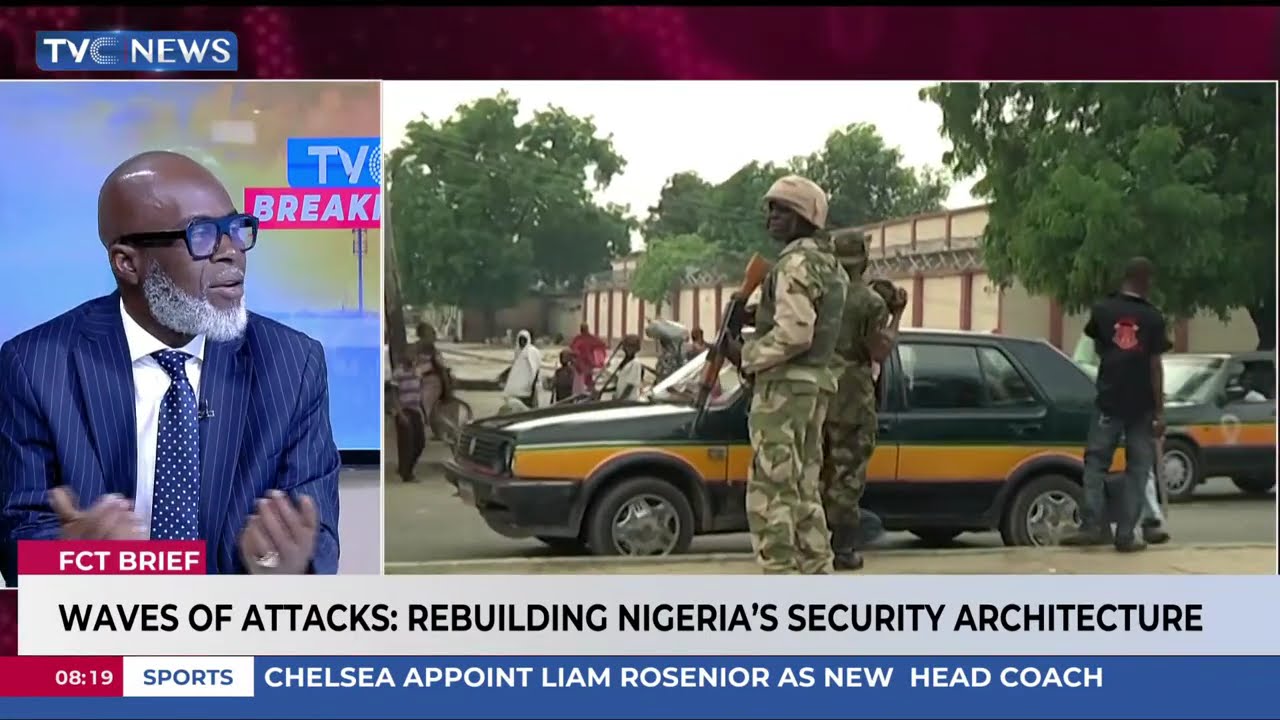
Mali Overhauls National Defense Framework to Address Modern Threats

By Kabir Isa

This reform is not a simple update but a strategic consolidation of Mali's entire security apparatus, unifying military, internal security, and cyber defense under a single, modernized legal framework for the first time in over two decades. The core innovation is the formal establishment of unified operational command under the Army Chief of Staff for crisis response, which enables rapid, coordinated action against major threats without permanently subordinating police or gendarmerie to military rule. By replacing outdated oversight bodies with the National Security Council and explicitly integrating the now-militarized police and civil protection forces, the law creates a more agile and inclusive system designed to address contemporary transborder and cyber threats. The ultimate value lies in its shift from a purely military doctrine to a comprehensive "global security" model, positioning the state to respond cohesively to complex crises while maintaining a clear separation of powers during routine operations.

West African Politics

Mali: Journalist and Activist Sentenced in Separate Cybercrime Cases, Clemency Appeal Raised

By Kabir Isa

On August 3, 2026, Mali's judiciary delivered landmark verdicts against journalist Chahana Takiou and activist Adama Diarra, signaling a decisive crackdown on speech deemed critical of state institutions under the Transition's rule-of-law agenda. Takiou received a 12-month sentence (6 months suspended) from the cybercrime unit for remarks made at a media forum, while Diarra faced charges for undermining state credit, underscoring the regime's use of legal mechanisms to police dissent. These rulings reveal a strategic convergence of cybersecurity and criminal law to enforce political stability, placing media and activism under heightened legal scrutiny. The core takeaway is that Mali's Transition is actively leveraging judicial independence to consolidate control, making it imperative for journalists and activists to recalibrate their discourse within a rapidly narrowing legal framework.

Business & Economy

Mali Mining Fund Steering Committee Holds Inaugural Session on Infrastructure Investment

By Kabir Isa

Mali has launched an unprecedented financing mechanism that directly channels mining revenues into critical infrastructure, with over 109 billion CFA francs already mobilized to fund the roads, dams, and power grids essential for mining operations. This fund, established under the 2023 mining law, requires large and small mine permit holders to contribute 1% of quarterly turnover plus 10% of the ad valorem tax for the first five years, with the turnover rate rising to 2.5% thereafter. The strategic innovation lies in converting subsoil wealth into tangible national assets that boost economic competitiveness, rather than letting mining profits flow out without local structural benefit. The first steering committee meeting, chaired by the Minister of Economy and Finance, signals a decisive shift toward state-directed resource sovereignty, where mining companies are now structurally obligated to co-invest in the very infrastructure that sustains their operations.

Climate & Environment

Mali’s Energy Crossroads: Weighing Grid Interconnection Against a Solar Future

By Kabir Isa

Mali’s chronic electricity deficits stem from its landlocked status and unreliable hydrocarbon supplies, compounded by degrading wood resources. However, the nation holds a strategic regional energy position, with its true competitive advantage lying in an immense, under-explored solar potential (5-6 kWh/m²/day with 12 hours of daily sunlight). The critical strategic choice for the country is between costly regional grid interconnections and leveraging its abundant renewable resources. The decisive insight is that Mali’s vast solar capacity represents its most viable, sovereign path to closing the demand-supply gap and powering economic growth.

Women & Youths Empowerment

Mali’s Youth at a Crossroads: Social Media Tool or Trap?

By Kabir Isa

This analysis argues that Mali's youth are prioritizing social media validation over substantive self-development, threatening the nation's future. The core issue is not the platforms themselves but their misuse, as they can be powerful tools for learning and entrepreneurship if leveraged intelligently. Ultimately, the article issues a stark call to action: young Malians must choose between becoming the country's future builders or remaining trapped in a virtual world where follower counts replace real skills. The unique conclusion is that national progress hinges on this individual choice to replace the pursuit of "likes" with work, knowledge, and perseverance.

Business & Economy

Mali’s ATLAS Cement Plant Nears Production After Year-Long Delay, Minister Visits Site

By Kabir Isa

The ATLAS cement plant represents a strategic $45M+ investment (scalable to $105M) directly aligned with Mali’s push for economic sovereignty, aiming to produce 500,000 tons of cement annually—with potential to reach 2 million tons—to meet critical domestic demand. Beyond its capacity to stabilize a key commodity market, the project is projected to generate 300 direct and 1,000 indirect jobs, signaling a tangible shift from reliance on imports to local industrial production. The visit by Minister Diallo underscores the government’s high-level commitment to monitoring this flagship project, which remains in its final pre-production phase. The core takeaway is that ATLAS is not merely a factory, but a deliberate instrument of national policy designed to reduce dependency, control prices, and anchor large-scale development.

Climate & Environment

Mali Launches 32nd National Reforestation Campaign with Youth Focus and Ambitious Tree-Planting Targets

By Kabir Isa

Executive Summary Mali’s 32nd National Reforestation Campaign, launched under the theme of youth-driven environmental citizenship, reframes ecological restoration as a direct pillar of national security and stability in the Sahel. With a strategic target of over 20 million trees by year-end—building on 1.24 million planted in 2025—the initiative positions environmental protection not as a peripheral issue, but as a core prerequisite for sovereignty and resilience. The practical takeaway is that this campaign leverages a whole-of-society coalition (traditional authorities, private sector, and civil society) to operationalize a top-down political vision into grassroots action. The unique conclusion is that for Mali, planting trees is an explicit act of state-building, where restoring ecosystems is synonymous with reinforcing the foundations of peace and development.

Defense and Security

Bougouni Drug Seizure: OCS Officers Remove Narcotics from Illicit Market

By Kabir Isa

The Bougouni branch of Mali's Central Narcotics Office (OCS) successfully seized a significant cache of illicit drugs—including Tramadol, Diazepam, and cannabis derivatives—from the local black market. This operation is strategically critical as it directly counters a surge in youth drug consumption exacerbated by the nation's ongoing security crisis. The seizure underscores the Transitional authorities' intensified enforcement measures and the OCS's commitment to dismantling supply chains through enhanced intelligence and surveillance. The core takeaway is that proactive, localized interdiction remains a vital frontline defense against the destabilizing public health and social threats posed by drug trafficking in conflict-affected regions.

West African Politics

Mali Supreme Court Delays Ruling in Clément Dembélé Case Until August 4

By Kabir Isa

The case of Professor Clément Dembélé reveals a critical breakdown in Mali’s judicial process, where a court-ordered non-lieu based on forensic evidence proving his voice was not on the incriminated recording has been effectively nullified by procedural appeals and a missing 10,000 FCFA receipt. Despite technical exoneration and a formal order for release, the professor remains incarcerated because the prosecution’s appeals have kept the case alive in higher courts, turning a question of innocence into a test of procedural compliance. The core insight is that the justice system’s own mechanisms—such as requiring a payment receipt for a Supreme Court filing—can override substantive findings of innocence, creating a de facto detention without charge. This case serves as a stark warning that without robust safeguards against procedural traps, even a proven lack of evidence cannot guarantee freedom.