



Togo’s ruling party has pushed back against opposition interpretations of a January ruling by the ECOWAS Court of Justice, insisting the decision does not undermine the country’s constitutional order.
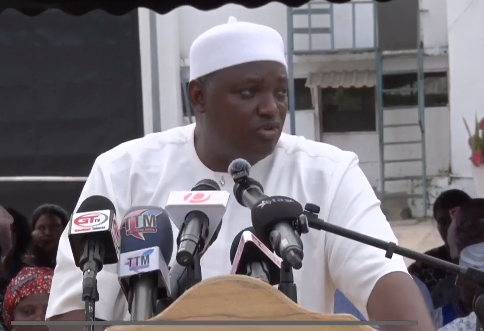
Kanka-Malik Natchaba, a National Delegate of the UNIR Youth Movement and former minister, offered the first official party reaction on Monday during an appearance on the private radio station Kanal FM.
He argued that the court’s ruling “does not call into question and is not intended to call into question the established constitutional order.”
Natchaba, who also serves as Director-General of the Lomé-Tokoin Airport Company, contested the reading put forward by a coalition of opposition parties and civil society groups in an August 25 memorandum.
That group interpreted the court’s decision as paving the way for a “return to constitutional order.”
The ECOWAS Court found in January that “the constitutional amendment adopted on March 25, 2024, given its timing, content, and expected effects, violates Article 23 of the African Charter on Democracy, Elections and Governance, and constitutes an unconstitutional change of government within the meaning of that provision.”
Komi Wolou, a member of the opposition grouping, had insisted the ruling “has the authority of res judicata and is binding on all.”

Natchaba, however, said the opposition’s interpretation does not match the ruling’s content.
“We intend to stick to the Court’s decision,” he said, noting that in his view it contains no provision calling for the “annulment” or “withdrawal” of the constitutional reform, nor a “return” to a previous situation.
According to Natchaba, the court’s decision “does not contain elements that render illegitimate or void the advances or reforms made under this Constitution.”
He also said no binding mechanism in the ruling imposes any measure on the government or Togolese institutions.
Natchaba rejected the idea that the new Constitution prevents political alternation, arguing that institutional officials are appointed through elections and that Parliament itself emerges from the ballot. “Alternation is not called into question,” he said.
On the question of international sanctions, Natchaba noted the ruling did not provide for any automatic measures.
“The decision itself does not include automatic sanctions for anyone to date,” he said, urging political actors to favor internal mechanisms for resolving disputes.
He dismissed the notion of an institutional crisis, saying Togolese institutions are functioning normally, and pointed to a political dialogue framework at the Ministry of Territorial Administration open to political actors.
The Togolese government had already responded to the ruling in late July, contesting the Court’s jurisdiction to rule on the constitutionality of domestic law.
The authorities said the Court “has no jurisdiction to review the constitutionality of domestic law, nor any title to judge a national constituent power,” and denounced “an attempt by the Court to exceed its powers.”
Source: savoir