


DRC Crackdown Signals Wider Regional Anxiety Over Constitutional Maneuvering
The Report
As reported by Jeune Afrique journalist Stanis Bujakera, the Democratic Republic of Congo’s political opposition is counting its wounded and detained activists after police forcibly dispersed a sit-in protest in Kinshasa on Friday. The demonstration, organized against a constitutional revision project widely attributed to President Félix Tshisekedi’s camp, was met with a heavy security response. The DRC government has condemned the violence, acknowledging injuries on both sides—among protesters and law enforcement—and has announced investigations to determine responsibility. The opposition, meanwhile, continues to compile its own toll of arrests and casualties.
“The government condemns the violence that occurred Friday in Kinshasa, citing injuries among both protesters and law enforcement, and announces investigations to establish responsibility.”
WANA Regional Analysis
The dispersal of the opposition sit-in in Kinshasa is not merely a domestic flashpoint; it carries significant implications for the broader West and Central African region, particularly within the ECOWAS framework and its evolving stance on democratic governance. While the DRC is a member of the Economic Community of Central African States (ECCAS), its political trajectory is closely watched by ECOWAS member states, many of which face similar pressures around term limits and constitutional revisions.
From a regional governance perspective, the Tshisekedi administration’s push for constitutional change—and the forceful response to dissent—echoes patterns seen in several ECOWAS nations where incumbents have sought to extend or consolidate power. The situation in the DRC reinforces a troubling trend: the use of state security apparatus to suppress peaceful assembly, a right enshrined in the African Charter on Human and Peoples’ Rights. For West African civil society and opposition groups, this serves as a cautionary example of how constitutional debates can quickly become flashpoints for state repression.
Economically, the instability in Kinshasa could have ripple effects on regional trade corridors. The DRC is a key supplier of cobalt and copper, critical minerals for the global energy transition. Any sustained political turbulence risks disrupting supply chains and deterring foreign investment, not only in the DRC but also in neighboring countries like Zambia and Angola, which serve as transit routes. For ECOWAS states that rely on mineral imports or have mining operations in the region, the political risk premium may rise.
Diplomatically, the crackdown places the African Union and regional blocs in a difficult position. The AU’s silence on the matter, or a muted response, could be interpreted as tacit acceptance of heavy-handed tactics against political opposition. This would undermine the AU’s own normative frameworks, such as the African Charter on Democracy, Elections and Governance. For ECOWAS, which has taken a more assertive stance on unconstitutional changes of government in recent years, the DRC case presents a test of whether similar principles apply to constitutional manipulation and the suppression of dissent, not just outright coups.
Security implications are also noteworthy. The DRC’s eastern provinces remain plagued by armed group violence, and a deterioration of political stability in the capital could divert security resources away from counterinsurgency efforts. For West African states dealing with their own insurgencies—from the Sahel to the Lake Chad Basin—a distracted DRC government could reduce regional cooperation on cross-border security threats, including arms trafficking and the movement of fighters.
Against this backdrop, the opposition’s ability to regroup and sustain pressure on the Tshisekedi government will be a key indicator of the resilience of democratic space in the region. If the crackdown succeeds in silencing dissent, it may embolden other leaders in West and Central Africa to adopt similar tactics when facing constitutional challenges.
Regional Backdrop
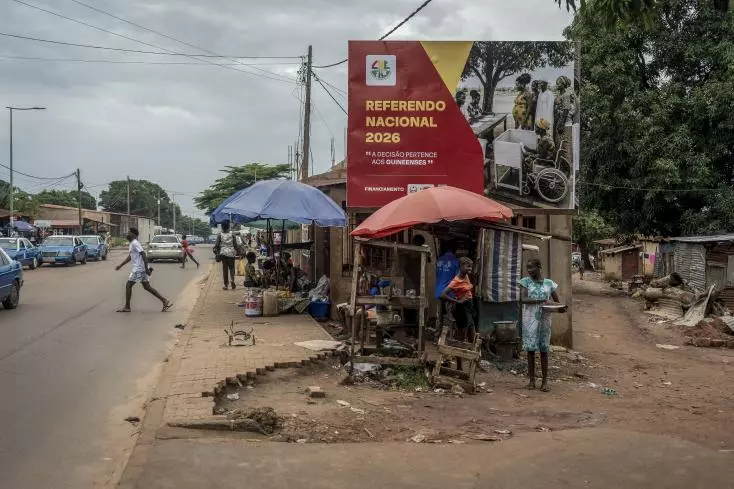
Constitutional revisions have been a recurring source of political crisis across Africa. In West Africa, recent examples include Guinea’s 2020 constitutional referendum that allowed Alpha Condé to seek a third term, and Côte d’Ivoire’s 2016 constitution change that was similarly criticized as a power consolidation move. In both cases, the resulting political tensions contributed to instability. The DRC’s current situation fits this broader pattern, where the line between legal constitutional reform and political manipulation remains dangerously blurred.
Historically, West African governments have often responded to opposition protests with disproportionate force, leading to cycles of violence and repression. The ECOWAS Protocol on Democracy and Good Governance explicitly calls for the protection of fundamental freedoms, including the right to assemble peacefully. The DRC’s actions, while outside ECOWAS’s direct jurisdiction, serve as a benchmark for how regional bodies might respond to similar incidents within their own member states.
Original Reporting By:
Jeune Afrique

Comments