

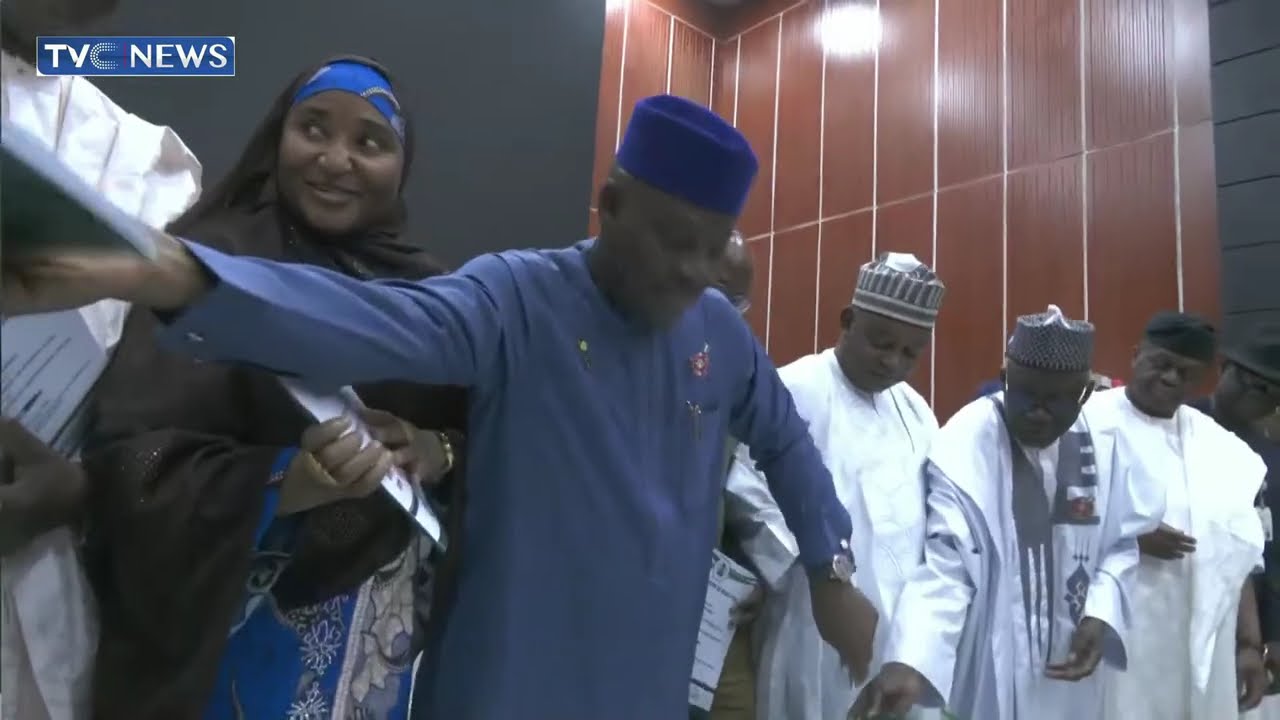
Nigeria’s Federal Government is set to review its foreign scholarship and bilateral education agreements, a move that could significantly reshape how public funds are allocated for overseas study. Education Minister Dr. Tunji Alausa announced the review, citing the need to eliminate wasteful spending and redirect resources toward strengthening domestic tertiary institutions.
Speaking on the rationale behind the decision, Alausa explained that the government can no longer justify sending students abroad for programs that are already available within Nigeria’s universities, polytechnics, and colleges of education. He emphasized that the policy shift is driven by a commitment to build local capacity and ensure better value for public expenditure.
A Proposal That Raised Red Flags
Alausa recounted a proposal he received shortly after assuming office, which involved approximately 100,000 Nigerian students traveling to Morocco to study English-taught courses, including mass communication and journalism. The minister expressed serious concerns about the plan, noting that these courses are already offered in Nigeria. Additionally, students would have been required to spend their first year learning French before beginning their actual programs.
“Number one, we have all those courses in Nigeria. And yet, number two, they were going to spend the first year learning French before they started the programme,” Alausa said.
He further highlighted the cost disparity, stating that the funds required to support a few students abroad could instead support thousands of students within Nigeria. “And number three, in the position of a few million to support this in Nigeria, we support thousands of them,” he added.
Bilateral Education Agreements Under Scrutiny
The minister was blunt in his assessment of the existing Bilateral Education Agreement (BEA) arrangements, describing them as “a way to waste government funds.” He stressed that the government concluded that continuing such arrangements in their previous form would be an inefficient use of public resources.
“So the Bilateral Education Agreement was not making sense, again, to us in government. It was a way to waste government funds,” Alausa said. He added, “And this President will not waste any public funds.”
Alausa also noted that foreign countries willing to sponsor Nigerian students could continue doing so, but without requiring financial support from the Nigerian government. He pointed out that the circumstances that once justified sending large numbers of students abroad have changed considerably, as Nigeria has developed substantial capacity in its own tertiary institutions over the years.
Implications for Students and Institutions
This review signals a potential shift in Nigeria’s educational strategy, with a stronger emphasis on self-reliance and domestic capacity building. For students who might have relied on government-sponsored foreign scholarships, the change could mean fewer opportunities for overseas study, particularly in fields already well-covered locally. However, the government’s focus on redirecting resources to domestic institutions could lead to improved facilities, better funding, and enhanced educational quality within Nigeria.
The decision also reflects a broader trend in public finance management, where governments are increasingly scrutinizing expenditures to ensure they align with national development priorities. By prioritizing local institutions, the government aims to maximize the impact of every naira spent on education.
Looking Ahead
As the review progresses, stakeholders in the education sector will be watching closely to see how the government balances the need for international exposure with fiscal responsibility. The minister’s remarks suggest a firm commitment to fiscal discipline, but the details of the revised scholarship schemes remain to be seen. For now, the message is clear: Nigeria is determined to invest in its own educational infrastructure and ensure that public funds are used where they can yield the greatest benefit.
Source: Latest Nigeria News

Comments