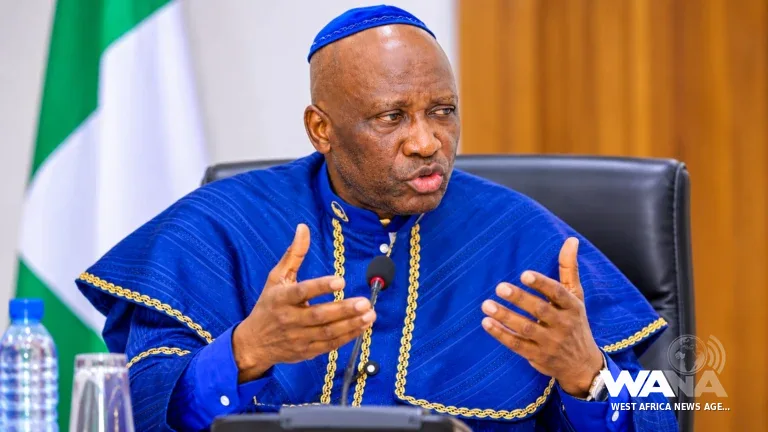
Nigeria’s Federal Government is to review its foreign scholarship programmes and bilateral education agreements, Education Minister Dr. Tunji Alausa has said.
Alausa said the government could no longer justify sending students abroad for courses that are already taught in Nigerian universities, polytechnics and colleges of education.
In a report from Latest Nigeria News, the minister pointed to a proposal he received shortly after taking office as an illustration of the problem. The plan involved about 100,000 Nigerian students going to Morocco to study English-taught courses, including mass communication and journalism.
Alausa raised two objections. The courses, he said, are already available in Nigeria. And students would have spent their first year learning French before starting their actual programmes.
“Number one, we have all those courses in Nigeria. And yet, number two, they were going to spend the first year learning French before they started the programme,” he said.
He also questioned the cost. The money needed to support a small number of students abroad, he argued, could support thousands at home.
“And number three, in the position of a few million to support this in Nigeria, we support thousands of them,” he added.
Bilateral Education Agreements Under Review
The minister was equally direct about the existing Bilateral Education Agreement arrangements, describing them as “a way to waste government funds.” Continuing them in their previous form, he said, would be an inefficient use of public resources.
“So the Bilateral Education Agreement was not making sense, again, to us in government. It was a way to waste government funds,” Alausa said. “And this President will not waste any public funds.”
Foreign countries that want to sponsor Nigerian students can still do so, according to the minister, provided the Nigerian government is not asked to contribute financially. He said the circumstances that once justified sending large numbers of students abroad had changed, citing the capacity Nigeria has built in its own tertiary institutions over the years.
The review, as announced, covers the scholarship schemes and the bilateral agreements. The material provided does not set out a timetable, the terms of reference, or which countries and programmes would be affected.
Source: Latest Nigeria News





Comments