

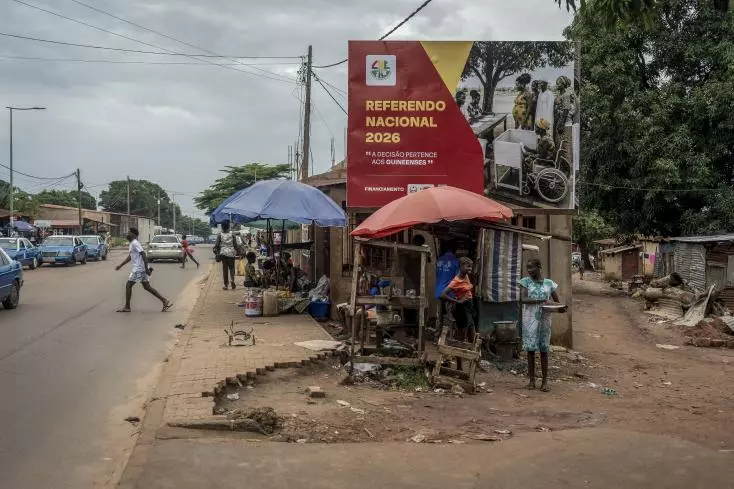
Guinea-Bissau voters on Sunday weighed a new constitution expanding presidential powers, under 10 months after a military coup.
The referendum asks citizens to answer “yes” or “no” to the question: “Do you agree with the entry into force of the new constitution approved by the National Transitional Council?”
The junta has unanimously approved the constitutional amendment, which would shift the country from a parliamentary system to a presidential one.
What the Proposed Constitution Would Change
Under the current parliamentary system, the prime minister is drawn from the parliamentary majority, a setup that has historically led to uncomfortable power-sharing arrangements. The new text would abandon that system entirely.
If approved, the head of state would gain the authority to appoint and dismiss the prime minister and members of the government, as well as the power to dissolve parliament.
These changes are designed to consolidate executive authority in the presidency.
A Tense Political Climate
The referendum is unfolding in a fraught atmosphere. The opposition has urged voters to boycott the vote, citing “a context of restrictions on public freedoms.”
The political environment remains tense in the coup-prone coastal nation, which has a long history of military interventions in politics.
The junta has framed the constitutional change as a necessary step to stabilise institutions before new presidential and parliamentary elections, which are scheduled for 6 December. Those elections are intended to hand power back to civilians.
Background to the Coup
The military seized power just days after a presidential election last November, overthrowing then-president Umaro Sissoco Embalo and suspending the electoral process.
Following the coup, the junta appointed General Horta N’Tam as transitional president under a transitional charter that bars him from running for election.
Embalo’s ouster came after a turbulent period in his own tenure. Following the 2023 legislative elections, he dissolved the opposition-dominated parliament in response to what he described as an attempted coup.
He then ruled by decree until the army removed him from power.
Regional Context
Guinea-Bissau, one of the world’s poorest countries, has experienced five coups and a series of attempted coups since gaining independence in 1974. The country’s political instability has long been a challenge for the region and for international partners.
The referendum in Guinea-Bissau follows a broader trend across Africa. In recent years, countries including Zimbabwe and Chad have amended their constitutions to extend term lengths, remove age limits, or strengthen the powers of the executive.
These changes have often sparked debate about the balance of power and the health of democratic institutions.
As the votes are counted, the focus will be on whether the public backs the junta’s vision for a stronger presidency, and what that means for the promised return to civilian rule later this year.
Source: allAfrica.com

2 comments