

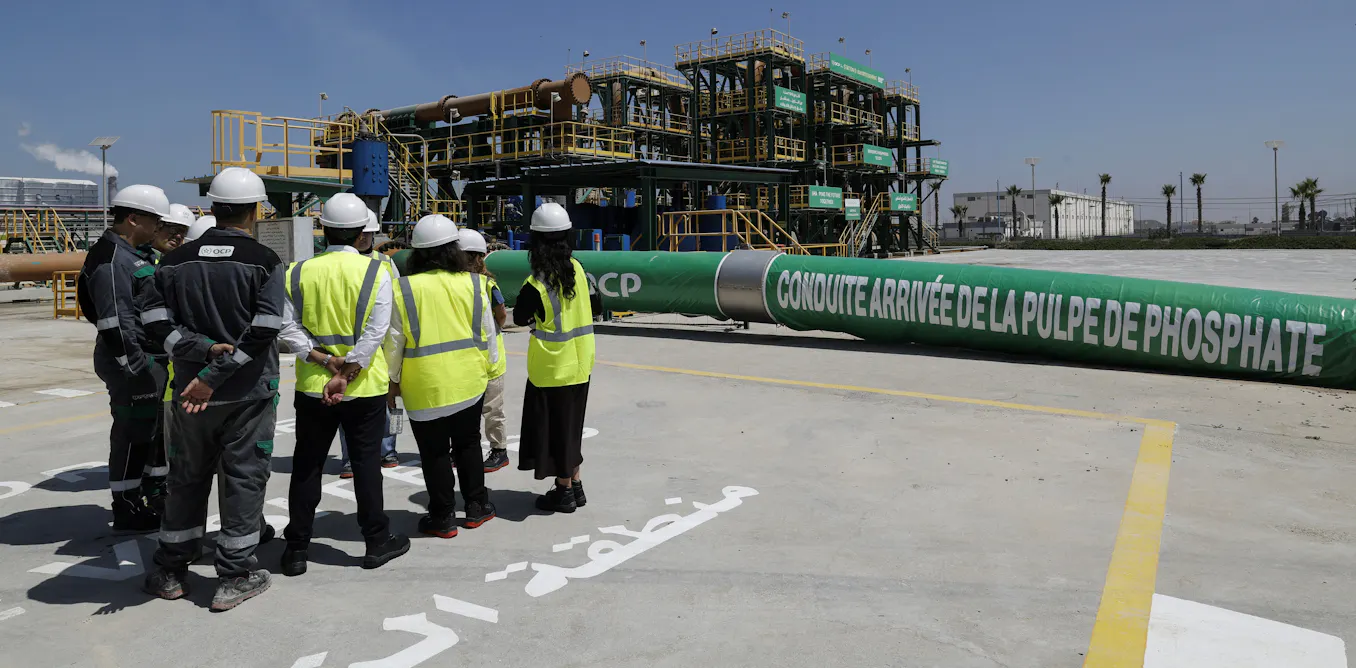
African countries hold deposits of 41 minerals used in electric vehicles, batteries, solar panels, wind turbines and electricity grids, yet most still sell them abroad raw or lightly processed, a World Bank-commissioned study finds.
The research found deposits, reserves or production of at least one transition mineral in 48 African countries. South Africa had 24 of the 41 minerals; Nigeria and the Democratic Republic of Congo each had 14.
Collectively, the continent holds about 96% of global platinum group metal reserves, 77% of phosphate reserves and 55% of cobalt reserves.
Phosphate and cobalt are used in electric vehicle batteries, while platinum is used in technologies that produce and use green hydrogen.
But most countries individually accounted for only small global shares.
That matters because small national volumes can make it harder for a country acting alone to influence buyers, attract large processing plants, build complete supply chains or compete with established producers elsewhere.
Collective mineral strength, shallow value capture
Trade data reinforces the finding. Apart from South Africa, Nigeria and the DRC, most African countries exported less than 1% of each mineral globally.
For several minerals, including nickel, rare earths, silver and lithium, Africa’s five largest exporters together supplied less than 10% of world exports.
The researchers suggest African countries could strengthen their position in mineral markets by coordinating trade policies rather than acting separately.
Private companies hold mining licences, but permission to extract minerals does not always include an unrestricted right to export them, giving governments some scope to coordinate trade rules.
How this would work alongside companies’ existing rights, and whether it would require their agreement, needs further study.
A deeper weakness the study identifies is limited local processing, which mainly happens in a few countries such as South Africa, the Democratic Republic of Congo, Zambia and Zimbabwe.
The processing these countries do often involves crushing and concentrating ore rather than making products from the mineral.
The cost of that gap is measurable. Congolese cobalt can sell for US$5.80 per kilogram at the point of extraction, but after local refining the price rises to US$16.20 per kilogram, nearly tripling its value.
A green economy built on old dependencies
Asia, and China in particular, is the leading importer of 16 minerals from Africa, taking over 30% of those exports on average and ranking as the second biggest buyer of six other green transition minerals.
The research found China absorbed over 40% of Africa’s annual mineral ore exports.
Between 2017 and 2023, Africa’s share across the green technologies studied remained below 0.4%, while its export share was below 1% in every category. African countries currently participate in the green economy more as consumers than as producers.
African governments are asserting agency
African governments are responding. The study found they are changing mining laws, restricting exports, taking ownership stakes and forming partnerships to capture more value from their minerals, seeking to keep processing, investment, jobs and income at home.
Most are acting individually, although some are working together across borders.
Acting alone has limits. Many countries supply too little to influence large international buyers, and if one country demands higher prices or local processing, buyers can shop elsewhere.
Many also lack reliable electricity, affordable loans, transport and skilled workers to process minerals and make components.
What needs to happen next
The researchers argue deeper regional cooperation would help African countries build industries rather than simply trade more easily with one another, a central thesis of a related study, Integrating Africa: From Threads to Hubs.
Pooling mineral supplies, markets, infrastructure and skills could lower costs and give them more power when negotiating with global companies, and a shared processing centre serving countries across Africa would also help the continent.
To make this happen, African finance and mineral institutions and national governments must agree on common priorities and similar rules about how minerals are processed and how environmental damage is managed.
Regional development banks and other African financiers could help fund shared electricity, transport and mineral-processing infrastructure, while universities and businesses develop the technical skills these industries need.
Partnerships with foreign governments and companies should also go beyond extracting and exporting minerals, the researchers write, and include commitments to process more minerals in Africa, share technology and know-how, train workers, and help local firms become suppliers to emerging green industries.
Source: The Conversation
Comments