

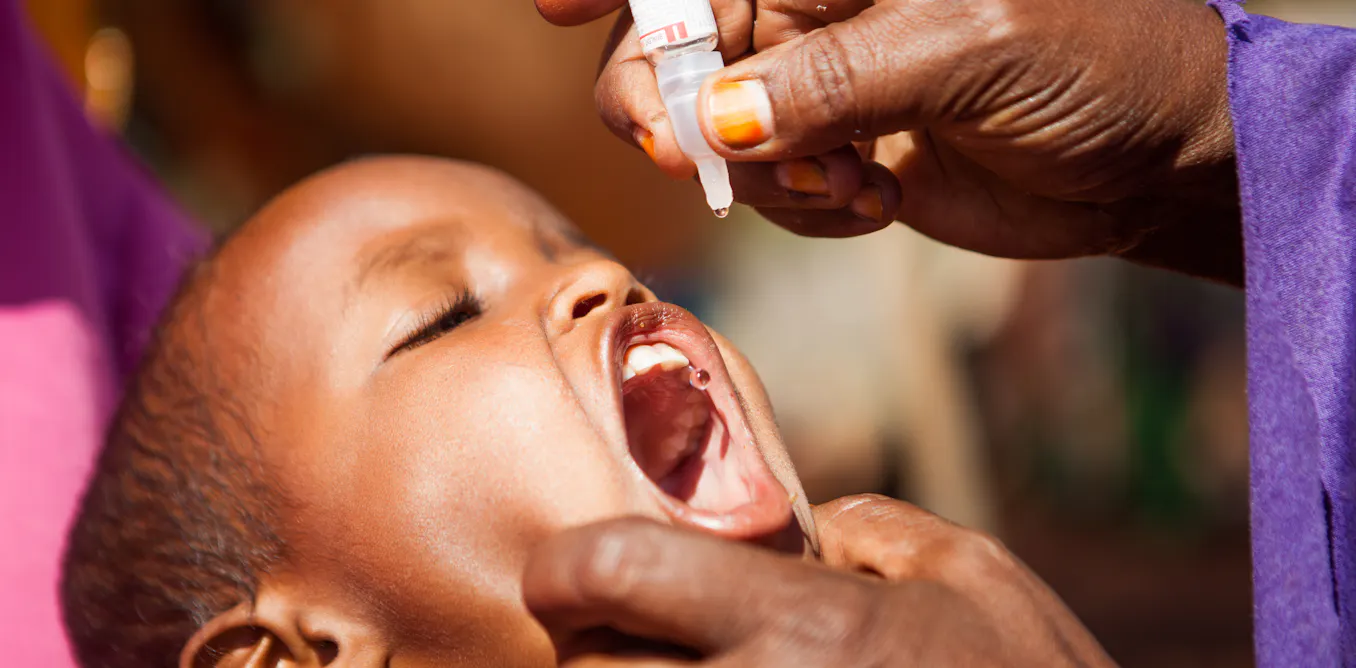
About 7.1 million African children under one — 15.6% — got no routine vaccine dose in 2025, says Africa CDC, which launched a 2026–2030 Continental Immunisation Strategy to reverse the decline.
The strategy, developed with input from immunisation practitioners, researchers and advisers, covers six areas: financing and political commitment; data and digital systems; life-course vaccination integrated with primary healthcare; community engagement; vaccine manufacturing and supply; and emergency preparedness and epidemic-ready immunisation systems.
The practitioners who contributed to the strategy have identified five priorities that cut across all six areas: sustainable domestic financing, fit-for-purpose digital systems, integration with primary healthcare, genuine community partnership, and vaccine sovereignty linked to epidemic preparedness.
In a report from The Conversation, the authors — who now support the strategy’s implementation — argue that the greatest threat to immunisation in Africa is not whether effective vaccines exist, but whether countries can finance and deliver them reliably.
Financing pressures
International partners including Gavi, the Vaccine Alliance, Unicef and the World Health Organization have helped countries introduce vaccines, procure doses and strengthen delivery systems. That support remains invaluable, the authors write, but it cannot substitute for predictable national budgets.
Governments must service debt while also responding to food insecurity, climate shocks and conflict, and financing education, infrastructure and other essential health services. Growing populations increase the number of children who need routine vaccines.
Every interest payment reduces the funding available for vaccines, cold-chain equipment, transport and health workers.
The authors argue for using scarce resources better, noting that immunisation returns about US$54 for every dollar invested.
Predictable domestic financing, they write, gives countries more control over priorities, makes programmes less vulnerable to donor cycles and strengthens accountability to citizens.
Digital systems and data
Many programmes still rely on paper registers kept by health workers. These records are increasingly ill-suited to highly mobile populations, expanding vaccine schedules and the need to identify missed individuals quickly.
Electronic immunisation registries linked, with privacy safeguards, to birth registration and national health-information platforms can show who received which vaccine — or missed a dose — and improve stock management.
Rwanda, for example, integrated its vaccine registry with electronic birth systems in 2022.
Life-course vaccination
The original Expanded Programme on Immunisation was designed primarily to protect infants against a few childhood diseases, often through fixed health facilities and periodic outreach. Today’s realities are different.
Africa has a rapidly growing and urbanising population, and vaccine schedules now include adolescents, pregnant women and adults.
Vaccination should therefore become a routine part of primary healthcare throughout life. The Immunisation Agenda 2030 supports expanding vaccination across the life course and linking it with other essential services.
Community health workers are especially important to connect families with services. Nigeria’s community health influencer programme, for example, identifies zero-dose children and links them to healthcare services.
Community trust
Immunisation programmes succeed when people trust the vaccines, the health workers who provide them and the institutions running the programme. People are more likely to accept vaccines when they feel respected, listened to and involved.
Religious leaders, traditional authorities, teachers, civil-society organisations, youth groups and community health workers can all help.
In Sierra Leone’s Kailahun District, rumours that HPV vaccination caused infertility led parents to refuse consent and girls to avoid school. Health teams listened to concerns and worked through trusted local voices to rebuild confidence.
In northern Nigeria, traditional and religious leaders have similarly helped vaccination teams address rumours and identify missed children.
Trust is built through consistent service quality and partnership; it cannot be manufactured during an emergency.
Vaccine manufacturing
COVID exposed Africa’s dependence on imported products and the vulnerability of global supply chains. The continent still imports about 99% of the vaccines it uses.
The Continental Immunisation Strategy therefore supports the African Union’s ambition to produce 60% of Africa’s vaccine needs locally by 2040.
Africa is not starting from zero. Existing or expanding capabilities include the Institut Pasteur de Dakar in Senegal, Biovac and Aspen Pharmacare in South Africa, and manufacturers in Egypt and Tunisia.
But sustainable manufacturing requires predictable demand, pooled procurement, technology transfer, skilled workforces, strong regulators and access to regional markets.
Reliable continental supply is most valuable when countries can quickly identify a threat, decide how vaccines should be used and deliver them equitably across borders.
Implementation and measurement
The Continental Immunisation Strategy already recognises these priorities. The task now is to come up with costed national plans, clear responsibilities, measurable milestones and transparent annual reporting.
Governments must lead, while development partners align their support behind country priorities.
Success will be measured by whether a child in a remote village, an adolescent in an informal settlement, a pregnant woman in a fragile setting and an older person at risk can receive the vaccines they need, when they need them.
The article was co-authored by Dr Folake Olayinka and Dr Chris Ngwa Akonwi.
Charles Shey Wiysonge does not work for, consult, own shares in or receive funding from any company or organisation that would benefit from the article, and has disclosed no relevant affiliations beyond his academic appointment.
Looking ahead
Source: The Conversation
Comments