

A review of 324 studies on post-harvest losses across the global south found the evidence base for tackling food loss and waste is fragmented, uneven and hard to compare.
The paper, published by agriculture, indigenous knowledge and food security researchers, examined studies on the scale, causes and drivers of post-harvest losses across food commodities and regions.
Its authors report that estimating the true scale of the problem is difficult because studies measure losses differently, examining different commodities and stages of the value chain and using different indicators and methods.
What are the main drivers of these losses?
Research has concentrated heavily on storage losses in major staples such as maize, rice and pulses, leaving evidence gaps for fruits, vegetables, roots and tubers, animal products and other foods.
Even so, the review identified patterns. Post-harvest losses occur throughout the food supply chain, from harvesting and handling to transportation, storage, processing and marketing.
And the scale of loss varies substantially by food group.
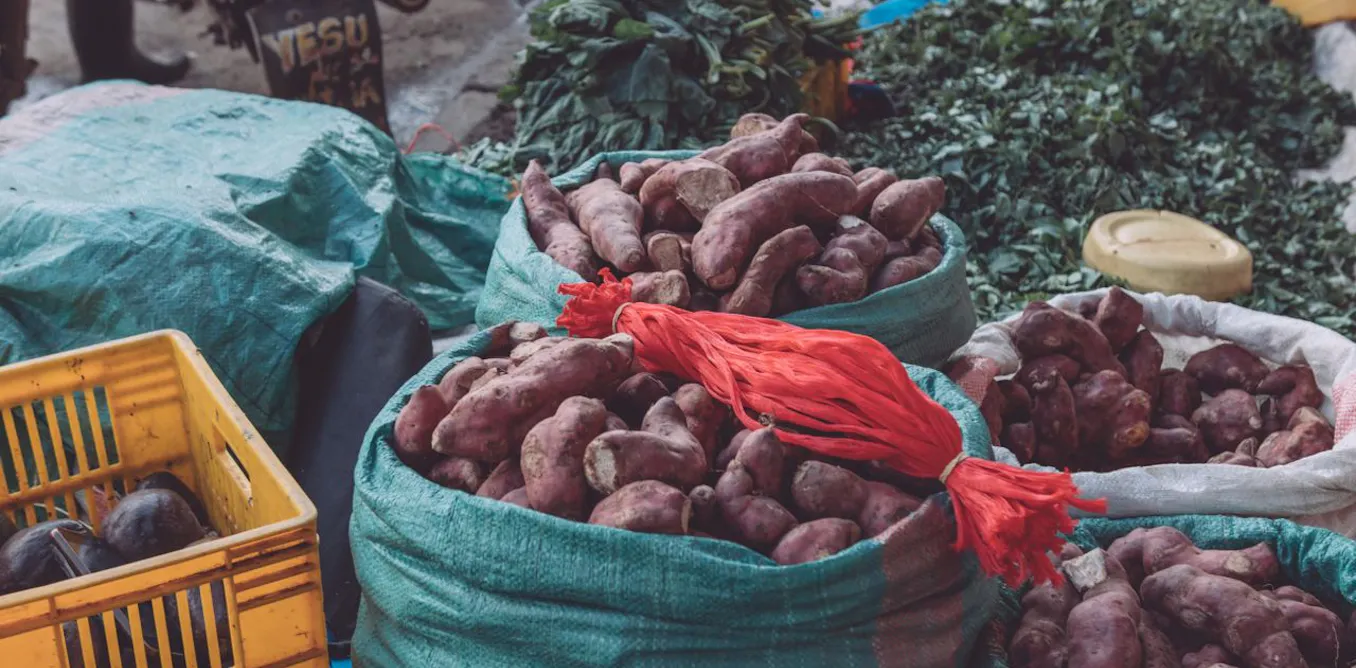
Without interventions, estimated losses were about 27.7% of cereals, 35.1% of vegetables, 25.8% of fruits and 42.9% of roots and tubers.
With mitigation measures such as improved harvesting and handling practices, hermetic storage technologies, cold-chain infrastructure, better packaging, and enhanced processing and transportation systems, those figures fell to about 8.2%, 7.3%, 6.2% and 11.5% respectively.
The authors also found that post-harvest losses are rarely caused by a single factor. Their study identified interconnected infrastructure, technological, environmental, financial and market constraints.
Poor roads, inadequate warehouses, limited cold storage and inefficient transport expose food to physical damage and spoilage, while inadequate drying, packaging and handling add to the losses.
Climate variability increases the risk: high temperatures, excessive moisture, floods and droughts can accelerate deterioration.
What are the four biggest challenges – and opportunities?
From that diagnosis, the researchers set out four priorities.
The first is measuring losses accurately. Before governments can decide where to invest, they need reliable information about where losses occur and how large they are.
Standardised, region- and commodity-specific methods for measuring post-harvest losses would make evidence more comparable and help governments target resources more effectively, the authors argue.
They call on researchers, national statistical agencies, governments, international organisations and commodity-sector stakeholders to develop those methods together, with national statistical offices, agricultural research institutions, universities, extension services and value-chain organisations gathering the evidence through:
- farm and household surveys
- field-based measurement
- storage and market assessments
- monitoring across different stages of the supply chain
The second is infrastructure that keeps food moving and preserves its quality. Storage facilities, rural roads, processing facilities and cold chains are not secondary agricultural infrastructure, the authors write, but part of the food-production system.
They point to evidence that improved storage, drying, packaging and cold-chain systems substantially reduce losses, improve farmers’ incomes and increase access to higher-value markets.
The third is making appropriate technologies affordable and combining them with Indigenous knowledge. Not every solution needs to be high-tech.
Hermetic storage, or airtight sealing, solar drying, improved packaging and low-cost cooling can complement practices such as drying, smoking, salting and fermentation.
Those approaches would be more accessible to smallholders when adapted to local conditions, the authors write, and can be encouraged through practical demonstrations and locally adapted training.
They list farmer extension services, demonstration farms, farmer organisations and cooperatives, local processors, NGOs, private-sector suppliers and digital platforms as training avenues.
The fourth priority is finance, extension and inclusive innovation. Many smallholder farmers lack the finance and technical support needed to invest in improved storage and processing technologies.
Price fluctuations and harvest gluts leave farmers with more produce than markets can absorb, increasing losses of perishable foods before they are sold, and credit constraints can prevent farmers from adopting post-harvest technologies.
Governments and financial institutions can lower those barriers through targeted subsidies, affordable loans, grants and risk-sharing mechanisms, the paper states, while extension services should help farmers choose, use and maintain appropriate technologies.
On gender, the authors note that women play important roles in post-harvest handling and need to be explicitly included in technology design, training and financing. They propose:
- agricultural and financial policies that require women’s representation in technology design and extension programmes
- improving women’s access to credit, subsidies and training
- mandated monitoring of how men and women adopt and benefit from technology
How could priorities be funded?
On funding, the review argues that public investment should not focus only on buying technologies. It could support rural infrastructure, research, extension and enabling policies, while development finance could provide grants, concessional loans and guarantees for post-harvest investments.
Private-sector partnerships can help with storage, processing, logistics and cold-chain services where viable markets exist.
The authors want funding to move beyond isolated technology projects such as one-off storage or processing equipment schemes, and toward integrated programmes combining technology, farmer training, finance, market access and maintenance services.
Investments should support entire value chains, linking farmers to storage, processing, transport and reliable markets, which would make post-harvest loss reduction part of broader food security, climate resilience and rural development strategies.
The paper’s central message, its authors write, is that feeding a growing population is not only about producing more food. It is also about losing less of what farmers already produce.
Source: The Conversation

Comments