

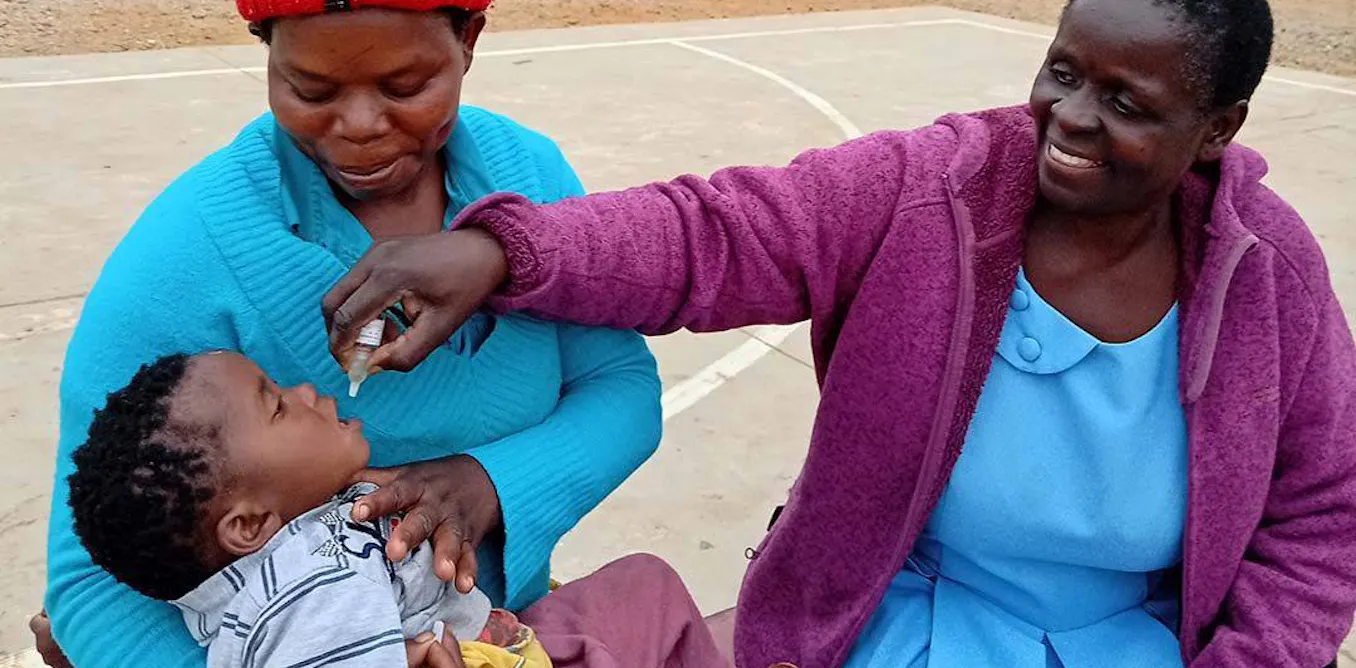
A tetanus-diphtheria vaccine stable without refrigeration generated strong immune responses in its first human trial, a proof of concept that could loosen vaccine delivery’s dependence on the cold chain where electricity and transport are unreliable.
The experimental product, known as SPVX02, was developed by the UK biotechnology company Stablepharma.
Sixty healthy adults in the UK were randomly assigned to receive either the fridge-free formulation or one of two licensed tetanus-diphtheria vaccines, according to results published in eClinicalMedicine in September 2026.
The experimental formulation was well tolerated and produced what the researchers described as excellent immune responses.
Why is vaccine storage such a big issue?
The technology relies on trehalose, a naturally occurring sugar that protects some plants and organisms during drying. The vaccine is freeze-dried with trehalose into a powder, stored without refrigeration and mixed with water before injection.
Laboratory stability data gathered before the trial showed the formulation can remain stable for at least 24 months at temperatures of up to 30°C.
That matters because vaccines generally must be kept between 2°C and 8°C as they move from manufacturer to refrigerated vehicles, national and district cold rooms, health facility fridges and outreach sessions, with some requiring much lower temperatures.
The uninterrupted refrigeration system, known as the cold chain, depends on reliable electricity, refrigerators and freezers, temperature monitoring devices, cold boxes, vehicles, fuel, maintenance technicians and trained health workers.
Failure at any point can leave doses unusable or of uncertain quality.
The demands are hardest to meet in remote communities, areas affected by conflict and facilities with unreliable electricity.
In a report from The Conversation, immunisation experts Charles Shey Wiysonge and Chinwe Juliana Iwu-Jaja noted that after fighting erupted in Sudan in April 2023, Unicef reported that unstable electricity and shortages of generator fuel had compromised the central cold chain holding millions of vaccine doses.
What’s in the pipeline?
Immunisation programmes already use measures that provide some flexibility. The vaccine vial monitor, a small heat-sensitive label attached to a vial, changes colour in response to cumulative heat exposure, helping health workers decide whether a dose can still be used.
It does not directly measure potency or detect freezing, which must be monitored separately.
A second approach, the controlled temperature chain, allows specifically approved vaccines to be kept outside the standard 2°C to 8°C range for a limited, monitored period immediately before administration.
Africa is not starting from zero on this front.
MenAfriVac, the meningitis A vaccine developed for the continent, was authorised for use at temperatures up to 40°C for four days immediately before administration under a controlled temperature chain, and its use in Benin showed that vaccinators could reach remote populations with a lighter logistical burden.
Other vaccines have also been prequalified by the World Health Organization for controlled temperature chain use. The fridge-free approach goes further, seeking to remove refrigeration entirely throughout prolonged storage and distribution.
What could it mean for African countries?
If subsequent evidence and regulatory reviews are favourable, the technology could make delivery more flexible in several ways. In the Sahel and the Horn of Africa, mobile teams could reach pastoralist and nomadic communities without depending on ice-pack production.
In island, mountainous and sparsely populated settings, vaccines could tolerate longer journeys. In conflict and humanitarian emergencies, doses could be positioned closer to displaced populations even where electricity and secure transport are intermittent.
The approach could also ease pressure on crowded refrigerators in fast-growing urban areas and during mass campaigns, and lower requirements for refrigeration, fuel, equipment and specialised transport could reduce costs and the environmental footprint of delivery.
The same solution might eventually apply to other vaccines and temperature-sensitive medicines, though each product would need its own evidence and approval.
What’s already in place?
Fridge-free does not mean logistics-free, and a single fridge-free vaccine would not make an entire national programme fridge-free. Health workers usually deliver several vaccines together, most of which would still require refrigeration.
Ambient temperatures in many African settings frequently exceed 30°C, and claims of stability at higher and fluctuating temperatures, and after repeated heat exposure, need independent verification under realistic transport and storage conditions.
A powdered vaccine must also be mixed with the correct amount of a specified sterile liquid before injection. Reconstitution can introduce dosing errors or contamination, and unused reconstituted vaccine may have to be discarded quickly.
Countries may therefore run mixed systems, with different handling rules, for many years before all vaccines go fridge-free, with the earliest gains likely coming from more flexible last-mile outreach rather than the removal of cold rooms.
Affordability will be decisive. Countries will still need reliable forecasting, procurement, stock management, safety surveillance and regulation, and the technology will not overcome shortages of health workers, inaccessible services, missed opportunities for vaccination or public mistrust.
The product is not ready for African immunisation programmes yet. Further studies are needed, including larger and more diverse populations that reflect the intended users of the vaccine.
The experts argued that further clinical development should focus on which products and settings offer the greatest benefit and should evaluate safety, feasibility, acceptability, costs, wastage, and effects on coverage and equity.
But this isn’t a silver bullet. Why?
Source: The Conversation


Comments