

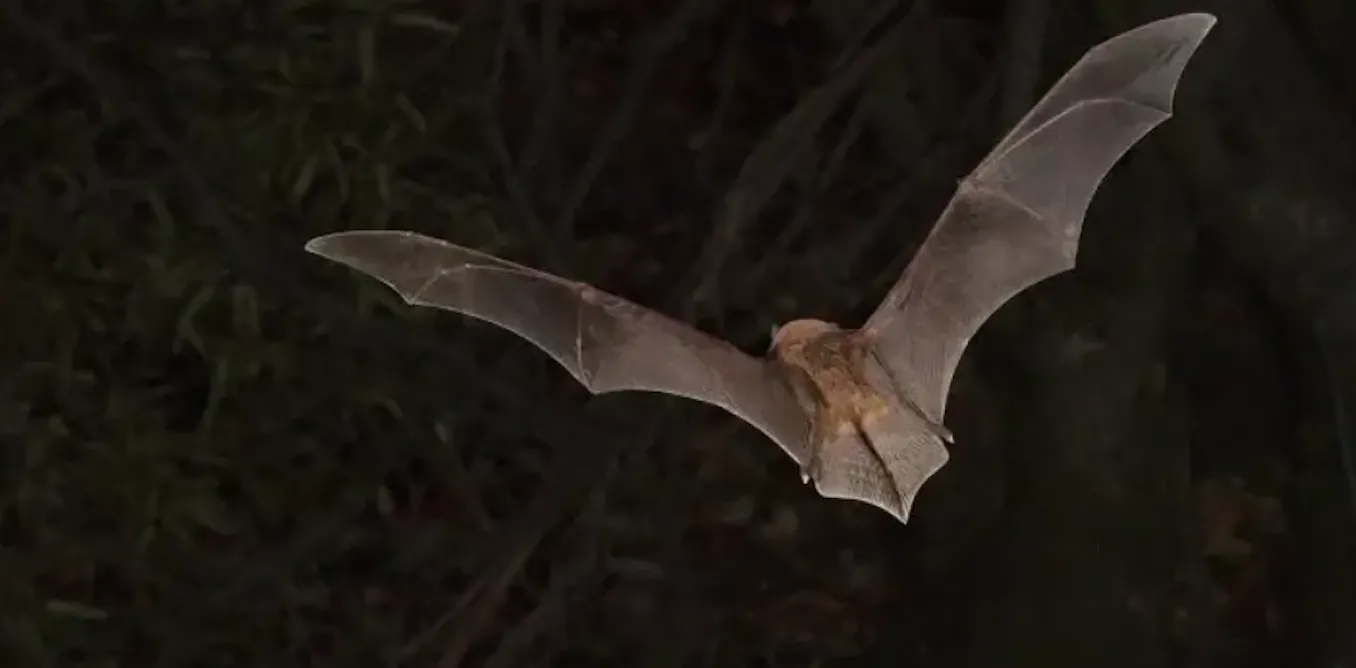
Only about 5% of sub-Saharan Africa’s areas with suitable caves are also expected to keep a climate fit for cave-dwelling long-fingered bats around 2070, a modelling study projects.
When the surrounding landscape’s vulnerability to future change is factored in, that overlap falls to roughly 2%.
The research, led by Mariëtte van der Walt with co-author Mark Keith, paired projections of future climate with the locations of caves and rocky roosting habitat.
Van der Walt has studied bats since 2017, and the work grew from a question about whether the places with the right climate would be the same places with caves.
The team drew on an existing database of 551 reliable records of where these bats, the Miniopteridae family, have been found across sub-Saharan Africa.
Each location was matched to its local climate, such as temperature and rainfall, to establish the conditions the bats need. The model then asked where those conditions would persist around 2070 if the world continues warming at a moderate rate.
Depending on how the climate changes in the coming decades, the area with suitable conditions could shrink by 36% to 64% by 2061-2080, the study found. What remained suitable was concentrated mainly in southern Africa, the eastern highlands and Madagascar.
Comparing those future climate zones with the locations of suitable caves and rocky landscapes produced the sharper result.
The places where bats might find the right climate and the places where they might find a home barely overlapped, van der Walt writes.
She describes the findings as a double challenge: climate change could shrink the areas where the bats can live, and even where conditions stay suitable, there may be no caves.
Three things would need to come together for a place to serve as a refuge — a suitable climate, somewhere to roost, and the ability to move between the places they need.
Movement is not a minor detail for these animals. Some cave-dwelling bats depend on a network of caves spread across the landscape, moving between them at different times of the year, so the ground between caves matters as well.
A cave may offer ideal shelter, but if roads, cities or agriculture have fragmented the surrounding landscape, reaching another suitable cave becomes harder.
Flight costs energy, and longer journeys between places to feed, rest and reproduce would draw on reserves the animals already need for coping with a changing climate.
Van der Walt notes that bats are particularly exposed to environmental change because of slow reproductive rates, dependence on stable roosts and sensitivity to climatic extremes that shape insect availability, their main food source.
She argues that cave-dependent bats cannot survive in climatically suitable areas without access to suitable roosts — a factor she says has been overlooked in research on how rising temperatures will affect them.
She extends the point beyond bats. A frog may need a particular wetland, a bird a particular type of forest, a plant a certain kind of soil.
As the climate changes, the conditions these species need may shift while their homes do not.
For conservation planning, she writes, it is not enough to ask where the climate will be suitable for wildlife in future; the question is whether wildlife will have somewhere to live when it gets there.
A problem that goes beyond bats
Source: The Conversation

Comments