

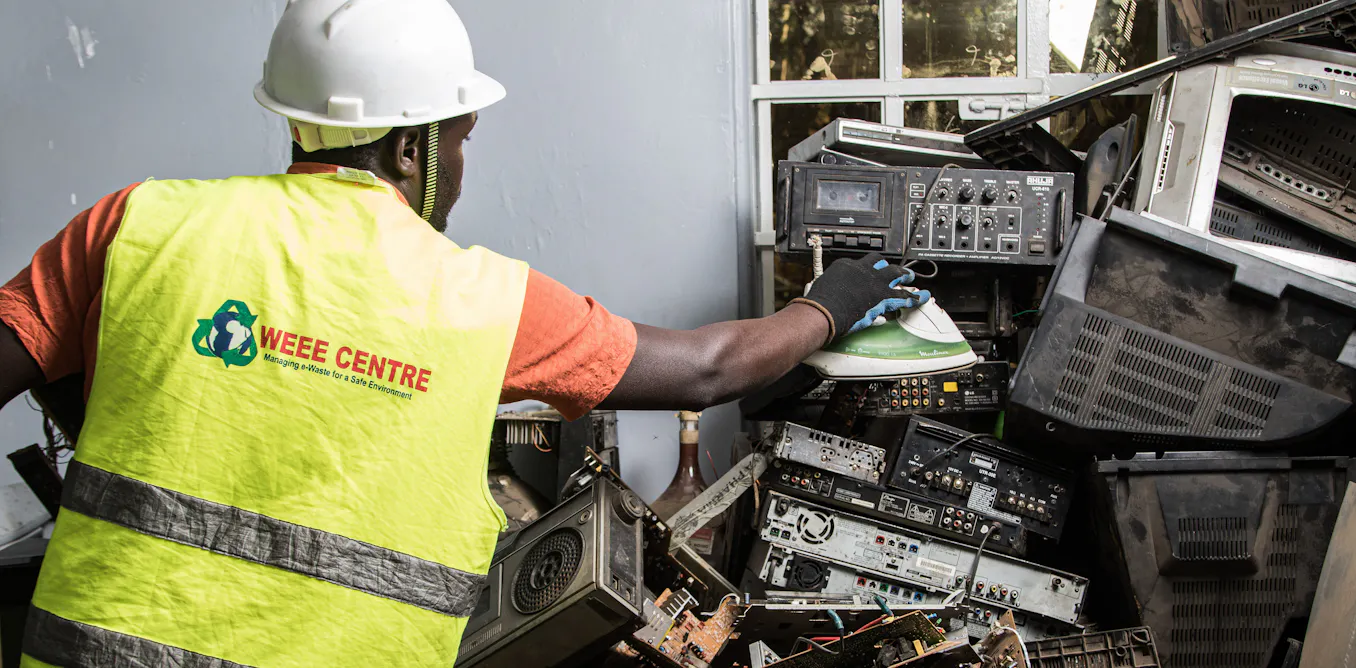
A broken refrigerator in an African city is often repaired and resold, stripped for spare parts or collected for its metal rather than discarded.
Old clothes are altered into new garments, and leftover crop stalks and leaves become animal feed, compost, cooking fuel or biogas.
These practices are frequently driven by limited incomes and the high cost of replacing appliances and clothing, and sometimes by unreliable waste collection.
They are also examples of a circular economy, in which products and materials are kept in use for as long as possible rather than extracted, sold, used and thrown away.
Circular economy specialists writing for The Conversation argue that these everyday practices, not imported formal waste-management systems, are the foundation on which the continent’s circular economy should be built.
Their research examined policies and examples across African countries to assess how circular practices are developing. It found that adoption is uneven.
Thirty-four African countries have banned plastic bags to some degree. Rwanda, Ethiopia, Ghana, Nigeria, South Africa and Morocco have set up facilities to recycle electronic waste and projects that turn waste into energy.
Kenya has rules making manufacturers responsible for collecting and recycling their products after use. Somalia, Sudan and Congo, by contrast, still depend heavily on a make-use-discard system.
Progress is possible but uneven
Several countries have introduced policies supporting aspects of a circular economy. Rwanda has acted against plastic pollution and developed facilities for processing electronic waste.
South Africa has rules requiring producers of goods to help manage and pay for their products after sale, compelling them to support collection, reuse and recycling. Kenya has taken significant measures against single-use plastic bags.
In Ghana, the National Plastic Action Partnership brings together government, business and civil society. Nigeria is developing a national circular economy roadmap, and Nigerian groups such as Wecyclers have connected informal collectors with recycling markets.
The researchers identify greater opportunities in agriculture and food systems, manufacturing, energy, and water and sanitation. But they caution that a policy on paper does not automatically produce an effective system.
Waste collection remains inadequate in many African cities, recycling facilities on the continent are few, and local authorities often lack the funds, equipment and technical capacity to enforce regulations.
Political instability and unreliable electricity supplies can make long-term investment in circular economy projects difficult.
What needs to happen next
The research argues that Africa’s move towards a circular economy must start with the basics: collecting waste, sorting it properly and disposing of it safely.
Expensive technologies will not work well if waste is never collected or is too contaminated to recycle.
The African Union’s Continental Circular Economy Action Plan contains useful ideas, but its success will depend on how well it is put into practice in local communities.
For many countries, improving everyday waste services should come before investing in high-tech solutions.
Informal workers, including reclaimers, repairers and second-hand traders, are already central to Africa’s circular economy, according to the research.
It says governments should support them with training, safer working conditions, facilities to work in, fair compensation and social protection, and that including these workers in formal systems while protecting their livelihoods can help build a more inclusive and effective circular economy.
The researchers also argue that success should be judged on more than how much waste is kept out of dumps.
Policymakers need to ensure that people benefit: working conditions of recyclers should improve, recovered products must be affordable and local recycling enterprises must remain viable.
Their conclusion is that the foundations of a circular economy already exist in African countries, supported by a strong culture of repairing and reusing goods and by local experts and entrepreneurs who turn discarded materials into value.
The task, they write, is to support these efforts without destroying the social and economic systems that sustain them.
Source: The Conversation


Comments