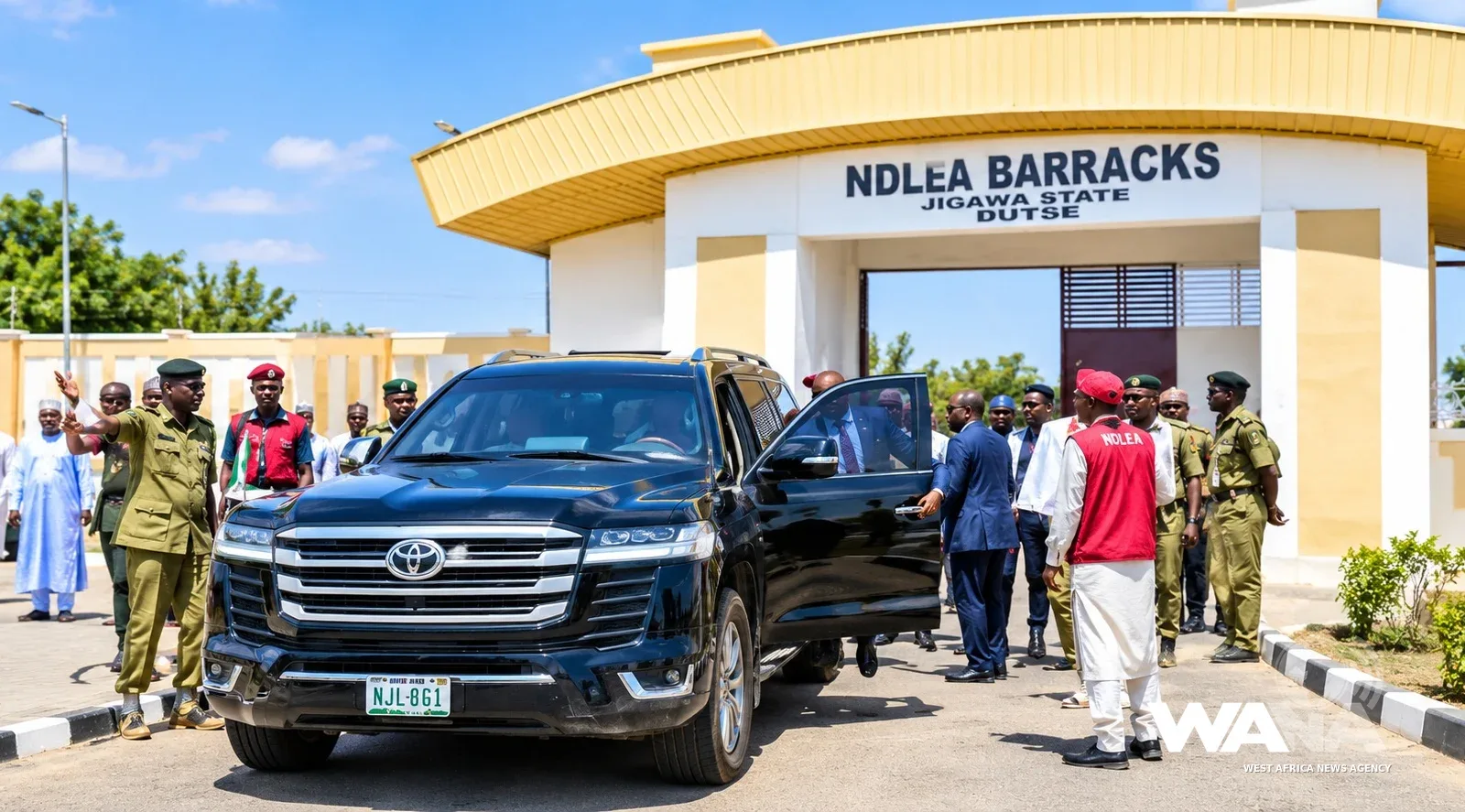
Vice-President Kashim Shettima has warned that the National Drug Control Master Plan 2026–2030 risks becoming “a declaration of good intentions” without credible financing, as the federal government launched the framework in Abuja on Monday.
Shettima, represented at the launch by Dr Modibbo Aliyu Umar, Special Adviser to the President on Special Duties, urged stakeholders to implement the plan, themed ‘Strategic Action for a Drug-Free Nation.’
He said the framework aims to consolidate the gains of the 2021–2025 plan and address its shortcomings.
What the last plan recorded
The outgoing framework’s evaluation, cited by NDLEA Chairman Buba Marwa, recorded more than 77,700 arrests, seizures of over 14.8 million kilogrammes of illicit drugs and substances, more than 14,200 convictions, and treatment for over 32,400 people.
Marwa also cited an April 28, 2026 operation with the US Drug Enforcement Administration and partners in Switzerland, France and Greece that dismantled a transnational criminal organisation.
The operation led to the arrest of alleged drug baron Amadi Simon in Switzerland and two female kingpins in Anambra and Delta States, according to the NDLEA chairman.
He further said a Nigerian-Mexican methamphetamine network and a clandestine laboratory in Ogun State involved drugs and chemicals valued at about $362.9 million.
Six pillars, and a split approach to offenders
The new plan has six pillars, including supply reduction, demand reduction and disruption of the illicit drug economy.
Attorney-General of the Federation and Minister of Justice Lateef Fagbemi described the NDLEA as the bedrock of Nigeria’s drug control architecture and said the master plan would strengthen the agency by integrating enforcement with public health, education, social development, financial investigation and community participation.
Fagbemi said drug control must distinguish between organised traffickers and people suffering from substance use disorders.
Traffickers and financiers, he said, must face the full weight of the law, while those with drug dependence require treatment, counselling, rehabilitation and community reintegration.
The Ministry of Justice, he added, will collaborate with the NDLEA and the judiciary to ensure speedy and fair prosecution of drug-related offences under the Administration of Criminal Justice Act.
Legislative and regional backing
The National Drug Law Enforcement Agency Bill, 2026, has passed second reading in the National Assembly. The House of Representatives Committee on Drugs and Narcotics, represented by Hon. Dominic Okafor, pledged legislative support, oversight and policy advocacy for implementation.
The ECOWAS Commission was represented at the launch by Commissioner for Human Development and Social Affairs Prof. Nassirou Bako-Arifari, who said the plan’s success depends on sustained political will, adequate funding and cooperation among governments, civil society, communities, the private sector and international partners.




Comments