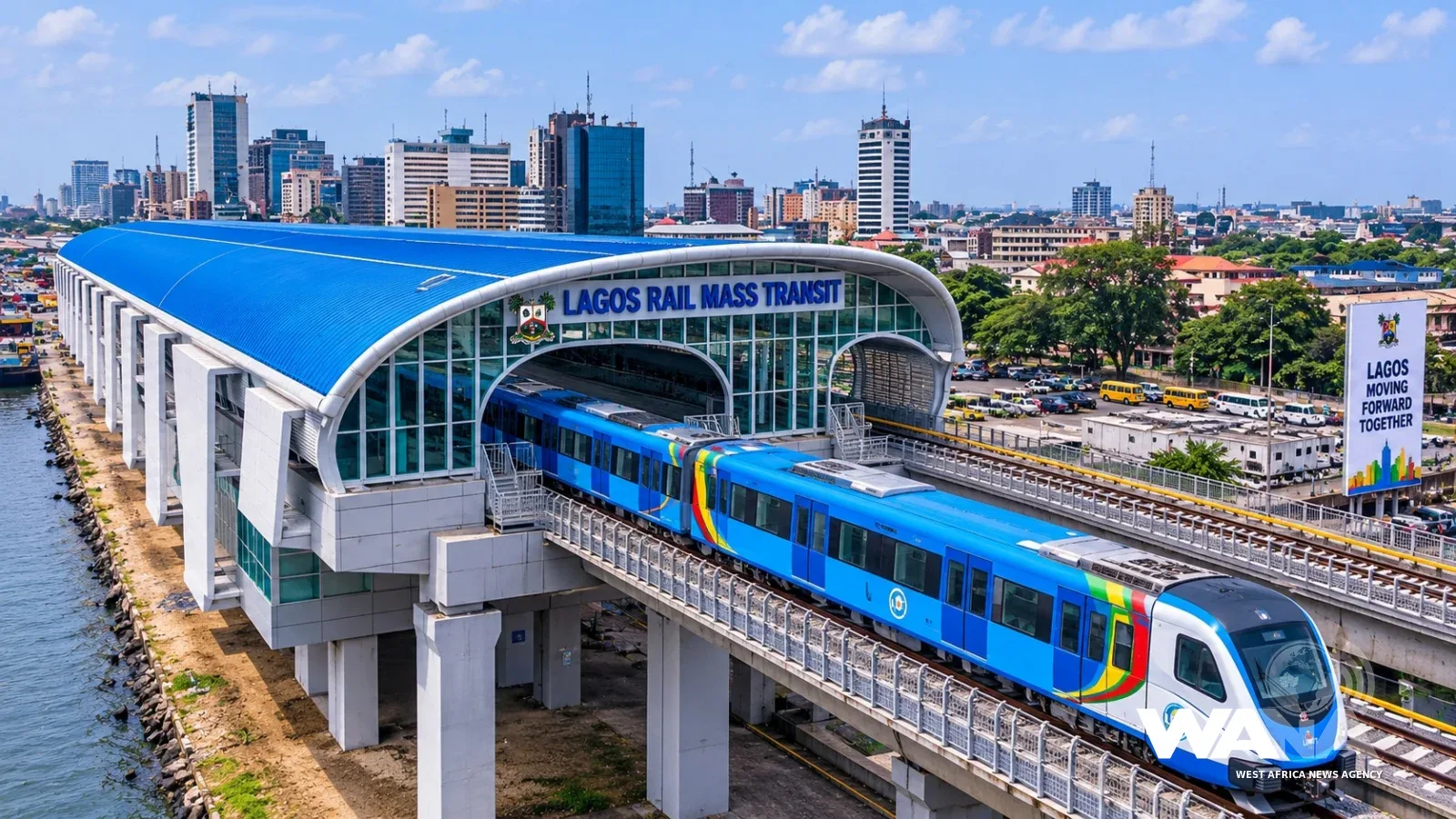
The first three stations of the Lagos Blue Rail Line’s second phase are scheduled to begin operations by the end of February 2027, according to the project’s timeline.
Those stations — Festac, Alakija and Trade Fair — sit within a 14-kilometre extension that will eventually carry the line from Mile 2 to Okokomaiko, with three further stations planned at Volkswagen, LASU and Okokomaiko.
The Blue Line currently runs along a 27-kilometre corridor from Marina to Mile 12.
Separately, construction work on the Marina and Mile 2 transport interchange hubs began in July 2024.
The groundbreaking took place on July 2, 2024, presided over by Commissioner for Transportation Oluwaseun Osiyemi, with representatives of the French development agency AFD and the Lagos Metropolitan Area Transport Authority present.
The interchanges are described as part of the Lagos Strategic Transport Masterplan, which is intended to integrate road, rail, water and non-motorised transport. The project is funded through an AFD credit alongside counterpart funds from the state government.
The two hubs sit at either end of the operational Blue Line corridor — though the facts available do not detail how the interchanges will be operated or when they are due to be completed.
The Blue Line is not the only rail route in the state’s programme. The Red Line is a 37-kilometre route from Agbado to Oyingbo running along the Nigerian Railway Corporation corridor.
The transport commissioner said phase 1 of the Red Line is in operation and has been expanded with 24 new coaches.
What the record does not show is how the phase 2 stations will be served once they open, what rolling stock will be assigned to the extended route, or how fares will be set across the new segment.
Those details are absent from the material available, and the February 2027 date applies only to the first three stations — no opening date is given for Volkswagen, LASU and Okokomaiko.
The interchange programme and the rail extension are being pursued on different tracks: the interchanges broke ground in mid-2024, while the phase 2 stations carry a 2027 operational target.
Whether the two timelines converge — that is, whether the Marina and Mile 2 hubs will be ready to receive passengers when the new stations come online — cannot be established from the facts at hand.
The full six-station extension to Okokomaiko has no stated completion date.
The funding structure — an AFD credit plus state counterpart funds — applies to the interchange project.
The financing arrangements for the phase 2 rail extension itself are not recorded in the available facts, nor is the cost of the 14-kilometre segment or the six new stations.
What is clear is the sequence the state has set out: three stations by the end of February 2027, three more at some later point, and two interchange hubs under construction since July 2024 to tie the rail corridor into road, water and non-motorised transport.
The Red Line, already running phase 1 with its expanded coach fleet, proceeds in parallel along the NRC corridor.

Comments