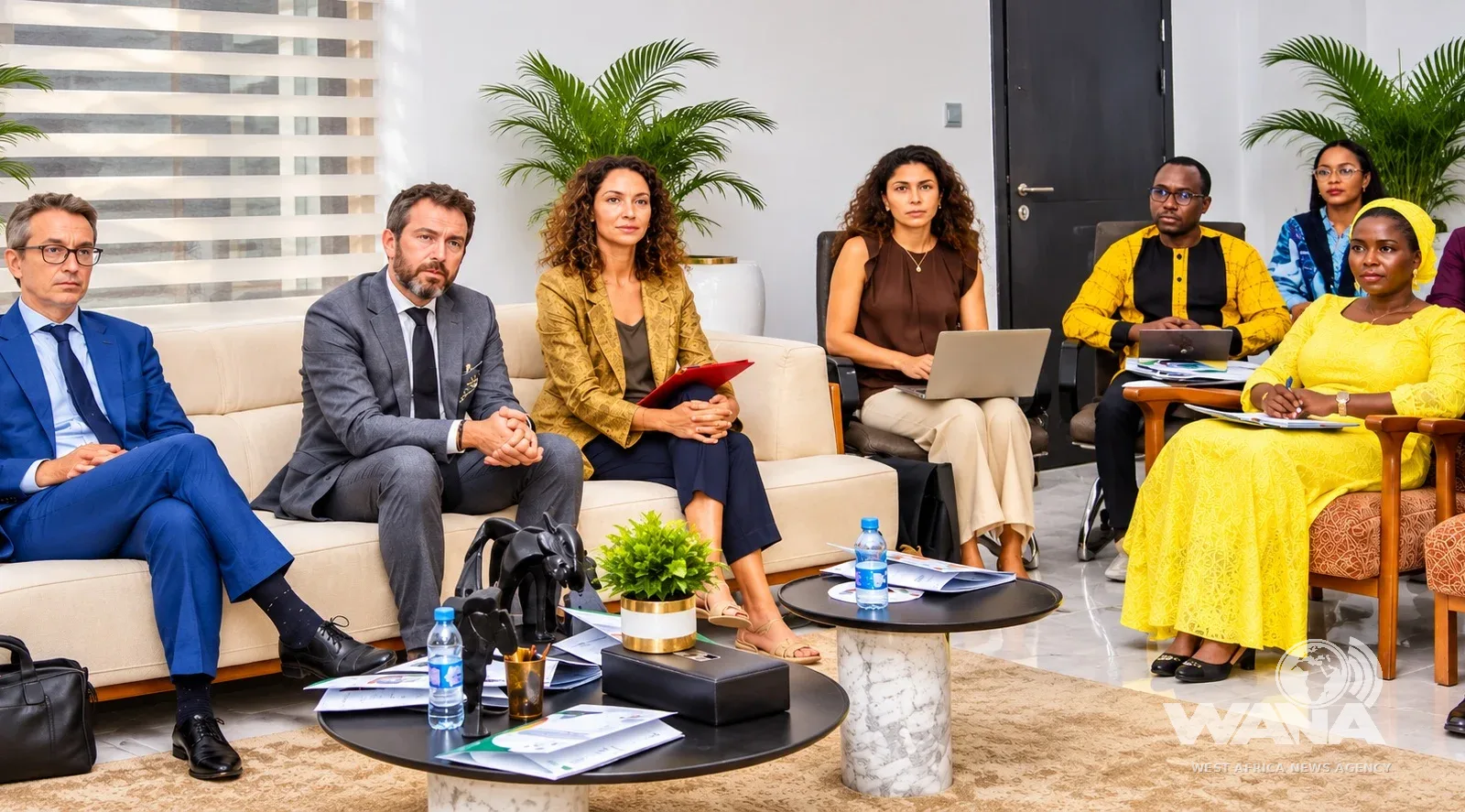
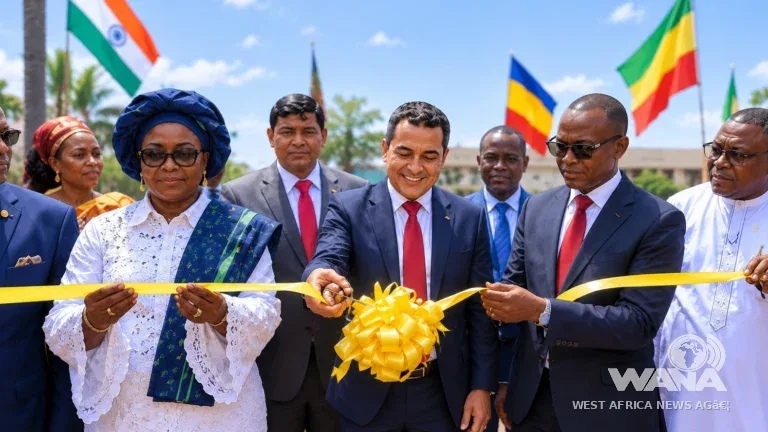
More than 41 senior officials were installed at Guinea’s Ministry of Culture, Tourism and Handicrafts on Thursday, 26 November 2026, at a handover ceremony presided over by Minister Moussa Moïse Sylla.
The scale of the appointments — made or confirmed by presidential decree — forced the ministry’s chief of staff, Thierno Hamidou Bah, to ask speakers to keep their remarks short given the number of officials involved.
At the ceremony, the ministry’s secretary-general, Dr Youssouf Boundou Sylla, said priority would go to the newly promoted officials, particularly directors and deputy directors-general.
The event was held under the minister’s authority, with the new appointees formally taking up their posts.
New faces at the cultural agencies
Aly Bongo Léno was named deputy director-general of Cultural and Creative Industries by presidential decree on 23 November 2026. He said the appointment was his first ever by presidential decree and marked his formal entry into Guinea’s senior public administration.
He said he intends to work closely with the director-general, Mamadou Adama Bilia Bah.
Ahmadou Oury Bah is the new deputy director-general of Cultural and Artisanal Infrastructure and Equipment. He said cultural centres, artistic spaces, equipment and artisanal installations should become instruments for promoting cultural diversity and economic development.
Djènè Sidimé is the new deputy director-general of the National Service for Tourist and Hotel Development (SNATH). An IT engineer by training, she said she intends to contribute to modernising SNATH, digitalising its tools and promoting Guinea as a destination.
The remaining installations are to be coordinated by the Inspectorate-General and the relevant services.
A separate telecom file still open
The cultural appointments come as the State’s telecom holdings remain in flux. MTN announced the sale of its Guinean operations to the State on 30 December 2024, and the State took over the 75% stake MTN held.
By decrees of 11 December 2025, the State holds 100% of Areeba’s capital and voting rights, and Areeba was converted into a public limited company with a board of directors.
It sits under the technical supervision of the telecommunications ministry and the financial supervision of the economy and finance ministry, while the Directorate-General of the State Portfolio already exercises shareholder oversight.
Areeba’s second-quarter 2026 revenue was 101 billion Guinean francs, down 51.4% from 208 billion a year earlier. A new Areeba general management was appointed in October 2026.
As of 30 June 2026, Guinea’s national mobile base stood at 13.2 million subscriptions, with Orange holding 85.4%, Areeba 13.4% and Cellcom 1.2%.
The stated three-year objective is to stabilise the operator’s subscription share at around 13 to 15%, with a five-year ambition to exceed its end-2024 market share of 22.6% of subscriptions.
Tower-sharing, fibre extension and network interconnection are expected to improve service quality.
Guinée Télécom has not returned to the market and remains in a strategic preparation phase. On 11 November 2026, Guinean ministers received a Maroc Telecom delegation in Conakry to discuss relaunching the two operators, with no agreement announced.
SOTELGUI was created as a public company by decree in June 1992 with a ten-year monopoly on basic services.
A September 2017 decree dissolved SOTELGUI and created a new entity taking over its assets and debts, giving birth to Guinée Télécom.
Regional precedents
Comparisons elsewhere in West Africa are mixed. Celtiis in Benin declared about five million subscribers in thirty-six months, while NITEL showed zero subscribers in February 2026 according to NCC data.
MTN and Airtel hold nearly 86% of the Nigerian market.
In Ghana, the State sold 70% of Ghana Telecom to Vodafone for $900 million in 2008; the regulator first refused the transfer to Telecel in 2022 before granting conditional approval in January 2023, and the company was renamed Telecel Ghana in February 2024.
In May 2021, Benin’s State entrusted delegated management of SBIN to Sonatel. The Ghanaian experience suggests a regulator could require guarantees before approving a transfer of control.




Comments