
Connected Development will monitor Nigeria’s 2027 general elections from polling units through to collation centres, its founder Hamzat Lawal announced at an Abuja press conference on Monday, November 23, 2026.
The mission will cover the presidential, National Assembly, governorship and state assembly elections.
The observation will run on CODE’s Uzabe election observation platform, developed with Ushahidi, to operate a real-time situation room.
Through the platform, the organisation intends to track developments as they unfold across polling units and collation centres rather than after the fact.
Focus on IReV uploads
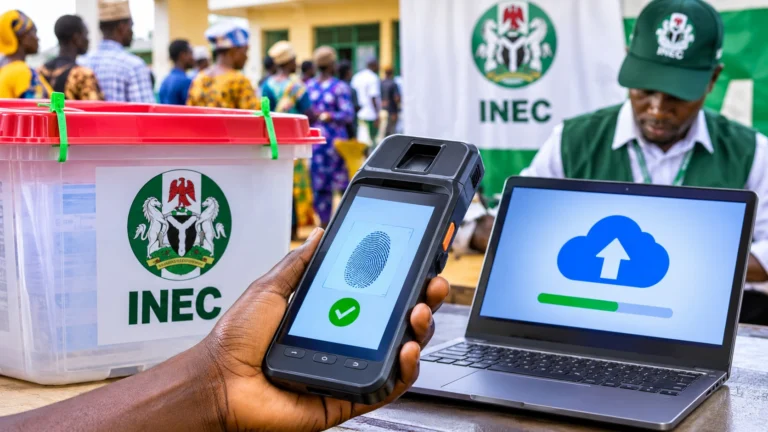
Observers will pay particular attention to the upload of polling-unit results to INEC’s IReV portal.
CODE said it will compare declared figures with results uploaded from polling units, a process that could surface discrepancies between what is announced and what is published at unit level.
Lawal said CODE would document every instance in which the manual-results exception is invoked. The organisation will also document cases where manual results are used after reported transmission failures, suggesting attention to the circumstances under which results bypass electronic transmission.
Scorecard to track pledges against delivery
Beyond election-day observation, CODE plans to publish a post-election scorecard through its Follow The Money initiative. The scorecard will compare campaign pledges with budget allocations, spending and delivered projects.
The scorecard appears designed to extend scrutiny past the vote itself, linking what candidates promise on the campaign trail to what is actually budgeted, spent and built.
The comparison of pledges with allocations and delivery could give voters a documented record against which to measure elected officials.
Referrals for electoral offences
CODE will refer verified reports of vote buying and other electoral offences to INEC and to anti-corruption and financial intelligence agencies.
The referral mechanism suggests the organisation intends to pass evidence of alleged offences to bodies with investigative and enforcement powers rather than simply publicising them.
Lawal returned to CODE after a year of study as a Chevening Scholar at the Institute of Development Studies, University of Sussex. During his absence, Hyeladzira James Mshelia served as acting chief executive.
The scope of the mission spans four sets of elections, from the presidential contest down to state assembly races, with observation anchored at polling units and extending to collation centres.
The combination of real-time reporting through Uzabe, comparison of declared and uploaded results, documentation of manual-results exceptions, and referrals of alleged offences points to a multi-layered monitoring effort.
For voters, the announced mission offers a channel through which polling-unit level information could be aggregated and compared with official declarations.




Comments