Skip to content

Search news

Type to search stories, topics and pages.

Author: Kabir Isa

Uncategorized

Côte d’Ivoire’s Anti-Money Laundering Push: Influencer Sentences Signal Tougher Stance on Financial Crime

By Kabir Isa

In a landmark verdict, Ivorian influencers Apoutchou National and Lionel PCS received heavy prison sentences (3 and 5 years respectively) plus massive fines for money laundering, triggered by their own viral social media videos flaunting cash. This case is a critical strategic signal: the Ivorian judiciary is actively cracking down on financial crimes to combat its "grey list" status with the Financial Action Task Force (FATF). The key takeaway is that public displays of unexplained wealth
Uncategorized

Mali’s Offensive Against Armed Groups: A Test of Regional Counterterrorism Strategy

By Kabir Isa

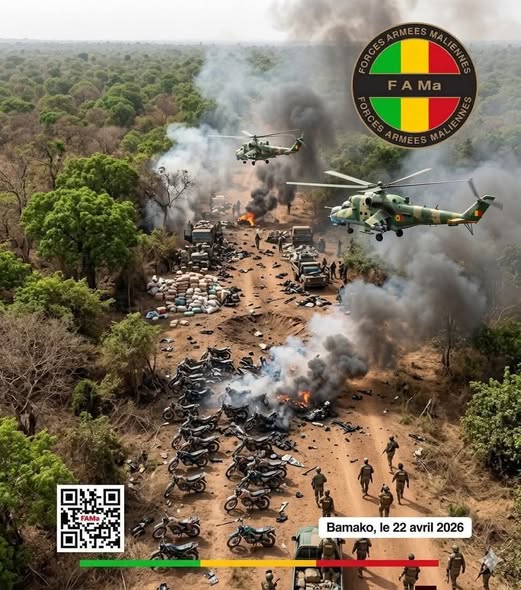
Between May 30 and June 1, 2026, the Malian Armed Forces executed a series of highly effective, intelligence-driven airstrikes in the Koulikoro and Mopti regions, neutralizing an estimated 65 terrorists and destroying critical logistics, including motorcycles and hideouts. The operations, which began with a precise aerial-ground maneuver in the Faya forest, targeted three distinct enemy regrouping points and a refuge near Sofara, demonstrating a shift from broad sweeps to surgical,

Uncategorized

Kogi Attack: 30 Abducted, Two Killed in Renewed North-Central Security Crisis

By Kabir Isa

Gunmen killed two and abducted 30 passengers from a commercial bus in Kogi State, Nigeria, just 24 hours after the government suspended a local festival based on "credible intelligence" of a security threat. This timing suggests the attack was a direct, coordinated response to the state's proactive security measures, highlighting a dangerous escalation where criminal groups retaliate against government actions. The abduction of 26 men and 4 women from a single vehicle underscores a shift towards mass, high-impact kidn

Uncategorized

Nigeria’s Equity Market Opens June with N1.81 Trillion Loss as T+1 Settlement Cycle Begins

By Kabir Isa

On the first trading day under Nigeria's new T+1 settlement cycle, the stock market experienced a severe N1.811 trillion loss, driven by aggressive profit-taking in major equities like BUA Cement. This single-day decline dragged the All-Share Index down 1.13% and weakened the year-to-date return to 59.09%, with bearish sentiment overwhelming the market as 37 stocks closed in the red versus 24 gainers. The practical takeaway is that the transition to

Uncategorized

Wike Dismisses Jonathan 2027 Speculation: A Test of Political Protocol in Nigeria’s Pre-Election Season

By Kabir Isa

Nyesom Wike has decisively dismissed speculation about a Goodluck Jonathan 2027 presidential run, arguing that no credible candidate is ever "drafted" by public demand—they must first signal interest themselves. The core insight is that political narratives of public persuasion are often misleading, as aspirants typically express ambition privately before any public mobilization begins. Wike’s pointed question—“Did Jonathan ever express interest?”—suggests the rumors are baseless and potentially disrespectful to the former president

Uncategorized

AES Sovereignty Push: Why Hostility Toward the Sahel Alliance Signals a Regional Power Shift

By Kabir Isa

Here is the high-value executive summary: The core driver behind the relentless pressure on the Sahel States Alliance (AES) is not terrorism, but the member nations’ assertion of sovereignty over vast natural resources—particularly gold and uranium—which threatens the neocolonial extraction model that has long benefited foreign powers. Security crises in the region are inseparable from a system of permanent interference and domination, as evidenced by France’s manipulation of ECOWAS against Niger, the attempted partition of Mali with Ukrainian-backed

Uncategorized

Mali’s Security Infrastructure Expansion: A Strategic Signal for Regional Stability

By Kabir Isa

The Malian Council of Ministers, chaired by General Assimi Goïta on May 29, 2026, prioritized national security by approving decrees to allocate land across multiple localities for the Ministry of Security and Civil Protection. This strategic move directly enables the construction and expansion of security infrastructure, signaling a shift from policy to tangible, ground-level capacity building. The practical takeaway is that the administration is operationalizing its security agenda by removing bureaucratic barriers to facility development. The unique conclusion is that land

Uncategorized

Oyo School Kidnappings: Tinubu Approves 1,000 Forest Guards as Federal Rescue Team Deploys to Ogbomoso

By Kabir Isa

Following the abduction of students and teachers in Oyo State, President Tinubu has approved the recruitment of 1,000 forest guards and deployed a specialized rescue unit, signaling a shift toward proactive, community-based security rather than purely reactive measures. The President’s dispatch of the nation’s top security leadership—including the Chief of Staff, NSA, and service chiefs—to personally address affected communities underscores a strategic emphasis on high-level political visibility and public reassurance as a tool for crisis management. Crucially

Uncategorized

PSG Victory Celebrations: 400 Arrests in France Highlight Broader West African Security and Governance Lessons

By Kabir Isa

PSG’s Champions League victory triggered widespread civil unrest across France, resulting in over 400 arrests, multiple police injuries, and significant property damage, revealing a recurring pattern of football celebrations escalating into public disorder. The violence, condemned by Interior Minister Laurent Nuñez as “absolutely unacceptable,” included clashes with police, arson, and vandalism along the Champs-Élysées, reviving memories of last year’s fatal title celebrations that claimed two lives. This incident underscores a critical governance

Uncategorized

Euphrates Flooding Exposes Infrastructure Fragility Across Conflict-Affected Regions

By Kabir Isa

In late May 2026, the Euphrates River flooding in eastern Syria triggered a humanitarian crisis, causing a bridge collapse and isolating communities in Deir Az Zor. Rescue operations successfully extracted stranded farmers from the floodwaters, highlighting the region's acute vulnerability to infrastructure failure during extreme weather events. The core takeaway is that climate-exacerbated flooding is directly compounding the existing humanitarian and infrastructural fragility in conflict-affected zones like Syria. This event underscores the urgent need for proactive disaster preparedness and resilient