
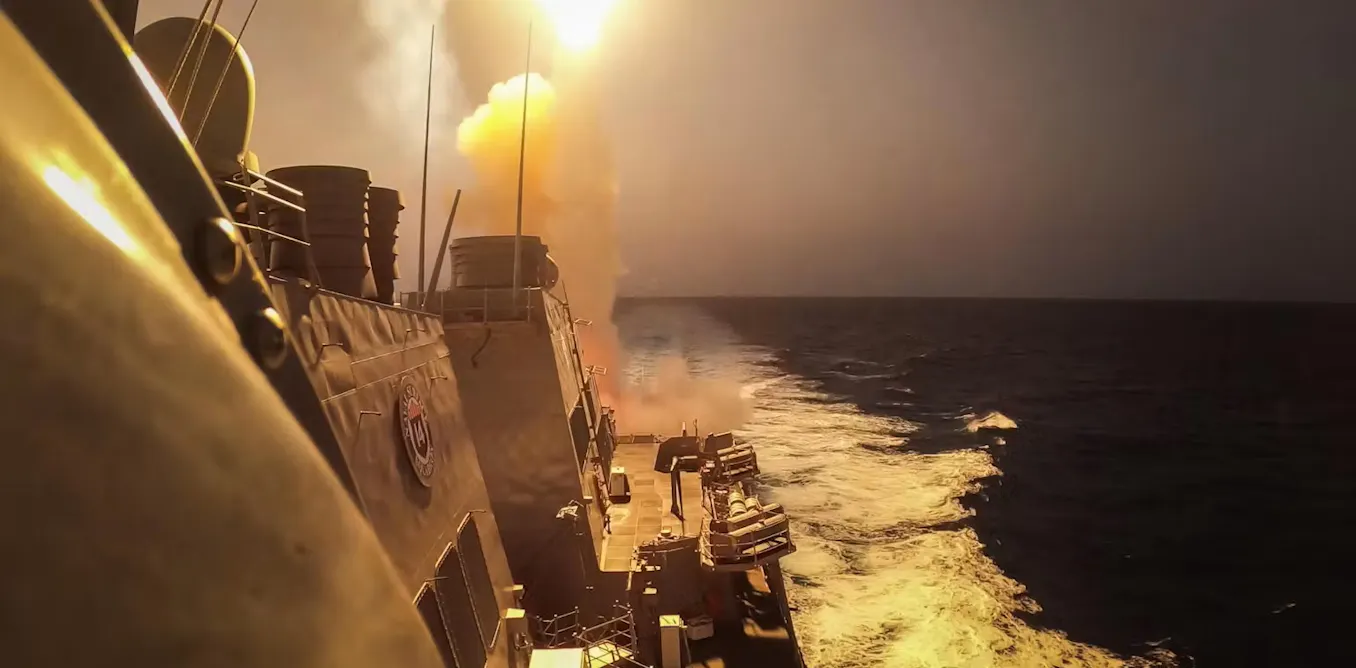
Houthi forces have taken control of positions along Yemen’s Red Sea coast, including Mokha port, Mayyun (Perim) Island, and the Zuqar and Hanish island groups, giving the Iran-backed movement a platform to disrupt international shipping.
The areas were previously held by Yemeni government forces.
The seized islands sit roughly 160 kilometres north of the Bab el-Mandeb strait, a maritime chokepoint about 32 kilometres wide that separates the Arabian Peninsula from the Horn of Africa and links the Red Sea to the Gulf of Aden and the Indian Ocean.
Mayyun Island divides the strait into two channels used by international commercial shipping. Historically, about 12% of global maritime trade passes through the Red Sea and Bab el-Mandeb, according to the French Senate.
The African side of the strait, between Djibouti and Eritrea, is not under Houthi control.
But the group’s advance in September 2026 carries serious economic and security implications for Egypt, Ethiopia, Djibouti and Eritrea, and could aggravate existing conflicts in Somalia and Sudan.
The Houthis are an Iran-backed movement that controls much of Yemen and has fought the country’s internationally recognised government since taking the capital Sanaa in 2014.
According to a report from The Conversation, the Houthi threat is not only logistical but strategic for African Red Sea states.
The African coastline has suddenly taken on greater importance for outside actors seeking to monitor, contain or bypass the shipping lane opposite them, with Houthi armed positions now encircling the strait.
In the current situation, a non-state armed group backed by Iran could be able to deploy missiles, mines and fast boats along a long stretch of the Red Sea’s eastern coast.
At the same time, Iran retains the ability to block the Strait of Hormuz, raising the risk of simultaneous disruption at two major maritime chokepoints and potentially depriving ships of any safe route through the Red Sea.
Les risques pour l’Afrique
Red Sea disruptions cascade through four aspects of African economies: shipping and insurance costs, port revenues, energy and food prices, and maritime security risks.
Egypt
Egypt faces the most direct financial exposure.
In 2024, the decline in Suez Canal traffic, linked in part to Houthi attacks on merchant ships in the Red Sea, caused a loss of about $7 billion in transit fee revenue, according to Egyptian authorities.
Revenue reached $4.67 billion for the 2025-2026 fiscal year, a 23% increase over the previous year. But if shipping diversion continues, it could quickly reduce or even cancel out that improvement.
Djibouti, Ethiopia and Eritrea
More than 3,700 people fleeing hostilities in western Yemen have reached Djibouti’s northern coast. The resumption of fighting has brought the number of displaced people to 141,972 since the escalation began in September 2026.
Djibouti is also a critical trade route for landlocked Ethiopia, which conducts about 95% of its trade through the country.
Eritrea is geopolitically vulnerable as well. Its geographic position makes it attractive to Saudi Arabia and Egypt, which want to ensure Iran and the Houthis do not exert too much influence on the African shore of the Red Sea.
It is also now involved in the renewed conflict in Ethiopia.
Somalia and Sudan
The Houthi crisis is aggravating existing crises in Somalia and Sudan.
The Houthis and the Somali terrorist group al-Shabaab have exchanged weapons, drone technology and training in return for support for piracy activities off the Somali coast. This cooperation comes as an African Union mission in Somalia tries to contain al-Shabaab.
As a result, piracy off the Somali coast surged in 2026, reaching its highest level in ten years. In September 2026, Somalia adopted an anti-piracy bill aimed at preventing kidnappings at sea.
In Sudan, Iranian support has extended to some components of the Sudanese Armed Forces, which are fighting the Rapid Support Forces (RSF), who are backed notably by the United Arab Emirates.
In mid-2024, the Houthis reportedly began transferring weapons to the Sudanese army on Iran’s behalf.
The US Treasury sanctioned the head of weapons procurement for the Sudanese Armed Forces in 2024, then Sudanese Islamist actors in 2025, citing their links to Iran among other reasons.
The implications are concerning: the African shore of the Red Sea is now more exposed to influence and supply networks linked to the Houthis and Iran.
La lutte pour le contrôle politique
The current geopolitical upheaval in the Red Sea predates the Houthi offensive.
In January 2024, Ethiopia signed a memorandum of understanding with the separatist Somaliland region to obtain access to its maritime facade on the Gulf of Aden and a naval base. In exchange, it committed to considering recognition of the region.
Somalia, Eritrea and Egypt opposed the agreement. Less than a year later, the three countries established a joint security mechanism.
Since then, regional security cooperation has accelerated. On 30 July 2026, Saudi Arabia hosted a meeting in Riyadh at which 14 countries, including Egypt, Djibouti, Sudan and Somalia, announced the creation of a multinational maritime defence alliance.
The United Arab Emirates — following clashes with Saudi-backed forces in Yemen in December 2025 — and Ethiopia, a landlocked country, were excluded.
At the same time, a competing alignment of the UAE, Israel and Ethiopia emerged, reinforced by Israel’s recognition of Somaliland in December 2025. On the other side are Somalia, Turkey, Egypt and Saudi Arabia.
Iran has also sought to secure a military presence along the Red Sea corridor, notably in Sudan. Eritrea, for its part, is using its strategic coastline to strengthen its regional position and counterbalance Ethiopia.
The result is a growing struggle for influence in which Middle Eastern powers are drawing more benefit from Africa’s strategic position.
Que faire ?
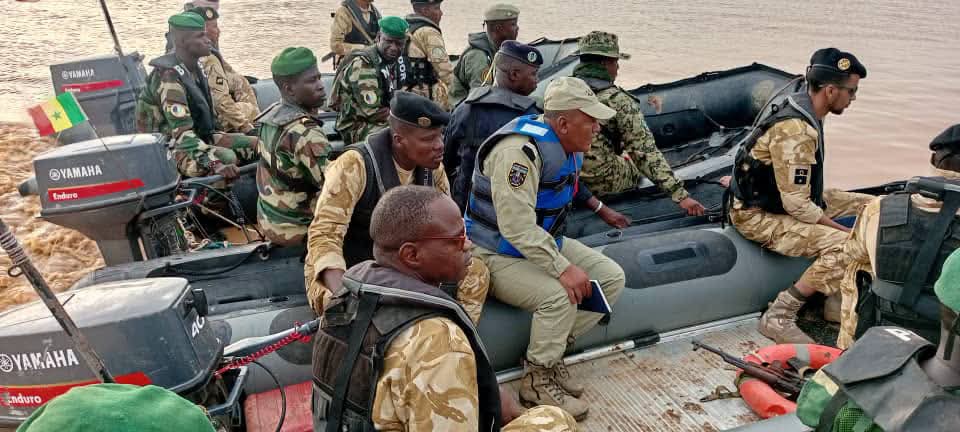
No single African state can protect the Bab el-Mandeb strait alone, but governments can mitigate some consequences by diversifying port access and inland trade routes. A more direct lever is improving maritime security capabilities at the regional level.
In August 2026, signatory states of the Djibouti Code of Conduct and its Jeddah Amendment committed to establishing a combined operational force to combat piracy.
The success of this initiative will depend on governments’ ability to provide the ships, intelligence, personnel and legal frameworks needed to make it an operational security mechanism.
African states do not yet set the overall strategic agenda, but their control of maritime chokepoints strengthens their diplomatic weight. The challenge is to leverage that weight without becoming conduits for a broader Middle East conflict.
Source: The Conversation
Comments