General News: The definitive source for essential daily updates and breaking news across the West African sub-region. From major public interest stories to regional developments, WANA’s General News provides the context and clarity needed to understand the events shaping our communities and the wider world.
Wycliffe-Togo held its annual general assembly in Lomé on August 29, 2026, where leaders linked Bible translation into local languages to the preservation of Togo's linguistic and cultural heritage. The Bible is currently available in Ewé, Mina and Ntcham, with work advanced on translations into Lama, Kabyè, Ifè and Moba in partnership with SIL.
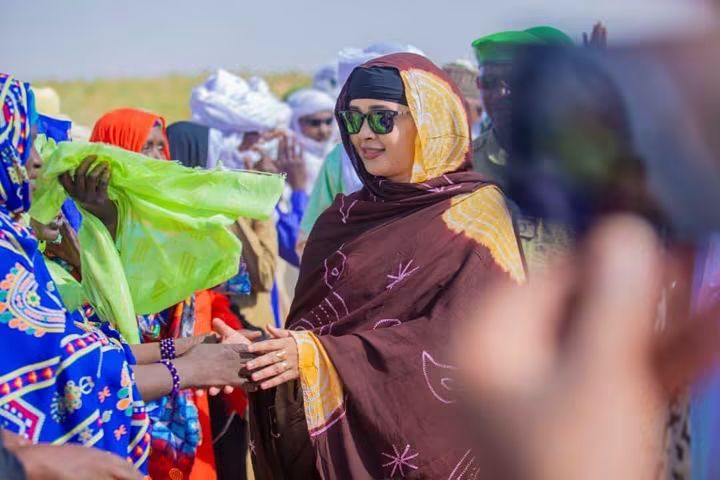
The Nigerien government is executing a high-stakes, final-stage operational review for the third edition of the Crafts and Culture Forum (FARCUB), signaling that the event is a top national priority. The presence of a high-level delegation—including ministers and the Prime Minister's special adviser—underscores that FARCUB is a strategic tool for peace consolidation and economic development, not merely a cultural showcase. The core challenge now lies in the logistical execution of converting the Blanakour site into a fully operational venue within days, as the forum's success hinges entirely on flawless final preparations. Ultimately, the September 4th opening will serve as the definitive test of whether the government's high-level mobilization translates into tangible, on-the-ground results.
A viral TikTok claim that Imam Mahmoud Dicko was arrested in Algiers and placed under house arrest is entirely unsubstantiated, as no official sources or close associates confirm the event. The article underscores that high view counts and engagement do not equate to factual accuracy, making this a critical case study in viral misinformation. The core takeaway is a call for rigorous verification: before sharing sensational claims, one must seek confirmation from reliable, official channels. Ultimately, the piece serves as a vital reminder that in the absence of credible sourcing, such information should be treated as unverified rumor, not fact.
A self-styled pastor in Burkina Faso was sentenced to 11 years in prison and a permanent ban from the country after being convicted of using his religious authority to coerce followers into sexual relations and extort money. The case demonstrates how spiritual leadership can be weaponized for systematic abuse, with charges including aggravated rape, sexual slavery, and money laundering. The verdict establishes a critical legal precedent for holding religious figures accountable for crimes committed under the guise of divine mandate. This outcome underscores the necessity of robust legal mechanisms to protect vulnerable congregants from predatory behavior within religious institutions.
On August 28, 2026, the Lifo bridge on the Aklampa-Glazoué axis collapsed, nearly drowning two road users who were rescued by firefighters and police. This incident exposes critical infrastructure failures in Benin's Collines department, where a lack of maintenance and monitoring led to a life-threatening structural failure at night. The successful rescue operation highlights the vital role of emergency services, but the unrecovered motorcycle and reliance on social media for alerts reveal gaps in official reporting and response coordination. The key takeaway is an urgent need for proactive bridge inspections and robust emergency protocols to prevent future tragedies and ensure public safety.
INTERPOL has placed a 673-diamond necklace once owned by Egypt’s Queen Nazli on its global Stolen Works of Art database after it was stolen from Vienna’s Museum of Applied Arts, marking a rare royal artifact theft with international tracking implications. The listing transforms the piece into a high-risk, unsellable asset, as the database enables law enforcement worldwide to identify and intercept the stolen cultural property. This case underscores the growing use of Interpol’s digital infrastructure to combat art crime, particularly for items with provenance tied to historical figures, which carry both immense monetary and symbolic value. The recovery effort now hinges on global police cooperation, making the necklace’s illicit sale or display nearly impossible without triggering detection.
Diamond Platnumz’s new single, "Mtoto Kasimama," is a high-energy Bongo Flava track that fuses traditional East African rhythms with modern pop, creating an instantly danceable, festive atmosphere. The song’s core value lies in its clever lyrical metaphor—translating to "The Child Stands"—which frames female allure and confidence as a magnetic, commanding presence, delivered through Platnumz’s signature smooth yet confident vocals. By blending playful romance with vibrant percussion and synth melodies, the track is engineered for broad commercial appeal, bridging cultural authenticity with global pop accessibility. The key takeaway is that this release is not just a song but a strategic celebration of attraction and charisma, designed to reinforce Platnumz’s dominance in the genre while inviting listeners into an uplifting, irresistible groove.
The Hague District Court sentenced 66-year-old Eugene N. to life imprisonment for his direct role in the 1994 Rwandan genocide, specifically for blocking Tutsi refugees from escaping a stadium in Mbazi and throwing a grenade into the crowd, resulting in roughly 3,000 deaths. The court’s ruling underscores that individual acts of "genocidal intent"—even those not involving direct shooting—carry full criminal liability, as his actions were deemed inseparable from the broader massacre. This verdict demonstrates the long arm of international justice, holding perpetrators accountable decades later, and reinforces that war crimes and genocide convictions require no statute of limitations. The case serves as a stark reminder that legal accountability for mass atrocities is not only possible but essential, regardless of the perpetrator’s age or the time elapsed.
The 9th Mile–Obollo-Afor–Makurdi Federal Highway and its connecting road to Eha-Amufu and Nkalagu are in a state of abandonment, leaving travelers exposed to kidnapping, vehicle breakdowns, and severe dust pollution. The core issue is not just potholes but the abrupt halt of construction, which has turned a vital transport artery into a security and safety hazard. For commuters and residents, the practical takeaway is that this neglect directly increases their daily risk of violent crime and mechanical failure, making the road a liability rather than a link. The unique insight is that the road’s condition is a dual failure—infrastructure and public safety—where the absence of construction crews has effectively ceded the route to criminals and decay.
Luigi Mangione has reversed his not-guilty plea, now admitting to shooting UnitedHealthcare CEO Brian Thompson in 2024, a pivotal shift that moves the case from a question of guilt to one of legal strategy and motive. This admission reframes the narrative around the accused’s state of mind and the broader public debate on healthcare inequities, making the trial’s outcome less about whether he acted and more about why and how the law will treat him. The practical takeaway is that this confession likely accelerates proceedings, forcing the defense to pivot toward arguments of mental state or mitigating circumstances rather than factual innocence. The unique insight is that this case has become a cultural flashpoint, where the admission itself may galvanize both supporters and critics, turning the courtroom into a stage for larger societal grievances.