

Guinea-Bissau adopted a new constitution expanding presidential powers at the expense of the prime minister and government, after an August 30, 2026 referendum approved it with 70 percent of the vote.
Under the new charter, the head of state gains greater latitude to appoint and dismiss the prime minister and now presides over the Council of Ministers, a role that did not exist in the previous constitution.
The reform comes to a country that has experienced chronic political instability since gaining independence from Portugal in 1974, with five coups since 1980 and numerous attempted putsches.
The semi-presidential system previously in force was regularly a source of tension between the president, the prime minister and parliament, leading to repeated institutional crises.
Backers of the reform say they want to end these power struggles by clarifying responsibilities within the executive and strengthening presidential authority.
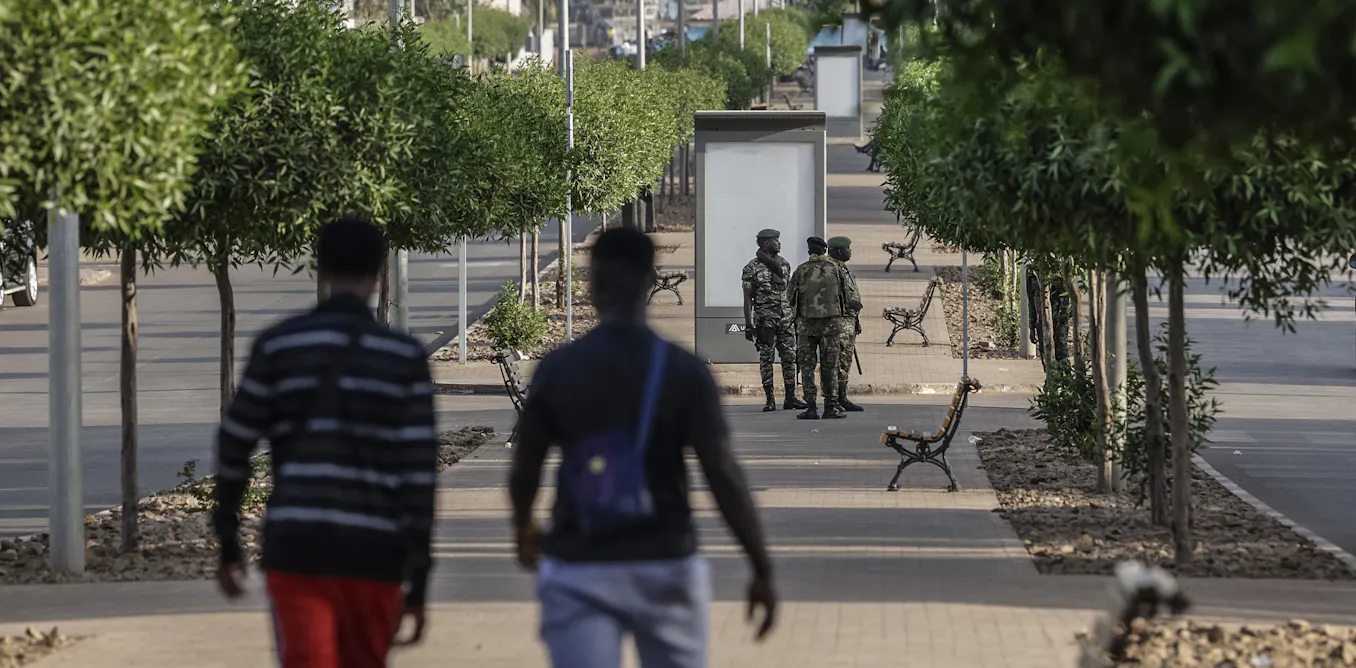
The referendum, however, took place under a junta that came to power after a coup in November 2025, raising questions about the legitimacy of the constitutional revision process.
Transition authorities present the new text as a means of guaranteeing stability before an announced return to civilian rule, with a presidential election scheduled for December 6.
The opposition, which had called for a boycott, argues instead that the shift to a strong presidential regime risks concentrating executive power further and weakening checks and balances.
The African Party for the Independence of Guinea-Bissau and Cape Verde (PAIGC), the historic party that led Guinea-Bissau to independence in 1974, denounces a consultation organized in a “context of restriction of public freedoms” and against a backdrop of strong political tensions.
The new constitution sets the institutional rules for the post-transition period and determines the nature of power relations in the future republic.
As a jurist and researcher, I was among the specialists who analyzed the Constitution of the Republic of Guinea-Bissau in a collective work published in 2019.
In my view, the new text notably advocates strengthening presidential prerogatives, the relative weakening of the prime minister, and the consequences of this reform for the balance between the executive, parliament and the judiciary.
Le principal changement
Regarding the political organization of the state, the main change introduced by the new constitution is the strengthening of the powers of the president of the republic.
These changes will reinforce presidential pre-eminence in a country marked for years by institutional instability.
It should also be noted that the new constitution prohibits the adoption of amendments for a period of 10 years. Such a prohibition has the effect of preventing reversals of the new distribution of political power during that period.
Any initiative by the parliamentary power in this regard (admitting the formation of a majority in favor of amendment) will be unconstitutional.
Politically, this prohibition may encourage the population to become accustomed to the new distribution of state powers, thereby discouraging, in ten years, political attempts to return to the previous constitutional situation.
Une plus grande marge de manoeuvre pour le président
The president will now have greater room for maneuver in appointing and dismissing the prime minister. This provision takes into account the existence of a majority political force capable of guaranteeing governmental stability through coalitions or alliances.
It thus makes it possible to appoint as head of government the leader of a party that did not obtain the most votes in the elections but is capable of forming a stable majority.
It is also provided that the resignation of the government is facilitated by the new constitution in the event of non-approval of its program by parliament.
Under the previous constitution, resignation occurs only after two consecutive rejections of the government program.
It should further be recalled that the investiture of the president of the republic is now ensured by an unelected body, the president of the Supreme Court of Justice.
The appointment of the latter falls within the powers of the president of the republic himself. In the current constitution, the investiture of the president of the republic falls to the president of parliament, the National People’s Assembly.
Rôle du Premier ministre
The role of the prime minister is not formally modified in the text of the new constitution.
In general political terms, however, the text strengthens the powers of the president at the expense of the government, particularly with regard to appointment and dismissal powers.
The president now has greater room for maneuver in appointing and dismissing the prime minister.
This provision takes into account electoral results, as in the current constitution, but also the existence of a majority political force guaranteeing governmental stability through coalitions or alliances.
It notably makes it possible to appoint as head of government a party leader who did not obtain the largest number of votes in the elections.
It thus removes from the head of government the possibility of conducting the policy of the executive and the country in contradiction with the political vision of the president of the republic.
There are no new mechanisms for controlling presidential power in the new constitution. Only cases of criminal responsibility of the president are still provided for.
Un nouvel équilibre des pouvoirs
The reform thus establishes a new balance of powers between the president of the republic and the government.
The former is strengthened and the latter weakened, for the reasons mentioned above, but also because the president of the republic now necessarily presides over the Council of Ministers. This did not exist in the previous constitution.
Transition authorities present the new text as a means of guaranteeing stability before an announced return to civilian rule, with a presidential election scheduled for December 6.
But the opposition believes, on the contrary, that the shift to a strong presidential regime risks concentrating executive power further and weakening checks and balances.
Les raisons de la réforme
In my view, several elements should be taken into account to explain this reform.
There are tribal and religious dimensions, the comparison with the French-African presidential model, absent from the Lusophone matrix, as well as internal political struggles for control of the state and its clientelist networks.
These latter probably rest on different electoral bases depending on the type of ballot.
For example, the PAIGC could retain an advantage in legislative elections, which determine the composition of the National Assembly and participate in the formation of the government.
As for the regime of the armed forces, it is not subject to formal modifications in the new constitution. It is their role to defend the independence, sovereignty and territorial integrity of the country.
It should be noted, however, that their supreme commander is the president of the republic, now endowed with strengthened powers.
Source: The Conversation

Comments