Farm trials in Ghana will test whether products from discarded shrimp and crab shells can protect seeds and plants, improve crop resilience in dry spells and strengthen defences against fungal diseases.
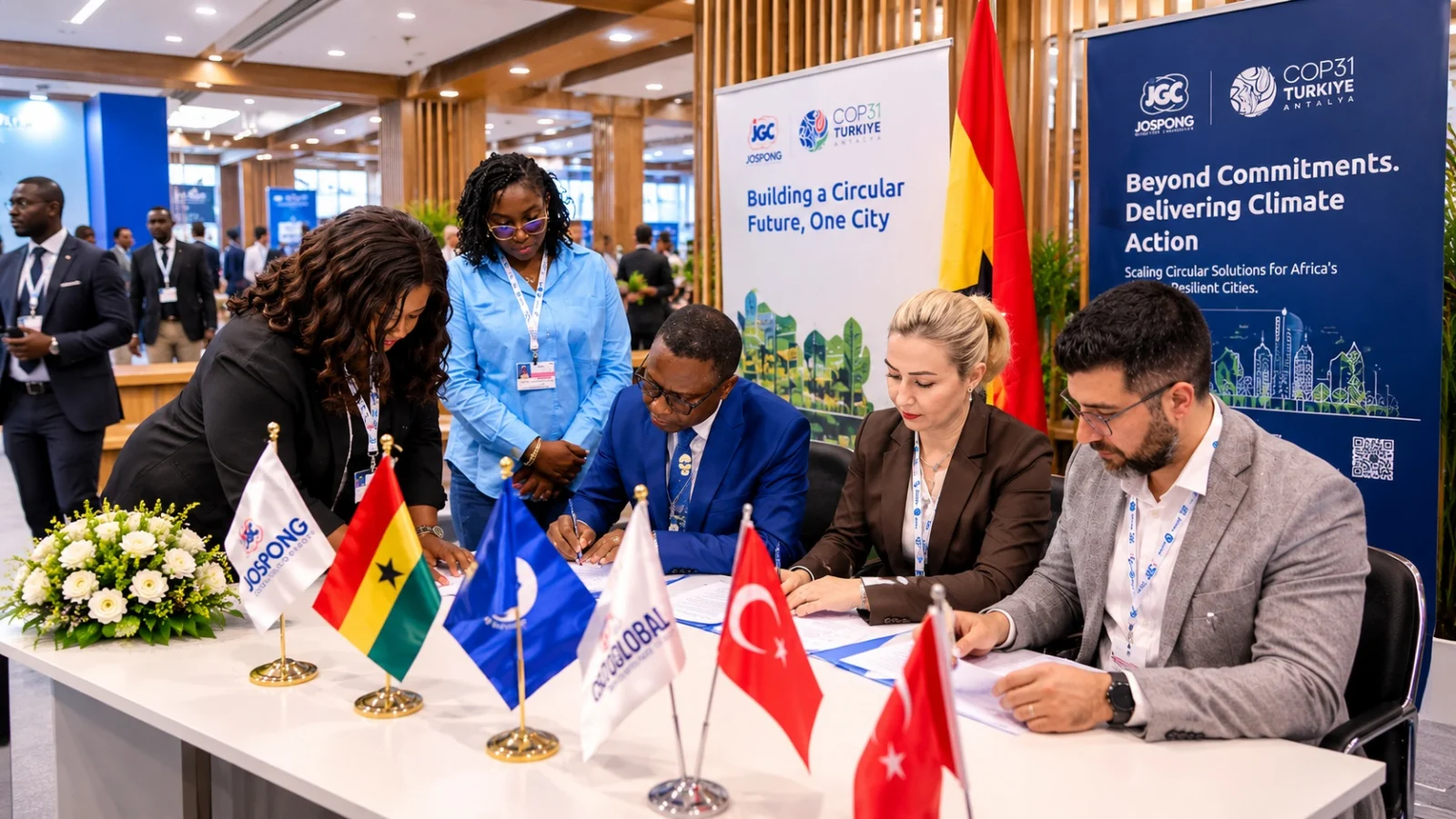
The African Agribusiness Consortium Limited signed a memorandum of understanding with Türkiye-based ChitoGlobal Biotechnology to run the tests, with the agreement concluded on the sidelines of COP31 in Antalya.
The products are based on chitosan, a substance derived from chitin found in crustacean shells. The trials will also assess effects on soil quality and crop yields, and the products’ potential as a more affordable alternative to some conventional inputs.
Regulatory checks before commercial questions
Jospong Group Chief Investment and Innovation Officer Noah Gyimah said the company would work with Ghana’s environmental and standards authorities to ensure the products meet local regulatory requirements.
Gyimah said the pilot would help AAC assess commercial viability, identify potential buyers and determine whether Ghana has sufficient raw materials for local production.
He said the work would move from research and development to practical application, starting with collaborative research and field trials in Ghana, then technology transfer and full-scale commercial production.
How the deal came together
The agreement followed a visit by a four-member AAC delegation led by Coordinator Dr Emmanuel Volsuuri to ChitoGlobal’s facility in Antalya. Volsuuri said he arranged the visit after meeting the company at its COP31 pavilion.
AAC Chief Executive Dr Adelaide Araba Siaw Agyepong leads the consortium, which grows rice, maize, vegetables and soybeans commercially in Ghana.
ChitoGlobal Sales and Technical Support Manager Dana Abourahma said the partnership would combine the expertise of both organisations.
What the trials will and will not settle
The scope set out in the agreement is a test programme, not a supply commitment.
Whether Ghana has enough discarded crustacean shells to support manufacturing at scale is among the questions the pilot is expected to answer.
Gyimah said the company would work with Ghana’s environmental and standards authorities to ensure the products meet local regulatory requirements.
For AAC, whose commercial operations cover rice, maize, vegetables and soybeans, the pilot could offer a route to inputs derived from waste material. For ChitoGlobal, the partnership could provide a West African testing ground for chitosan-based products.
Both possibilities depend on results the trials have yet to produce.
The agreement followed a visit by a four-member AAC delegation led by Coordinator Dr Emmanuel Volsuuri to ChitoGlobal’s facility in Antalya.





Comments