China’s demand for donkey skins, driven by traditional medicine ejiao, now requires four to five million hides a year, far more than its own herd can supply.
That shortfall has been filled largely from Africa, home to roughly two-thirds of the world’s donkeys, according to a new book by Lauren Johnston, an economist who studies China-Africa trade.
The book, China, Africa and the Market for Donkeys, published by Free Press Publishers in Nairobi, examines how a single commodity tied to an ancient remedy became a continent-wide supply chain, both legal and illicit.
Johnston, who spent several years researching the trade, answers questions about her findings in a report from The Conversation.
Ejiao, pronounced “e-jyow,” is a blood tonic made from donkey-hide gelatin.
For millennia it was produced by hand and consumed by a small circle of imperial elites, used to treat fatigue, dizziness, dry cough and irregular bleeding, and to support women’s wellbeing. Only in recent decades did production become industrial.
Johnston, who describes herself as an economist rather than a nutrition specialist, writes that the remedy’s reputation rests on its collagen content and bioactive peptides produced during processing, along with claims about the mineral properties of the water used.
She notes that while pharmacological research has pointed to potentially beneficial properties, the extent to which these translate into clinically established therapeutic effects remains disputed.
The market was until recently mainly medical. Johnston’s book details the recent and striking commercialisation of ejiao into a product range spanning cakes, drinks, cosmetics and other wellness goods.
It sells at affordable prices in pharmacies, both over the counter and on prescription, and also trades for thousands of renminbi in the high-end segment.
The main producer, Dong’e Ejiao, drove price increases at the top of the market that outpaced the gains Shanghai and Beijing property owners saw in the 2000s and 2010s, according to the book.
Demand also exists in Hong Kong, Taiwan, the United States, Europe, Australia and Southeast Asia.
Africa became a target for the supply chain, both legal and illicit, when the ejiao industry began running short of donkey skins around 2010.
Ethiopia, Kenya and Tanzania were among the first targets, because of both their donkey resources and their geographic proximity to China.
But demand for skins, and the profits it generates, grew so large that virtually no donkey on the continent was safe. A single donkey skin can fetch more than US$400 in China.
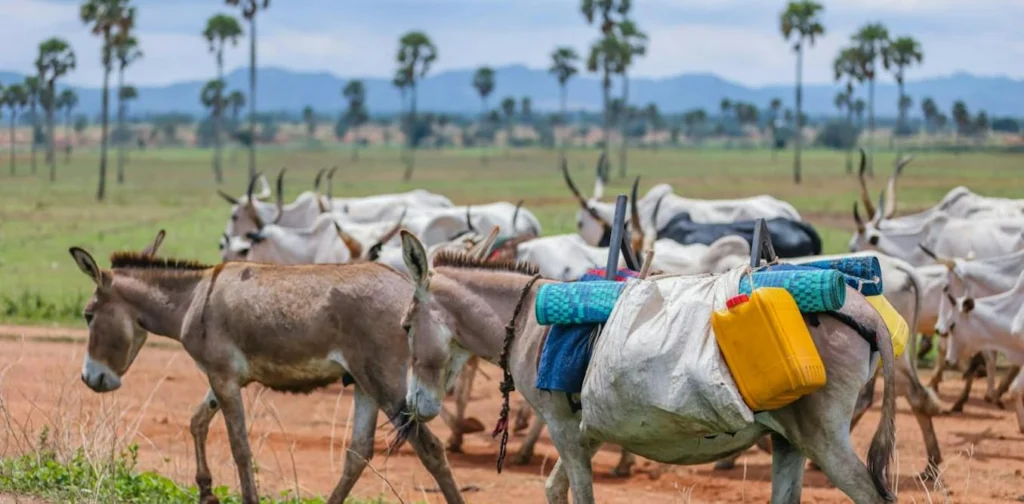
Donkeys have been draught animals in Africa for millennia, and the market is largely informal. Given the price a hide can command, animals are sold even when their labour is essential.
Their low reproduction rate compounds the pressure on supply, a cycle that heightens the risk of extinction. Porous and remote borders, differing regulations and uneven enforcement have made the trade almost impossible to contain.
The book details Tanzania’s experience.
The country abandoned efforts to secure a continent-wide official agreement to end the trade, following frustration with donkey smuggling, including across the Kenyan border, its inability to regulate slaughter numbers and standards, and its failure to establish sufficient breeding programmes.
The first Pan-African Donkey Conference, held in 2022, brought together representatives of the African Union’s Interafrican Bureau for Animal Resources (AU-IBAR), the Tanzanian government and other government representatives from across the continent, along with donkey welfare associations, think tanks and academics.
The event produced the Dar es Salaam Declaration, which called for a 15-year continental moratorium on slaughtering donkeys for their skins.
The 37th African Union Summit in February 2024 backed that call and approved the moratorium, a moment Johnston describes as historic for the protection of African biodiversity and poor rural populations, particularly women.
Implementation, however, has proved imperfect, because it requires each member state to adapt its legislation and then enforce it consistently.
Progress is under way but far from sufficient to save the donkey, let alone protect the wellbeing of communities that depend on its labour for physical and economic mobility.
Banning the trade can also push it underground and across borders: South African restrictions diverted supply to Lesotho, where abattoir standards are less strict.
The core problem, Johnston argues, is that supply cannot keep pace with demand. Donkeys are known for their low reproduction rate, and the deficit has been met by a poorly regulated trade drawing mainly on Africa.
As a result, donkeys are often stolen, depriving rural households of essential animals. The Donkey Sanctuary, a British donkey welfare organisation, estimates that China imports more than three million donkey skins a year.
Rising prices have hit communities too. In South Africa, a donkey that would have fetched about US$30 in the late 2010s sold for US$125 in 2022, when the moratorium was imposed.
The effect falls hardest on women and girls. Donkeys carry water, firewood and agricultural produce across much of arid and remote Africa; owning one saves women about five hours of work a week and children at least ten.
When a donkey is stolen or becomes unaffordable, household income, food security and school attendance suffer. The trade also breeds fear, mistrust and conflict within communities, and has been linked to organised crime, inhumane slaughter and biosecurity risks.
Johnston writes that readers will learn as much about China as about this unusual donkey market, which she presents as a lens on the country’s economy, history and global reach.
She says she hopes the account will help save the animal.
Source: The Conversation
Comments