
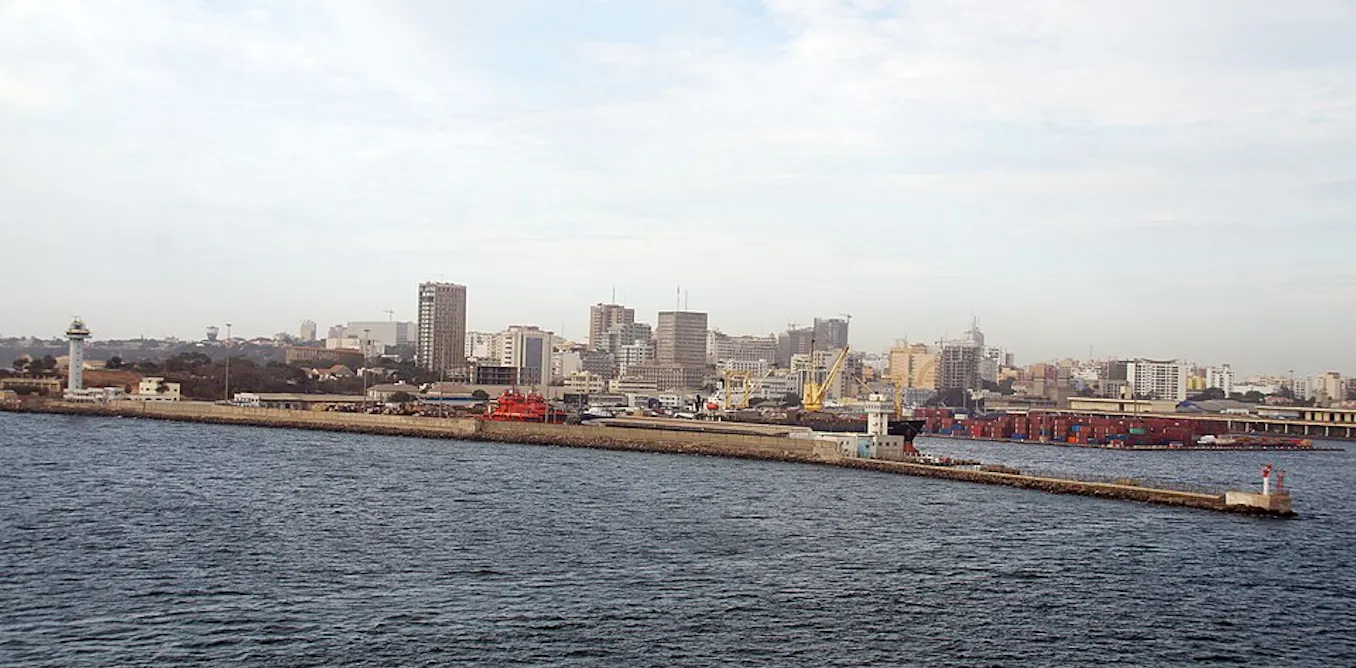
Senegal is preparing to accept a new IMF programme worth about $2.2 billion over 36 months under the Extended Credit Facility, a financing window for low-income countries facing prolonged balance-of-payments problems.
The arrangement is meant to restore fiscal balance and debt sustainability after the country discovered its public debt was far higher than officially reported.
The scale of the problem is stark. Public debt has been revised to 132% of GDP.
Senegal faces a refinancing need of $11.6 billion in 2026, while debt service absorbs 25% of tax revenues. Financial credibility has been downgraded.
In a report from The Conversation, Souleymane Gueye, an academic who has studied IMF policies and prescriptions, argues that the Fund is intervening to resolve a debt crisis whose full extent it did not anticipate.
The IMF is now demanding greater transparency, better debt management, spending rationalisation and increased revenue mobilisation.
Gueye does not dispute that these measures are necessary. His question is why they did not prevent the vulnerability from emerging in the first place.
He warns against making citizens bear the bulk of the correction cost when the surveillance system failed to detect the problem in time.
The programme rests on a logic of fiscal consolidation. Gueye argues this could carry heavy social and economic consequences, as was the case in the 1980s with structural adjustment programmes.
He describes the risk as Senegal paying twice: once for past errors and commitments, and again to correct them.
The correction would involve a restrictive fiscal policy, including drastic cuts to public spending, reform of energy subsidies and privatisation of certain important sectors of the economy.
Gueye argues this strategy would further reduce the state’s fiscal room and could reproduce a cycle of indebtedness, crisis, adjustment, restructuring, return to markets, new borrowing and new crisis.
The government’s own Plan for Economic and Social Recovery was built on a central principle: subordinating any external programme to national economic priorities.
The aim was to structurally transform the Senegalese economy and strengthen its autonomy, avoiding a vicious circle of low productive transformation, deficit, debt, adjustment, insufficient investment and new debt.
Gueye contrasts this with the IMF’s logic, which he says centres on stabilising the financial cycle while ignoring the productive cycle.
If stabilisation becomes the ultimate horizon of the new agreement, he warns, Senegal risks losing part of its capacity to define its own economic and social priorities and programmes.
He argues the IMF should be an instrument, not the economic planner.
While it would be absurd to ask Senegal to break with the Fund today, the country must resolve how to use the IMF without letting it become the principal architect of national economic policy.
Any programme, in his view, must lead toward financial autonomy. A debt treatment plan should free up financial resources for industry, agriculture, local processing of mineral and hydrocarbon resources, and productive infrastructure.
It should not serve only as a lever to amortise a debt of 4,517 billion CFA francs and help restore its sustainability.
Senegal’s economic difficulties, Gueye writes, go beyond the debt problem. The economy produces and transforms little, imports heavily, creates too few jobs and depends on external financing.
Oil and gas, he argues, must serve to transform this debt model, not to postpone its reform.
The new IMF programme, he says, should be understood for what it is: a stabilisation and debt restructuring programme with classic conditionalities.
These include reducing the budget deficit, estimated at 7.6% of GDP, controlling government spending including investment expenditure, mobilising revenue and implementing economic reforms.
It also involves changing state intervention, redirecting subsidies from $428 million to $1.35 billion in the new draft amended finance law, and a debt treatment plan. Gueye calls this nothing other than a structural adjustment plan.
Sanitising public finances, he writes, is not the same as transforming an economy.
If Senegal manages through this agreement to reduce its deficits, restore debt sustainability and regain access to international financial markets without structurally transforming its productive base, Gueye argues the crisis will not be resolved but simply postponed.
He points to the experience of Ghana and Zambia. In Ghana, the IMF programme and restructuring improved macroeconomic balances and debt, with economic growth and inflation evolving favourably in 2025-2026, but economic and social difficulties remain.
In Zambia, restructuring and fiscal consolidation improved debt indicators and some social spending was protected, but poverty and inequalities remain glaring and a new restructuring was necessary. A programme, he concludes, can stabilise finances without deeply transforming the economy.
Senegal, Gueye writes, must work with the IMF to validate its macroeconomic framework today without becoming dependent on the Fund tomorrow. The government must remain master of its choices.
Budgetary discipline is necessary, but austerity cannot become a development strategy, and authorities must be firm during the negotiation and confirmation phases of the programme.
He asks what programme Senegal can build with the IMF without abandoning its own priorities and economic sovereignty.
The country, he argues, must elaborate its own national plan for exiting the crisis and transforming the economy, negotiated with partners but designed from its own economic interests.
Failing to pursue the existing recovery plan, he says, there is urgency in convening general states of the economy to design an economic and social plan that would put Senegal on the trajectory of emerging economies.
Two objectives, in his view, are inseparable: sanitising public finances today and structurally transforming the economy to avoid the next crisis.
This requires protecting productive investment, mobilising revenue, reducing the state’s operating costs, developing national savings, mobilising the diaspora and reducing dependence on external borrowing.
Above all, he writes, Senegal must produce more, process resources locally, export more finished products and create durable jobs. Hydrocarbons offer an exceptional opportunity, but also a risk if they mainly finance current expenditure or new borrowing.
Senegal, Gueye argues, must assume its responsibilities: clarify past debt management, strengthen transparency and consolidate control institutions. But the crisis must also call into question a model too dependent on external debt and still insufficiently productive.
That, he writes, is true economic sovereignty: accepting the help the country needs without abandoning the right to define its future. Senegal must not only seek to become a good borrower again.
It must become an economy productive enough to need to borrow less and less.
The current crisis, he suggests, can be a threat or a historic opportunity. If authorities content themselves with restructuring debt, they may gain time.
If they use the crisis to deeply transform the economy, the financing system and institutions, Senegal will change trajectory.
The real issue, he concludes, goes beyond the financing obtained: will Senegal use this programme merely to restore its accounts or to rebuild its economy?
The first option may pull the country out of the debt crisis and progressively restore financial credibility; the second will pull it out durably.
Senegal needs the IMF to get through a difficult moment, he writes. But it must not entrust the Fund with defining its future.
Success will not be measured by the capacity to repay more debt, but by the capacity to build an economy that needs to borrow less and less.
The real exit plan from the crisis, he argues, must not only allow Senegal to leave the debt cycle: it must allow the country never to return to it.
Source: The Conversation

Comments