

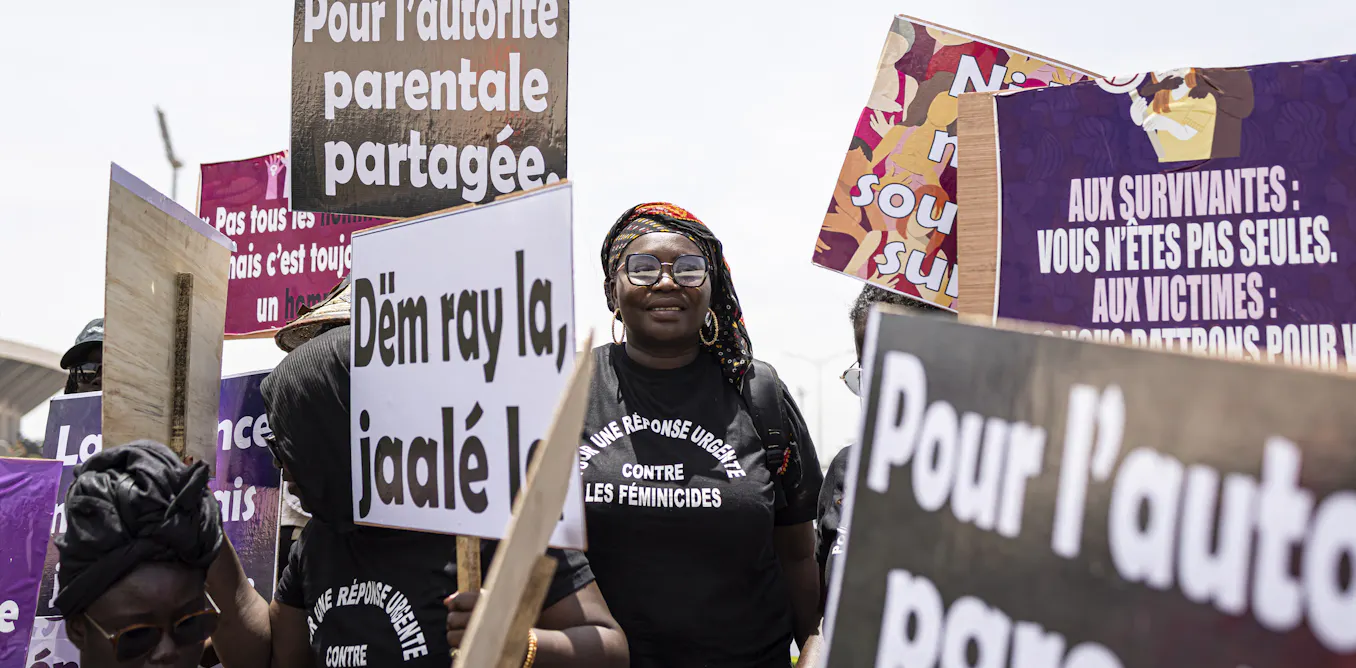
Senegal’s recurring public controversies over dance, dress, abortion and family law are not isolated flare-ups but episodes in a long-running argument about who gets to define the country’s moral boundaries.
A scholar who studies the relationship between politics and religion in Senegal argues that these disputes reveal how much influence conservative groups have acquired in the political arena, and how thoroughly the country’s political class has accommodated them.
Writing in The Conversation, Saliou Ngom traces the debate back to the colonial-era Code and to the years after independence, when President Léopold Sédar Senghor moved to establish a single family code intended to modernize relations between men and women, covering matters such as consent to marriage and legal age.
Conservative actors at the time denounced the move as a break with Muslim values, pointing to the suspension of Muslim courts.
According to Ngom, every attempt to reform the family code since then has reopened the same wound, pitting civil society actors who defend a secular and progressive state against conservative movements that describe such reforms as a form of rampant Westernization.
What has changed, in Ngom’s account, is the scale of the mobilization.
Organizations such as And samm jiko yi – a Wolof expression meaning “Together, let us preserve our values” – have gradually taken on the role of moral enforcers, demanding the censorship of television series deemed too risqué and campaigning against debates related to abortion.
These groups have joined older collectives, using social media to amplify their mobilizations.
Ngom argues that this moral discourse does more than defend abstract religious principles. It constructs a specific figure: the protective man, presented as a bulwark against a society judged effeminate by globalization.
He points to the 2016 controversy over a handbag carried by the singer Wally Seck, influential among young people, which was judged too feminine, and to public officials who present their masculinity as an argument of both virility and morality.
The defense of paternal authority and opposition to abortion, he writes, sketch the same figure – that of the “real man” (Góor Yàlla, Jambaar) facing threats perceived as external or subversive.
Moral Gendarmes
The electoral dimension gives these themes their full meaning, according to Ngom.
At regular intervals, elections bring the same subjects back to the surface: hardening positions on sexuality and morals, reform of the Family Code, and promises of firmness toward artists judged complacent about shocking scenes.
The calculation, he writes, is not only juridical but political – a way to claim a territory that the religious electorate often considers abandoned by leaders, and to distinguish oneself from competitors seen as too cautious or too aligned with Western norms.
This type of positioning, he adds, has become an accessible resource for anyone seeking to rally public opinion quickly, particularly through social media.
In recent years, Ngom writes, the entire Senegalese political space has integrated moralization as a performative electoral language, whatever the political camp.
The protection of the family, of paternal authority and of local cultural values are added to more traditional themes linked to economic sovereignty.
Moralization as Electoral Language
Ngom identifies common mechanisms behind these rhetorical strategies, usable by any movement seeking to increase its credibility with the public: a Senegalese and believer “we” facing a “them” embodied by international actors, transnational rights movements and sometimes feminist organizations.
This rhetoric works, he argues, because part of the population recognizes itself in it.
Among many young people in particular, he writes, there exists a feeling that the West and international actors – donors, agencies, NGOs, major institutions – seek to impose cultural norms on them regarding family, gender or morals under the guise of universalism.
The conflict staged, between a virtuous people seen as the guarantor of traditional values and elites judged corrupt or subservient to a Western model, gives political form to that feeling, responding to a social expectation relayed and reinforced by organizations that claim to speak in the name of the people.
Political figures and conservative groups, Ngom writes, draw their substance from one another, engaging in a spiral in which each boasts of defending the will of the people against international norms perceived as detached.
Conservative collectives, in his account, no longer content themselves with preaching. They have developed a strategy of influence that passes first through consultation of confraternal religious actors to obtain letters of support and greater legitimacy.
It is also exercised through attempts to influence audiovisual regulatory bodies in the name of fighting shocking scenes or dances judged obscene, through street demonstrations that can gather several thousand people, and more directly through electoral support for candidates or parties judged reliable on these questions.
Certain figures and political groups known for their commitment on this terrain, he writes, have been able to weigh in on the political recompositions of recent years.
A Question That Remains Open
A deeper question emerges from these recurring controversies, according to Ngom: in a state that defines itself as secular, who really controls bodies and actions?
The state, he writes, often struggles to decide for itself through law and appears to rely in practice on these actors to regulate what it prefers to leave in ambiguity.
This balance between institutional secularism and religious accommodations, he argues, is found across the political landscape whatever the party in power.
What has changed is the intensity with which sovereignty and morality are now articulated in political discourse in general – a dynamic, he concludes, that goes beyond the usual partisan divides and is carried as much by parties as by a good part of public opinion itself.
Source: The Conversation

Comments