

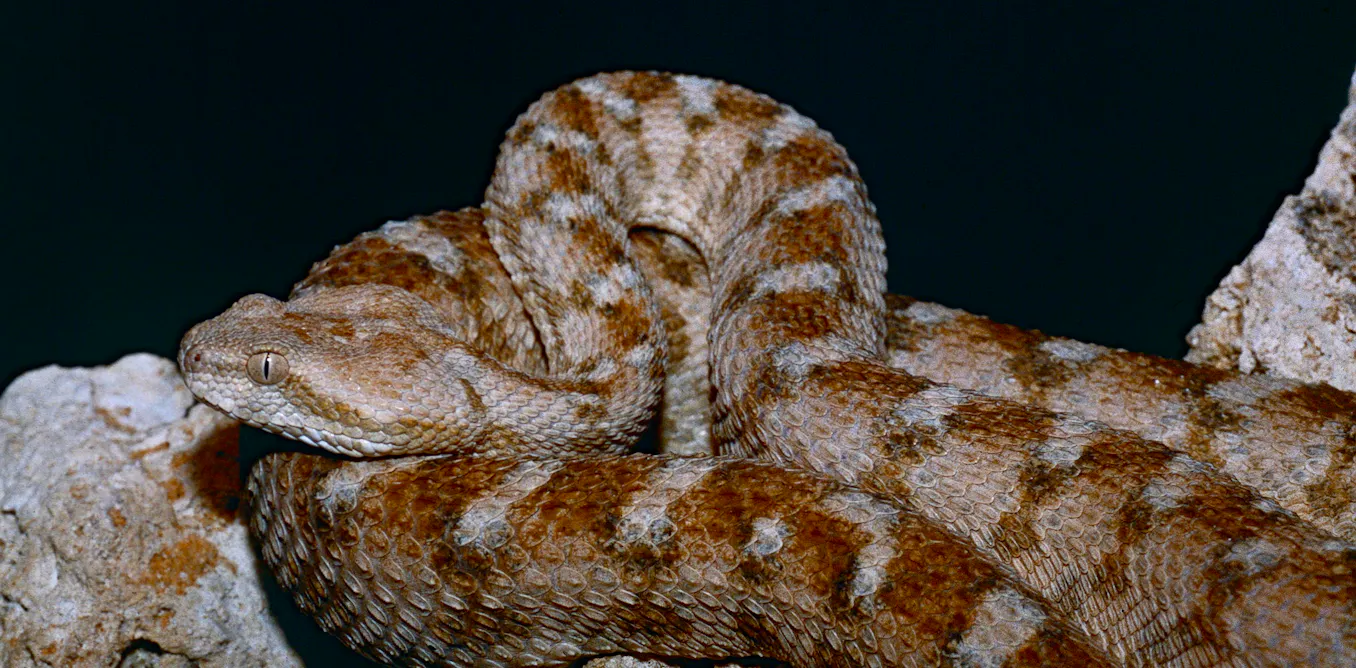
At least 2.1 million people worldwide suffer snake envenoming each year, and the true figure could reach 7 million, according to a new global burden study exposing a public health crisis larger than official statistics.
Annual deaths from venomous snakebites may range from 274,000 to 513,000 once under-reporting is accounted for.
The research, published by a team of snakebite and tropical disease epidemiologists, updates their landmark 2008 global burden study.
It draws on data from 79 countries, reviewing studies published up to 31 March 2025, and fills remaining gaps with a geostatistical model that combines real-world data with local environmental and socioeconomic factors.
The authors describe a data crisis at the root of the problem: more than half of the countries where venomous snakes pose a threat do not keep count of how many people are bitten or envenomed.
In rural sub-Saharan Africa and south Asia, many victims live hours from the nearest clinic, lack transport, or seek care from traditional healers, so their cases never enter national health statistics.
Uncovering the hidden burden
To work around the missing records, the team used a model-based geostatistics framework. The approach combines known data points with environmental signals to calculate a range of likely outcomes by statistical probability, rather than assuming data exists for every region.
Inputs included climate, snake species richness and socioeconomic indicators, allowing the model to estimate the probability of snakebites in specific locations even where official health records were blank.
By comparing hospital-reported data and regional statistics against ground-level community surveys, the framework produced both a baseline floor and a potential upper ceiling for envenomings and fatalities.
The geographic distribution of the burden is uneven. Sub-Saharan Africa accounts for 45% of all global envenomings and fatalities, and people there experience envenoming and death at nearly three times the rate seen in south Asia.
Nigeria, the Democratic Republic of Congo and Ethiopia face a high burden, driven by dense rural populations and high exposure in agricultural fields.
Why sub-Saharan Africa is hit hardest
The researchers attribute the disproportionate harm in sub-Saharan Africa to structural factors.
The continent hosts a rich diversity of medically important venomous species, including saw-scaled vipers (Echis spp.), puff adders (Bitis arietans), African cobras (Naja spp.) and mambas (Dendroaspis spp.), which the study links to substantial morbidity and mortality across the region.
Millions of rural agricultural workers labour in open fields without protective boots and walk on unlit footpaths at night.
When a bite occurs, fragile health systems, long travel distances to regional facilities and the high cost or total absence of effective antivenom can turn a treatable medical emergency fatal. The authors note similar conditions exist in parts of Asia.
Beyond the deaths, the study estimates that over 800,000 survivors are left with long-term physical disabilities each year, including amputations and other permanent impairments.
Those disabilities can reduce household income, increase healthcare costs and push already vulnerable farming families deeper into poverty.
Going forward
The World Health Organization has set a target to halve snakebite mortality and disability by 2030.
The study’s authors argue that meeting it requires moving away from guesswork and using spatial risk data to guide policy, identifying high-risk hotspots so governments and global health partners can stockpile antivenom where it is needed most, train primary healthcare workers in high-burden rural zones and improve rapid transport infrastructure.
The work was supported by the Medical Research Council under grant MR/P024513/1.
Source: The Conversation


Comments