
Climate variability from the Atlantic Ocean can be linked to year-to-year changes in cutaneous leishmaniasis transmission across north Africa, according to research by Adrià San José Plana and Xavier Rodó.
The study examined whether the region’s arid zones carry enough long-term climate predictability to forecast the parasitic disease months ahead of time.
Cutaneous leishmaniasis is a vector-borne disease transmitted by infected female sandflies, with around 1 million cases a year worldwide.
It is rarely life-threatening and often resolves on its own, but it leaves skin lesions and ulcers that can last months or years, and in some cases permanent scars and lasting physical, psychological and social harm, including stigma.
What’s known about the relationship between climate and diseases?
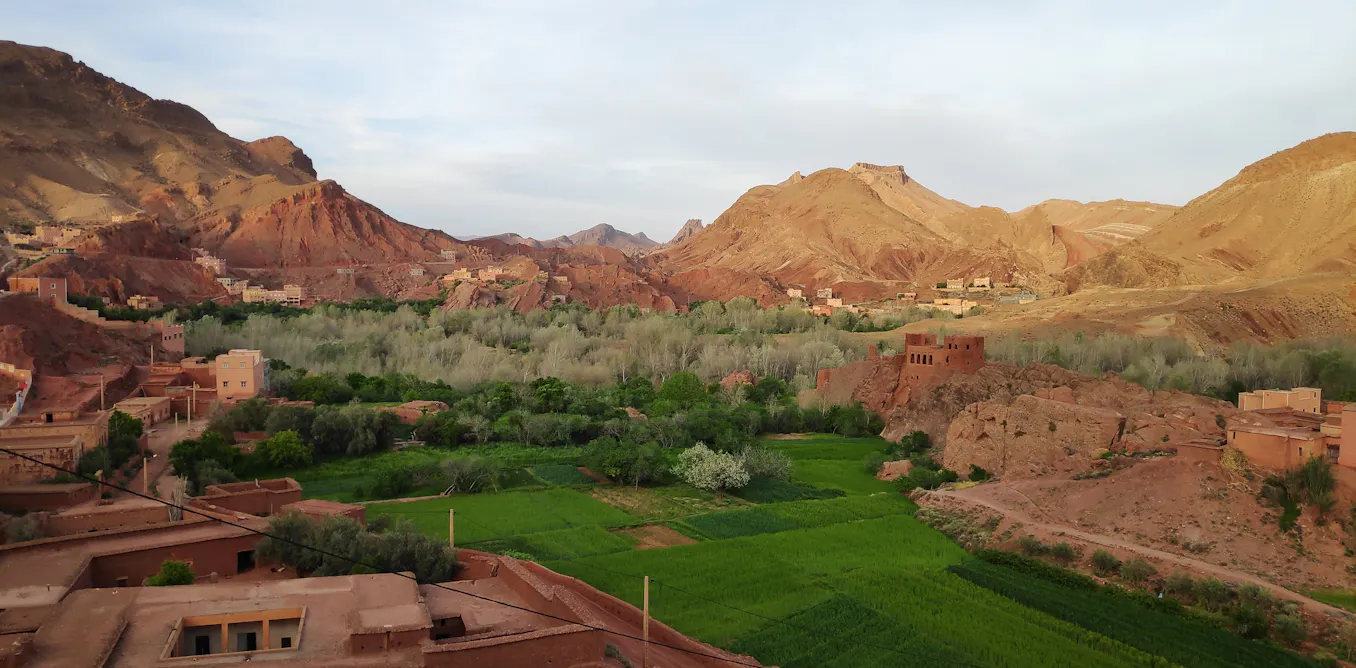
In north Africa, the disease is mainly caused by the zoonotic parasite Leishmania major, which is maintained in animal reservoirs, particularly rodents in arid environments close to villages.
The disease is strongly associated with succulent, salt-tolerant desert shrubs that provide rodents with food and vegetation cover, while the burrows the rodents make beneath or near the vegetation offer shelter and suitable habitats for both rodents and sandflies.
In Morocco especially, another form of the disease, Leishmania tropica, also circulates with humans as the main reservoir, and it was included in the analysis.
What was the focus of your study?
Previous research has identified rainfall as an environmental factor influencing zoonotic cutaneous leishmaniasis transmission in the region, operating through a cascade of ecological effects: increased rainfall, growth of desert shrubs, more rodents and sandflies, and greater transmission.
In the tropics, phenomena like El Niño create climate signals that are predictable months to years in advance, and diseases sensitive to temperature or rainfall can inherit some of that predictability.
Outside the tropics, the atmosphere usually loses its memory much faster, making it much harder to predict climate conditions months ahead. The researchers wanted to find out whether north Africa might be different.
How does climate affect its spread?
Rainfall is normally hard to predict because it depends on many competing processes at once: land-sea interactions, mountains, and shifting moisture in the atmosphere.
Pin down a signal in one of those processes, and the others tend to drown it out. North Africa’s arid zones are different.
With few other rain-generating processes at play, rainfall there is governed almost entirely by large-scale westerly winds carrying Atlantic moisture inland. The desert acts as a filter, letting that single Atlantic influence show through clearly in local rainfall.
How did the north African climate help your research?
The researchers found that the chain linking the Atlantic to disease transmission is remarkably coherent. Slowly varying temperatures in the Atlantic influence large-scale atmospheric circulation and the strength of westerly winds.
These winds transport moisture towards north Africa and influence rainfall in areas where leishmaniasis is transmitted. Rainfall affects vegetation in the region’s arid ecosystems.
Changes in vegetation affect the rodent populations that act as reservoirs for Leishmania major, as well as the conditions in which sandflies thrive. These ecological changes are then reflected in changes in cutaneous leishmaniasis transmission.
That Atlantic signal can also improve the ability to anticipate changes in leishmaniasis transmission, the researchers said.
What are your main findings?
Scientifically, the findings matter because they show long-range climate predictability is not limited to the tropics, where most seasonal forecasting research has focused.
A signal originating in the Atlantic can travel through the atmosphere and local ecosystem and surface, months later, in patterns of disease transmission.
Deserts may be especially good places to detect this kind of signal, precisely because their aridity strips out the competing processes that would otherwise mask it.
Whether the same approach transfers to other diseases and regions depends on how tightly their local ecology is tied to rainfall.
From a public-health standpoint, the findings lay groundwork for forecasting cutaneous leishmaniasis in Morocco and Tunisia. The forecasts could give health authorities advance warning to ramp up surveillance, plan vector control and prepare health services.
What’s significant about what you’ve found?
Source: The Conversation
Comments