
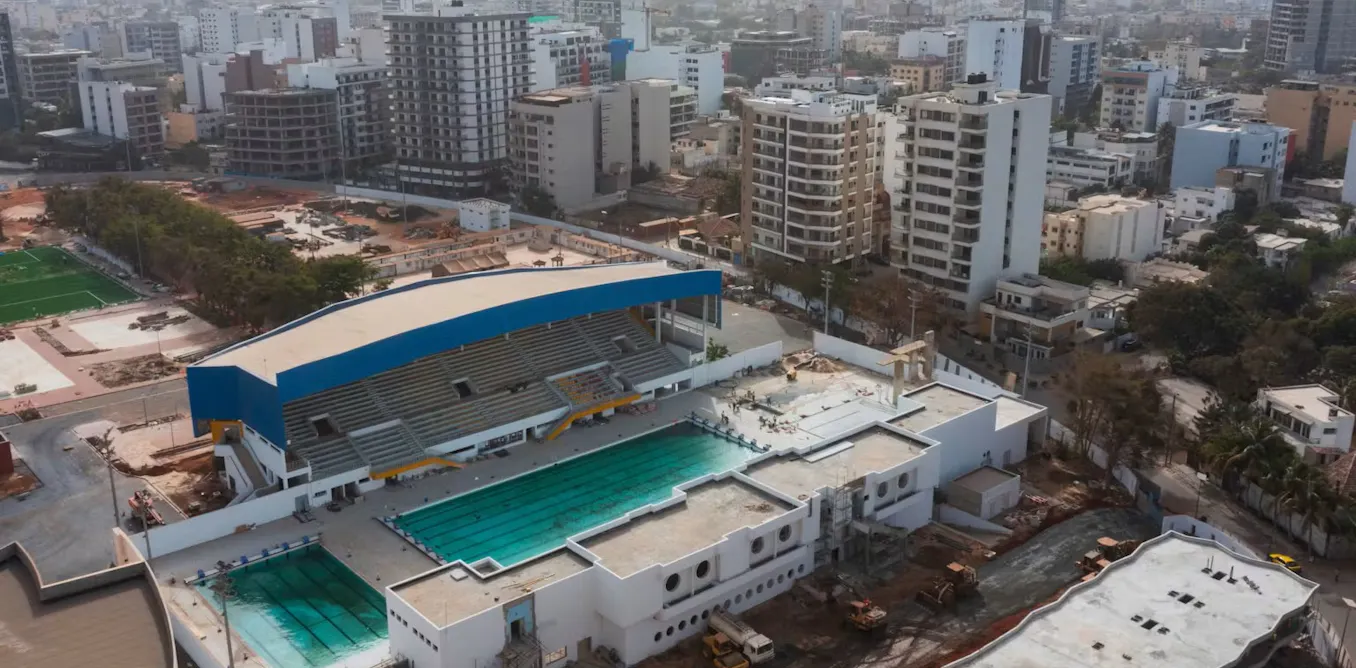
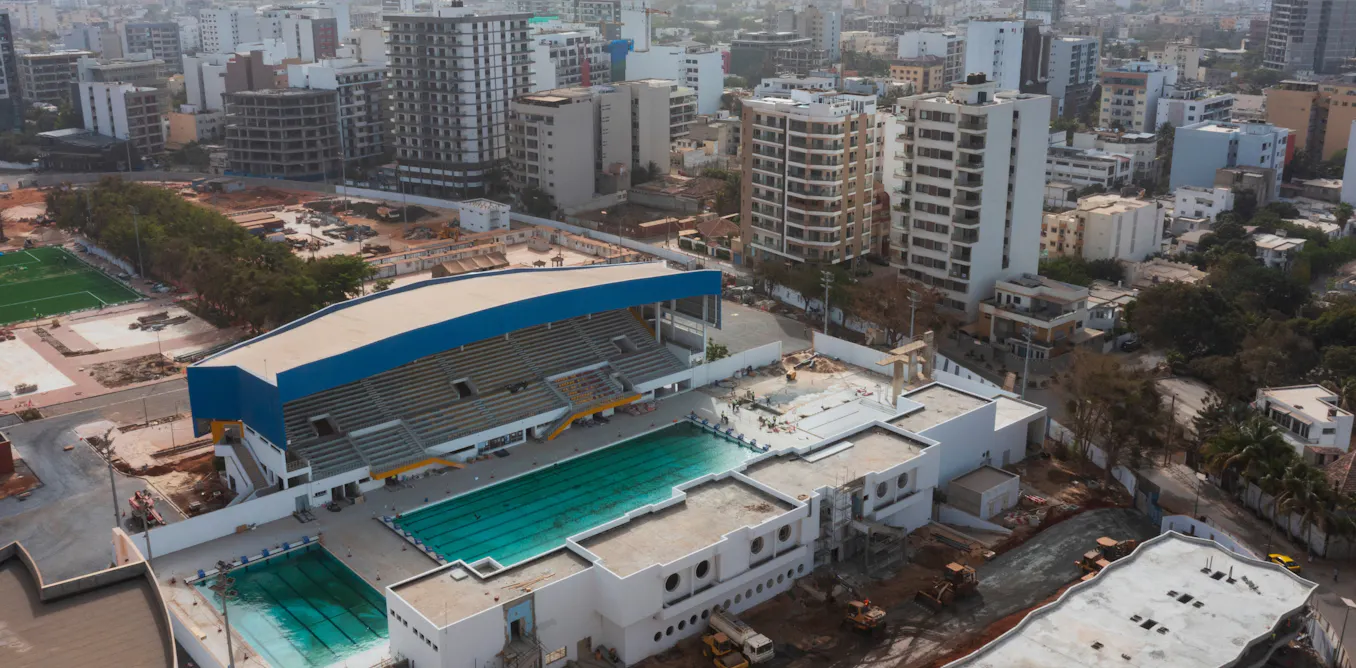
Senegal has built, renovated and modernised sports facilities across Dakar, Diamniadio and Saly for the Youth Olympic Games, which the country is hosting from 31 October to 13 November 2026.
The venues are in place.
The question that outlasts the competition is how the government will finance, manage and maintain them once it ends.
Two researchers put that question at the centre of an assessment of the Games’ legacy. Djibril Diouf specialises in public-private partnerships; Amadou Moctar Ndiouck works on the law and management of sports infrastructure.
In a report from The Conversation, they argue the Games could help reshape Senegal’s model and set out what they see as the respective roles of government, local authorities and the private sector in funding sports facilities.
For the Games, the government chose a model of direct, large-scale investment backed by partners including the West African Economic and Monetary Union and the French Development Agency.
Given the size of those contributions, the partnerships have significantly shaped how the Games are funded. The model still relies on public money or public-private partnerships, and now extends to the long-term management of the facilities.
As part of the Games’ legacy, the researchers say, that could open the way for greater involvement by private actors.
Can the Youth Olympic Games investment bring about lasting change to the way sports infrastructure is funded in Senegal?
Senegalese law places the duty to build sports facilities on the government and local authorities.
That principle runs from the 1984 Sports Charter to Articles 36 through 51 of the New Sports Code, adopted by the National Assembly on 11 May 2026.
In practice, the researchers write, ambitious public policies for infrastructure are rare outside major sporting events, which leaves private sector involvement necessary.
The 2021 law on public-private partnership offers a route to new approaches for sports infrastructure. The same financing model was used for the toll highway and Dakar’s Blaise Diagne International Airport.
Applied to sports, the researchers argue, it could boost private-sector participation in building and managing public facilities and help ensure both their financial and social profitability.
Private involvement brings extra money when public financing falls short and supplies technical expertise, which the researchers say helps keep facilities up to international standards while keeping them accessible to the wider population.
What role should the government assign to the private sector in the financing and management of sports infrastructure after the Youth Olympic Games?
The renovated facilities are concentrated in Dakar, Diamniadio and Saly, and the researchers argue a single, uniform maintenance model will not work across all three because local realities differ.
In Dakar, they point to the Iba Mar Diop Stadium, where Cheikh Anta Diop University must be involved through the National Higher Institute of Popular Education and Sports, headquartered on the site since 1982.
Placing both the stadium and the Olympic swimming pool under the institute’s care would ease maintenance and improve financial profitability, in their assessment.
For Diamniadio, they identify the Office for the Management of Sports Infrastructure, attached to the Ministry of Sports, as well suited to run facilities located far from urban centres that mainly draw crowds for major sporting events.
The office is a public industrial and commercial entity, which the researchers say allows it to help facilities deliver both financial and social benefits.
In Saly, the facilities sit in a tourist and beach resort area, where the researchers expect private-sector involvement to work best. Private operators, they write, can bring a professional approach to management, improving service quality and supporting long-term sustainability.
How can Senegal ensure that infrastructure renovated for the Youth Olympic Games is not too expensive to maintain after the Games?
The funding model built on direct public investment and public-private partnerships is geared to large-scale facilities capable of hosting major events.
Separately, the researchers note, the Ministry of Sports has since 2025 run an experimental local infrastructure programme that includes building 25 multi-purpose facilities in 25 municipalities across Senegal. They welcome the initiative.
Their argument is that large-scale facilities are necessary for major events, but local facilities are equally vital and must be supported.
Physical and sports activities take many forms across communities, including competition, recreation and health, and the researchers say the government and local authorities must fund those everyday needs through their own budgets.
Bilateral international cooperation offers another route. Some countries, including China and Russia, have often supported the construction and renovation of sports facilities in the global south, Senegal among them.
Source: The Conversation
Comments