

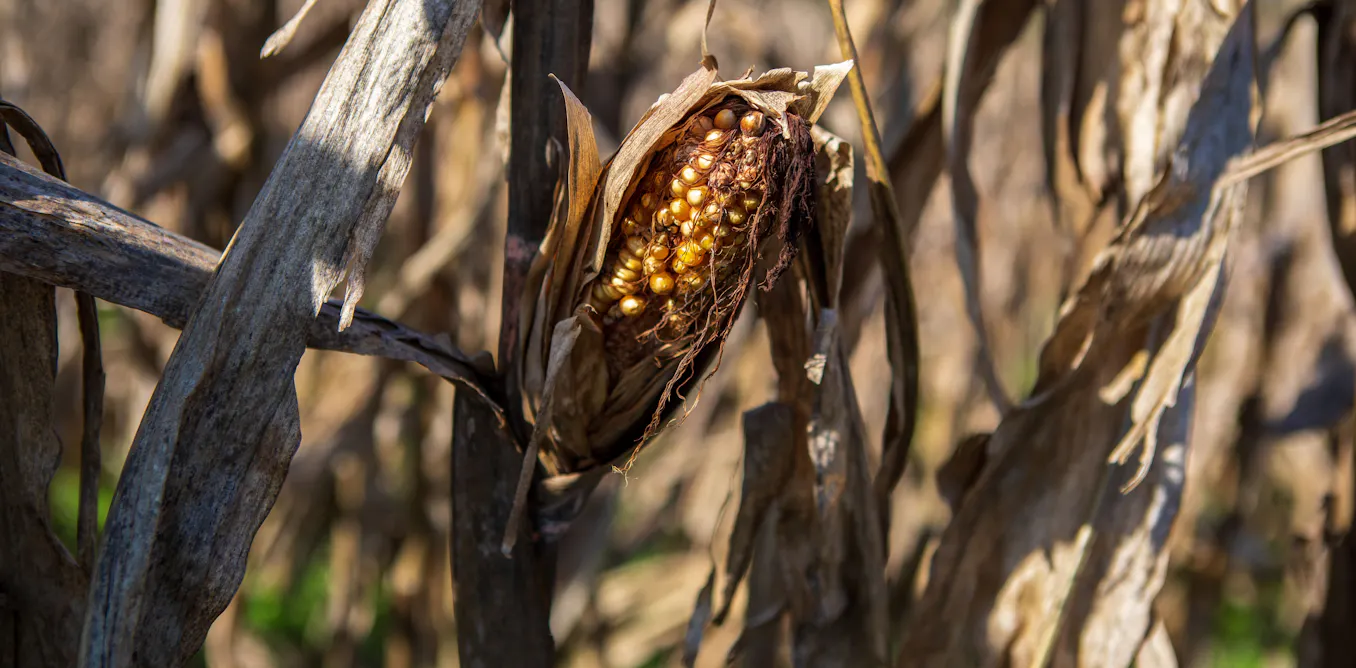
South Africa’s maize prices could become more volatile as a “super” El Niño strengthens, even with larger stockpiles than previous droughts, research examining nearly three decades of price data shows.
The current El Niño is expected to reach very strong intensity, peaking towards the end of 2026 and lasting through at least February 2027.
In southern Africa, El Niño — caused by warmer sea surface temperatures in the Pacific Ocean that affect air pressure and wind directions — usually brings below-average summer rainfall and increases the risk of drought, which means poor harvests of maize, a staple crop for many countries on the continent.
Maize prices in South Africa are influenced by overseas prices, not just the local harvest. Because maize is bought and sold globally, futures prices on the Johannesburg Stock Exchange tend to follow prices on the Chicago Mercantile Exchange.
When those prices rise or fall, South African prices can follow, although the rand’s exchange rate and local supply and demand also affect them.
Agricultural economists recently investigated whether South African maize prices still track US prices during El Niño and La Niña periods, or whether these weather patterns make local prices more unstable.
La Niña events occur when Pacific Ocean sea temperatures are below average, bringing generally favourable conditions for farming in southern Africa.
The researchers analysed daily US and South African maize futures prices from 1997 to 2024, alongside exchange rates and records of El Niño and La Niña.
Using statistical models, they examined how price swings in the US market carried through to South Africa and whether these weather events made prices more unstable.
The research found that US and South African maize prices generally moved together over the long run. However, maize price volatility was more persistent during both El Niño and La Niña events.
During El Niño droughts, South Africa produces less maize, leaving buyers competing for a smaller supply. This can push local prices up even if maize remains plentiful and prices stay steady in the US.
If South Africa needs to import maize, buyers must also pay for shipping and other import costs. These higher costs can feed through to the price consumers pay for maize meal.
South Africa produces two types of maize: about of white maize were produced in the 2025/26 season (mainly used for human consumption) and of yellow maize for animal feed.
In the drought-affected 2015/16 season, production fell to roughly 3.3 million tonnes of white maize and 4.3 million tonnes of yellow maize.
In good years, South Africa is an exporter of both white and yellow maize. White maize is mainly sold to countries in Africa and yellow maize to markets outside Africa.
In bad years, when South Africa cannot grow enough maize to meet its own needs, the country must import maize and pay the international price at that time.
El Niño can also influence prices long before any shortage occurs. If traders expect droughts and poor harvests, maize prices may increase in advance.
The investigation found two distinct patterns. Across six La Niña episodes, South African maize prices generally remained linked to US prices.
If local prices rose or fell more sharply than US prices, the gap usually narrowed again quickly. How quickly this happened depended on the strength of La Niña and how much maize South Africa had in stock.
During the three El Niño episodes (May 1997-May 1998; October 2014-April 2016; May 2023-April 2024), however, South African prices generally were not aligned with US prices. Drought conditions likely led to poor harvests and higher maize prices in South Africa.
These supply shocks in the small local market did not influence the US market, and the link between the two markets weakened.
Between 1997 and 2024, average daily price changes in South Africa and the US were similar when measured in the same currency. But South African price changes showed bigger rises and bigger falls.
The analysis suggests that these bigger swings in both white and yellow maize prices are linked to changes in ocean temperatures and air pressure associated with El Niño and La Niña.
These changes influence the weather that traders expect and their predictions of how much maize farmers will harvest. Prices can rise or fall as those expectations change.
None of the El Niño episodes included in the analysis were identical, so the researchers say they cannot be certain what may unfold. South Africa currently has much larger maize carryover stocks than were available during previous El Niño events.
The maize stocks are between one third and one fifth higher than they were at the beginning of two previous El Niño years.
Taking into account how much maize South Africans eat, and even though poor harvests are expected, the country should still have enough maize available at the end of the marketing season in April 2027.
Based on the expected stock levels, local maize prices are unlikely to rise as high as the cost of buying maize from abroad and bringing it into South Africa.
White maize costs more to import than yellow maize because less is traded internationally. If supplies run short, its price could rise more sharply, as it did in 2016, making maize meal more expensive.
For policymakers, the researchers say the priority must be to strengthen early warning systems so that reliable climate and crop information reaches farmers, traders and food processors as quickly as possible.
Timely information helps markets adjust gradually rather than react suddenly when harvest prospects deteriorate.
For producers and agribusinesses, the focus should be on risk management. This includes maintaining adequate grain stocks, using available hedging instruments where appropriate, and investing in production practices that improve resilience to drought.
Source: The Conversation

Comments