

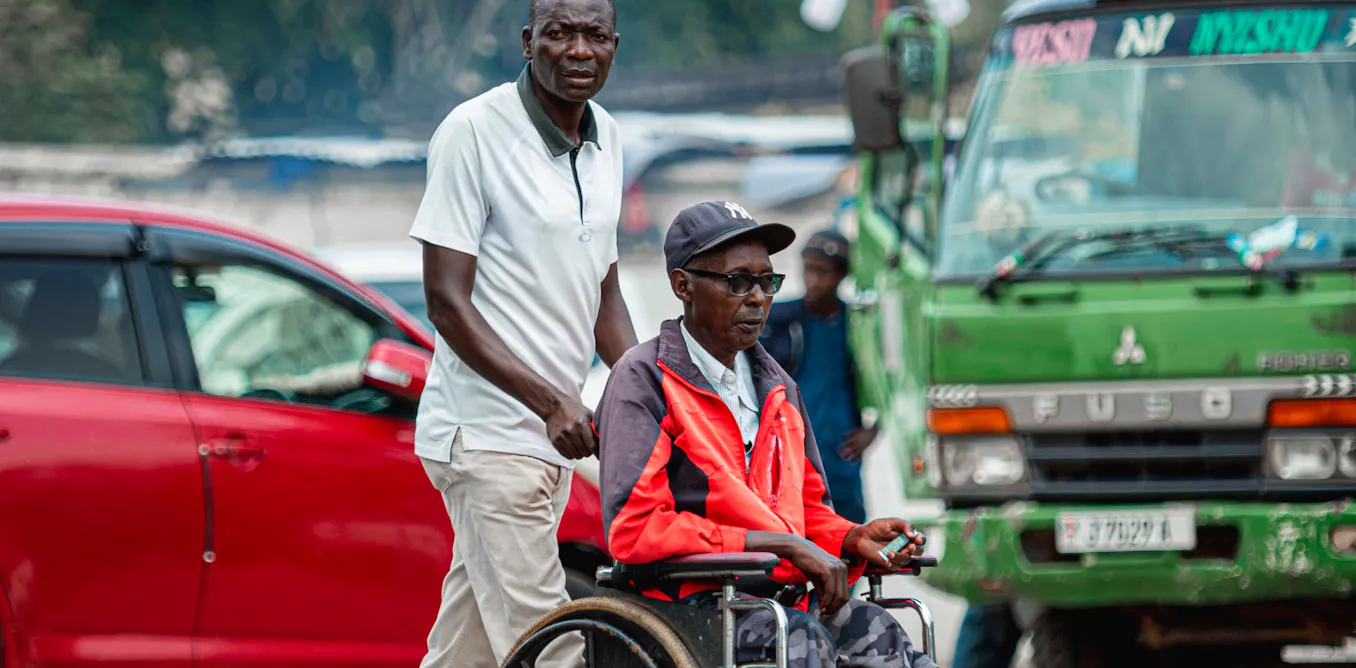
More people in sub-Saharan Africa survive illnesses and injuries that once killed, but more live with long-term consequences as health systems fail to expand rehabilitation at the same rate.
That is the central finding of the Global Burden of Disease 2023 study, which reports that years lived with disability worldwide rose from 786 million in 2010 to 990 million in 2023.
Globally, healthy life expectancy at birth rose from 61.1 years in 2010 to 63.1 years in 2023, but the gap between how long people live and how long they live in good health is widening.
Ukachukwu Abaraogu, a physiotherapist and rehabilitation researcher who contributed to the study, writes in a report for The Conversation that the findings complicate a common assumption in African health policy: that disability would decline automatically as healthcare improved.
In many cases, he argues, rising disability is linked to health system success, because more people now survive conditions that were once fatal.
Looking beyond deaths
Survival often carries consequences that last for years or a lifetime. Someone who survives a stroke may live for many years afterwards with weakness, mobility difficulties or communication problems that require ongoing rehabilitation and support.
Injuries remain a major cause of long-term disability, particularly among younger adults, and improvements in survival from infectious diseases such as HIV and tuberculosis mean more people are living with chronic health needs.
Population growth, ageing and the rising prevalence of noncommunicable diseases are adding to the burden.
What the findings tell us
Health systems have become increasingly effective at reducing mortality but have not expanded rehabilitation services at the same pace, according to the report.
Many are still poorly equipped to help people live well after illness or injury, even though rehabilitation can help patients recover, maintain independence and participate in society.
Abaraogu identifies three areas where governments and development partners could act: integrating rehabilitation into primary healthcare, investing in workforce development, and expanding access to community-based services so that care is available where people live and work.
The way forward
The study’s figures suggest that many people are spending more years living with the consequences of disease and injury, a shift that reframes how health progress in the region might be measured.
Abaraogu writes that Africa’s health gains over recent decades are worth celebrating, but that success should be judged not only by lives saved but by whether people can live well after survival.
Source: The Conversation
Comments