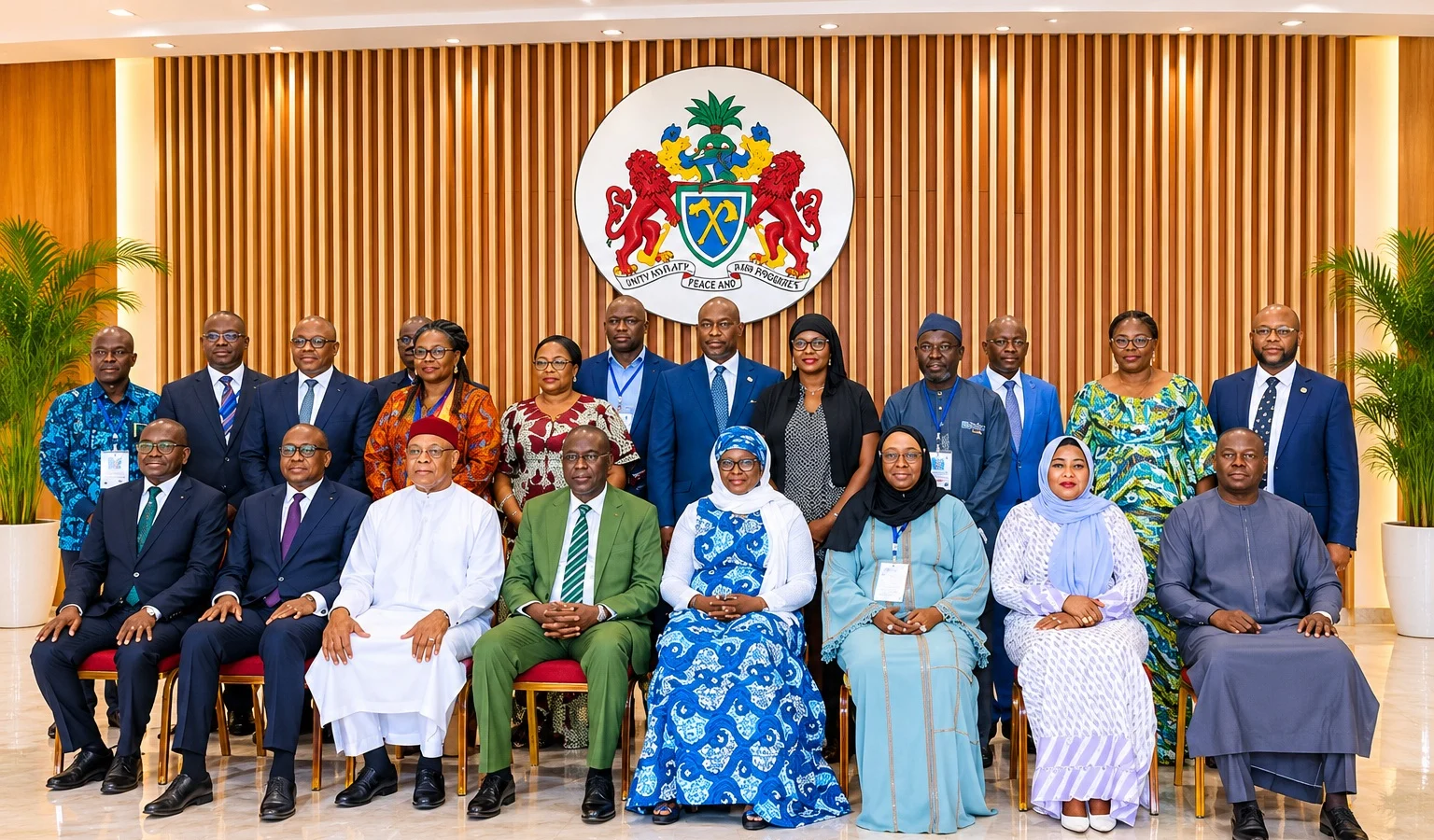
Gambia used its chairmanship of the Maritime Organisation of West and Central Africa to press transport ministers on financing, with a Regional Maritime Development Bank in Abuja central to two-day talks in Banjul.
The Ministerial Meeting of the 12th Ordinary Session of the MOWCA Bureau of Ministers was held on Tuesday, 17 November 2026, closing a summit that opened on Monday, 16 November and brought together ministers, government officials and industry stakeholders from across the region.
Ebrima Sillah, The Gambia’s Minister of Transport, Works and Infrastructure, described the session as a decisive milestone in translating the political will of the 19th General Assembly into financial and operational realities.
That assembly, held in Banjul nine months earlier, had entrusted The Gambia with MOWCA’s chairmanship for the 2026–2027 biennium.
On the bank, ministers examined a Special Committee of Experts report alongside legal frameworks prepared by Juris Law. The documents were reviewed as part of the push to move the Abuja-based institution from proposal to operation.
Sillah said removing bottlenecks was paramount to unlocking financing for port infrastructure, fleet renewal and maritime commerce.
The Bureau also reviewed the Regional Maritime Fund, human resource development, and member states’ financial contributions for 2027.
Discussions covered engaging ECOWAS and WAEMU to resolve double-taxation hurdles affecting MOWCA’s financial sustainability. Sillah said the engagement with the two regional economic communities was aimed at autonomy.
Delegates deliberated on a proposed transformation of MOWCA into the continental African Maritime Organization. The proposal was among the items before the ministers during the session.
Ministers also reviewed preparations for the inaugural MOWCA Heads of State Summit to be hosted by Côte d’Ivoire, examining the roadmap for that gathering.
MOWCA Secretary-General Dr. Paul Adalikwu said the region must demonstrate collective political will to translate commitments into practical programmes.
He added that history will judge MOWCA by the tangible impact of its decisions rather than the number of meetings or resolutions.
The Banjul session follows the 19th General Assembly’s decision to hand The Gambia the bureau chairmanship, a role that placed the country at the front of the organisation’s push to convert commitments into financing and operations.
What the ministerial meeting did not produce, at least on the record reviewed here, was a dated implementation schedule for the bank, a figure for member states’ 2027 contributions, or a decision on the proposed continental transformation. The session’s outcomes on those points were not specified.
Discussions covered engaging ECOWAS and WAEMU to resolve double-taxation hurdles affecting MOWCA’s financial sustainability.
The ministerial session placed both on the agenda; the operational steps that follow were not set out in the materials available.
Ministers also reviewed preparations for the inaugural MOWCA Heads of State Summit to be hosted by Côte d’Ivoire, examining the roadmap for that gathering.
Comments