Ghana warned that delays in delivering promised climate finance could undermine Africa’s confidence in international climate negotiations.
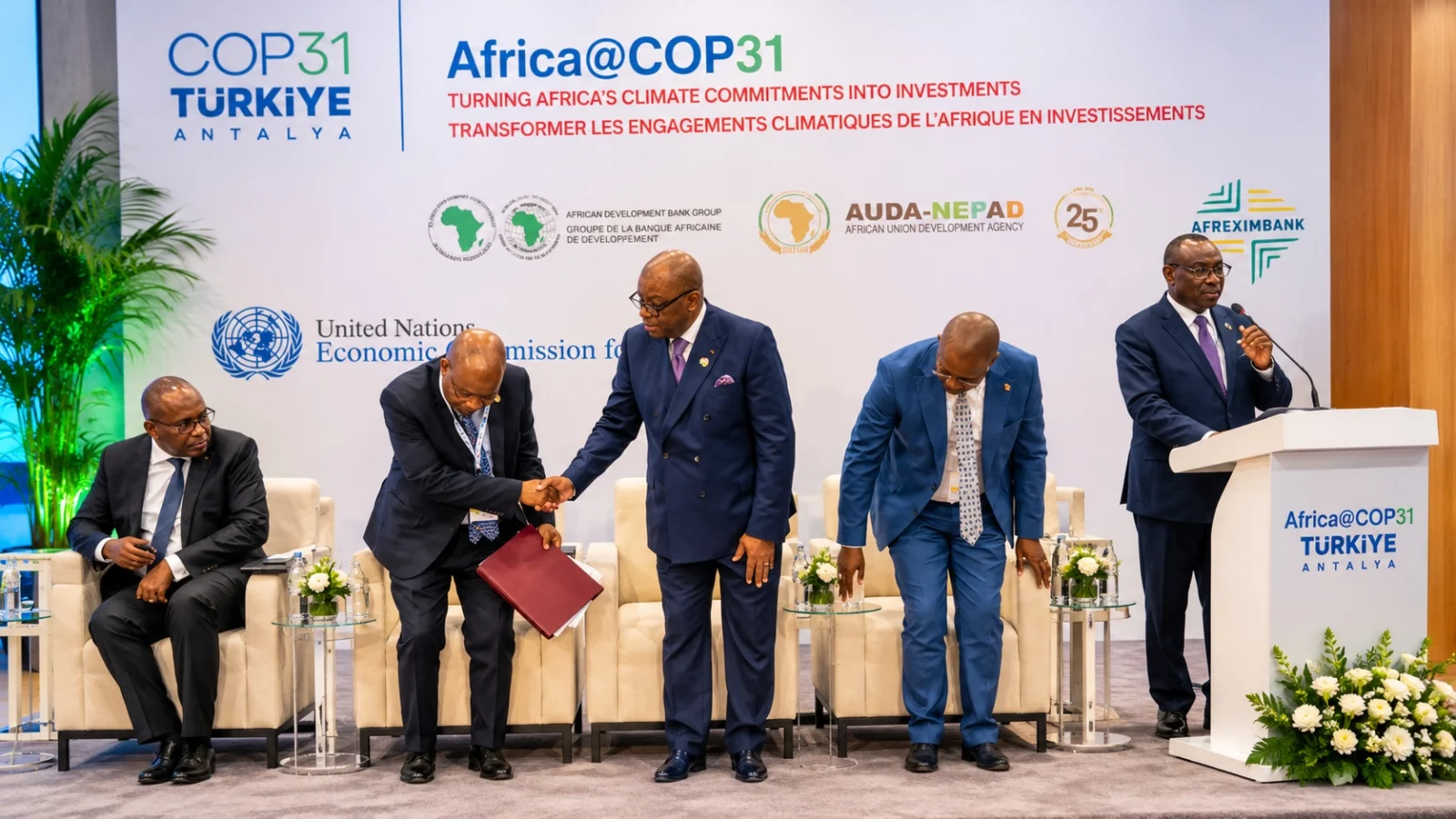
Speaking at the UN Framework Convention on Climate Change meeting in Antalya, Türkiye, where she presented Africa’s position at COP31, Minister of Environment, Science and Technology Dr Zanetor Agyeman-Rawlings said climate finance is an obligation under the Paris Agreement and should not be treated as charity or provided mainly through loans.
The financing figures she disclosed at the African Ministerial Conference on the Environment, held on the margins of COP31, set out the scale of the gap.
Africa needs about $277 billion annually to implement its climate plans by 2030, with current financing covering only about 11 per cent of that.
The continent also needs about $120 billion annually by 2035 to address climate change impacts, with adaptation financing far below that level.
Globally, international public funding for adaptation was between $28 billion and $32 billion in 2024, against projected annual needs of $305 billion by 2035.
Ghana alone needs more than $20 billion to implement its National Adaptation Plan between 2025 and 2030.
Agyeman-Rawlings said African countries submitted credible Nationally Determined Contributions, developed carbon markets and formulated climate action plans, but lacked the financial resources pledged by developed countries to implement those commitments.
She said African countries are not seeking to renegotiate existing climate commitments but expect developed countries to honour financing pledges already made.
She called for a clear roadmap to implement the Belém agreement to at least triple adaptation finance for developing countries by 2035, and said the annual $300 billion climate finance goal agreed in Baku should be treated as a minimum benchmark rather than the final target.
She urged countries to work towards the broader $1.3 trillion goal outlined in the Baku-to-Belém Roadmap.
On loss and damage, she noted that the first funding round of the Loss and Damage Fund had about $250 million available against requests estimated at $2 billion to $3 billion, including $1.4 billion from African countries.
She warned against double-counting of climate finance and excessive reliance on loans, and said African countries should not accept new climate obligations without adequate financial, technological and capacity-building support.
She urged rejection of additional obligations without the means to implement them, and called on African ministers to defend maintaining the commitment to triple adaptation finance.
She also called for recognition of Africa’s historical circumstances, including the effects of colonisation, in climate discussions.
On the negotiations themselves, Agyeman-Rawlings said Africa was not threatening to withdraw, and called for a united African position at COP31 to secure concrete commitments on climate finance and adaptation. “We will not leave Antalya with words alone,” she said.
The chair of the African Group of Negotiators, Nana Dr Antwi-Boasiako Amoah, addressed African civil society organisations at COP31.
He said negotiations on climate finance were among the most difficult, particularly on developed countries’ obligations under Article 9.1 of the Paris Agreement, and that the group is pushing for adoption of a work programme as part of the agenda to advance Article 9.1 discussions.
The ministerial meeting considered issues under negotiation at COP31, including climate finance, adaptation, loss and damage, just transition, energy transition and climate-related trade measures.
Africa holds about 30 per cent of the world’s critical mineral reserves, but much of the continent’s resources are exported with limited local value addition.
Agyeman-Rawlings said Ghana would champion Africa’s demands for climate justice beyond Antalya to Addis Ababa ahead of its 2027 African Union Chairmanship.
COP32 is scheduled to be hosted by Ethiopia in Addis Ababa in November 2027, and a joint session of African Ministers of Environment and Ministers responsible for Finance, Planning and Economic Development is expected in Addis Ababa from March 17 to 23, 2027.


Comments