Between 42.5 and 62 tonnes of mercury enter Ghana every year through illicit channels, destined for artisanal and small-scale gold mining.
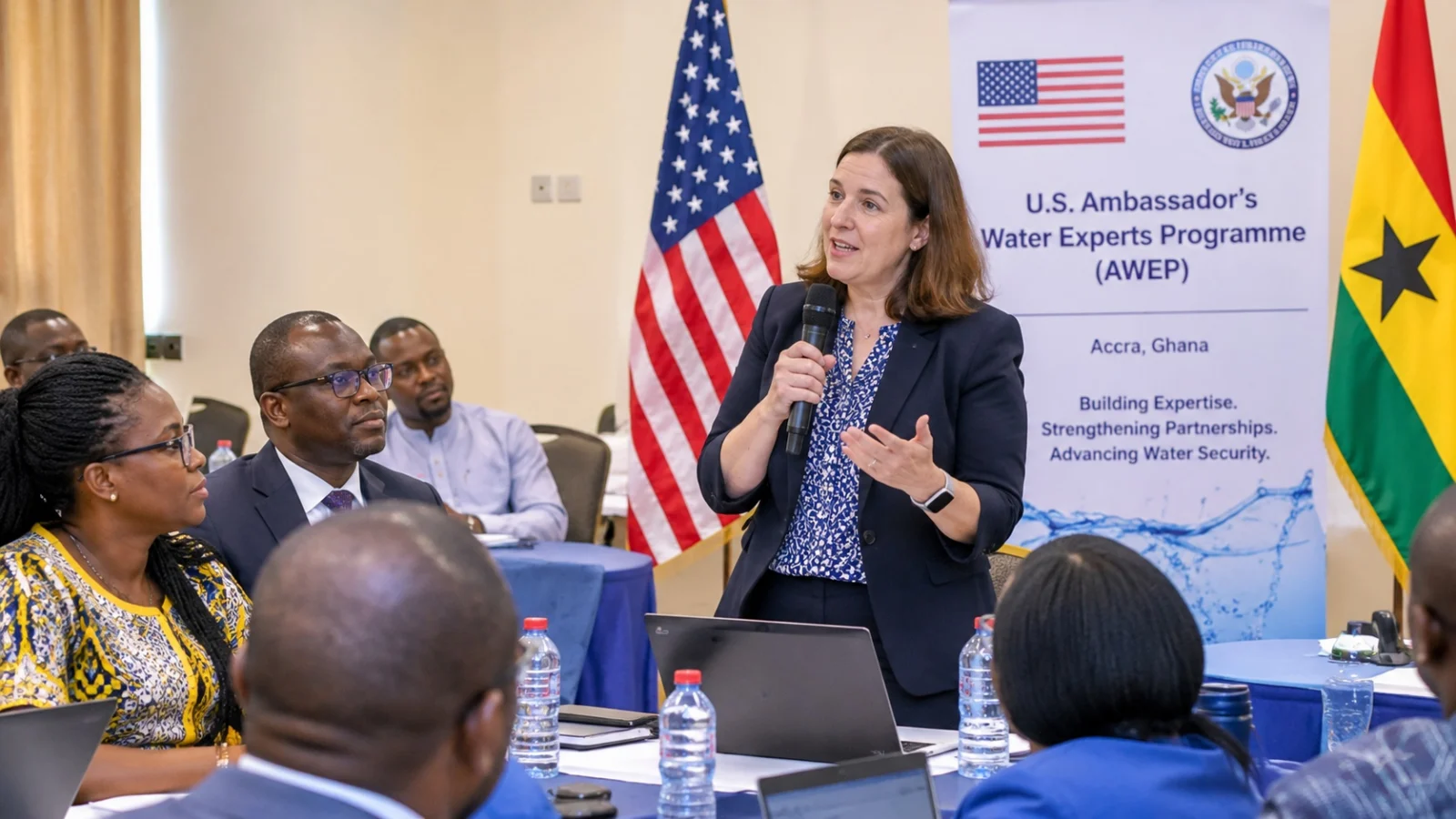
That is the central figure around which a two-day symposium in Accra was organised by the United States Embassy, convening the Regional Environment, Science, Technology and Health Hub for West and Central Africa.
The forum drew government officials, academics, civil society organisations, development partners and private-sector representatives. The scale of the mercury inflow, and the absence of a dedicated national structure to control it, formed the backdrop to the discussions.
A trade without a directorate
Ghana has ratified the Minamata Convention on Mercury. Yet the country lacks a dedicated national directorate to oversee mercury use and related controls in the mining sector, according to the facts presented.
Dr Sylvester Akpah, Chief Executive Officer of Smart Innovation Ghana Limited, addressed the gathering. His remarks came within a programme that brought together actors from across the region and beyond.
Livelihoods at the centre
More than 2.5 million people depend directly or indirectly on small-scale mining for their livelihoods. That dependence is concentrated in mining communities in the Western, Ashanti, Eastern and Central regions, which are particularly affected by mercury pollution.
Tarkwa and surrounding communities are under severe environmental pressure from continued pollution.
From sediment to food chain
Mercury deposited in water bodies does not stay inert. Bacteria in sediments convert it into methylmercury, which is absorbed by aquatic organisms.
Once in that form, it enters the food chain.
Professor Daniel Nukpezah of the Institute for Environment and Sanitation Studies at the University of Ghana cited UN Environment Programme findings that atmospheric mercury concentrations had increased by about 450 per cent above natural levels.
What the numbers leave open
The annual inflow of 42.5 to 62 tonnes describes mercury entering through illicit channels.
What is clear is the overlap of pressures: a ratified convention, a large and illicit annual inflow, millions of livelihoods tied to small-scale mining, and communities in four regions bearing the pollution.
For readers in the mining regions, the figures point to a question that outlasts any single forum: whether controls can be built at the speed the inflow demands.
Comments