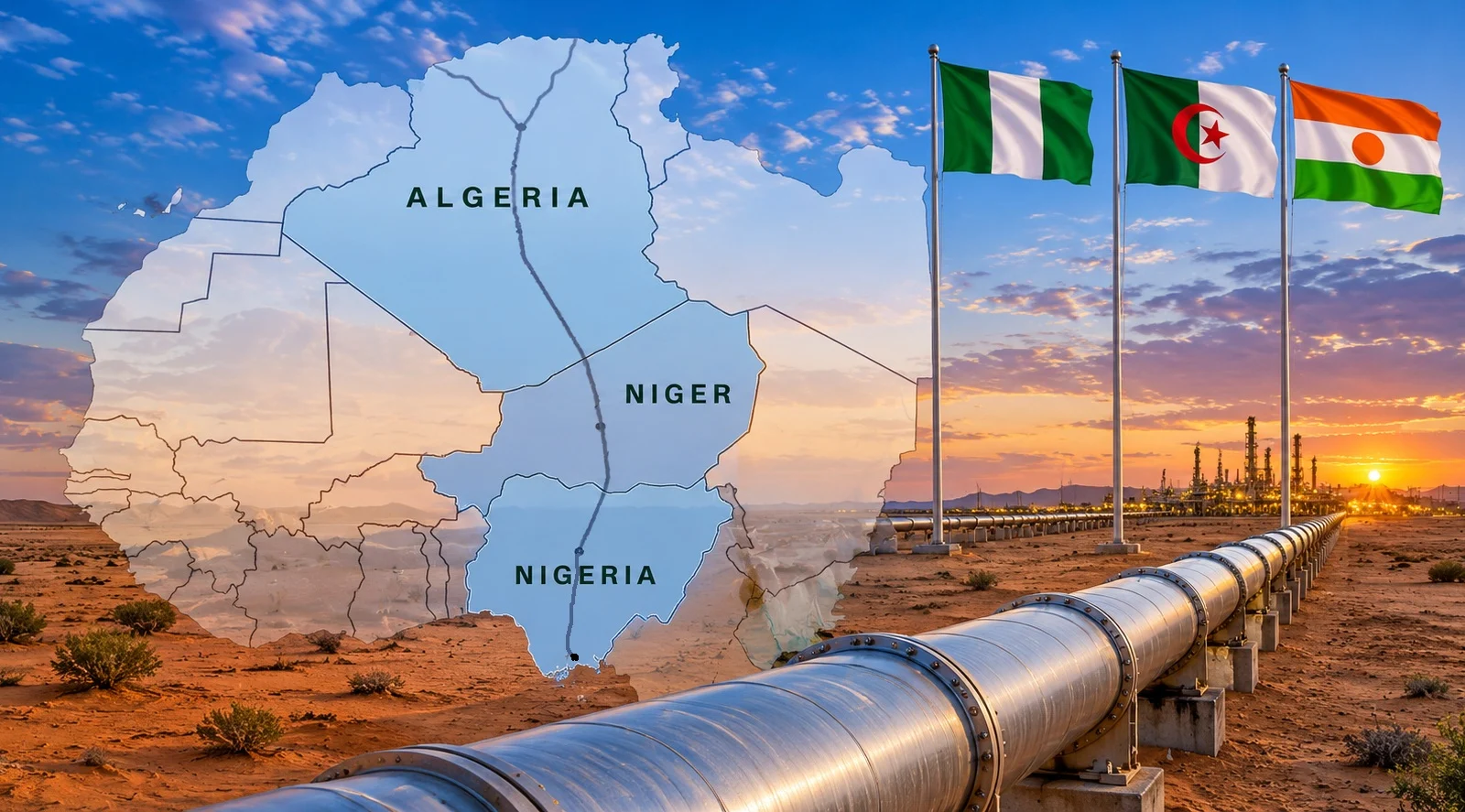
Algerian and Nigerien officials opened four days of working sessions in Niamey on 17 November 2026 to examine technical studies for the trans-Saharan gas pipeline and fix next steps, with the Algerian delegation in Niger until 20 November.
The talks centre on the exact route of the pipeline across Nigerien soil and on the calendar for the stages ahead, according to the account of the opening session.
The Algerian delegation includes officials from the hydrocarbons ministry, the pipeline transport arm of Sonatrach and the national pipeline company, ENAC.
Abdoulkarim Mohamed Ali, secretary general of Niger’s petroleum ministry, received the Algerian envoys and presided over the meeting.
Algeria has already begun construction of its own section of the pipeline.
That work is under way while the Nigerien route is still being examined, which suggests the two sides are moving on separate tracks rather than waiting for a single joint start.
Who does what on the Nigerien side
On Niger’s side, a project management unit leads operations, an interministerial committee coordinates arbitration, and SONIDEP provides technical, logistical and operational support. Preparatory work is to continue with those three bodies, alongside the interministerial committee charged with the TSGP.
The ministry has listed the trans-Saharan gas pipeline among the sector’s development prospects. The project is intended to carry Nigerian gas across Nigerien territory to Algeria and on to European markets.
That description places Niger on a transit route rather than at either end of the supply chain. What Niger’s own role in the gas flow would be is not set out in the available account.
Financing questions left open
The available account does not specify the amount of financing for the project, the financial instruments to be used, or the implementation timetable.
Those gaps sit alongside the technical work now under way, and it is not clear from the record how far the route discussions depend on financing decisions still to be taken.
Separately, the petroleum ministry and Ecobank have begun discussions on a partnership to finance Nigerien companies in the hydrocarbons sector. The two sides agreed to continue exchanges toward a road map.
SONIDEP has asked for financial support to strengthen its storage, transport and distribution capacity.
A committee handling petroleum negotiations has requested detailed statements on spending carried out for the benefit of Nigerien companies in 2026. How that request relates to the pipeline talks is not stated.
What the four days can settle
The Niamey sessions are framed around two deliverables: the exact line of the conduit on Nigerien territory and the schedule for the next stages.
Both are technical questions with commercial consequences, and both are being handled while Algeria’s own section is already under construction.
Whether the four days produce a fixed route or a further round of study is not recorded. The delegation’s mission runs to 20 November, and the account of the opening session sets out the agenda without reporting conclusions.
For a project that crosses three countries and ends at European markets, the Nigerien segment is one link in a longer chain.
The talks in Niamey address that link, and the record of what was agreed will matter more than the fact that the two sides met.
Comments