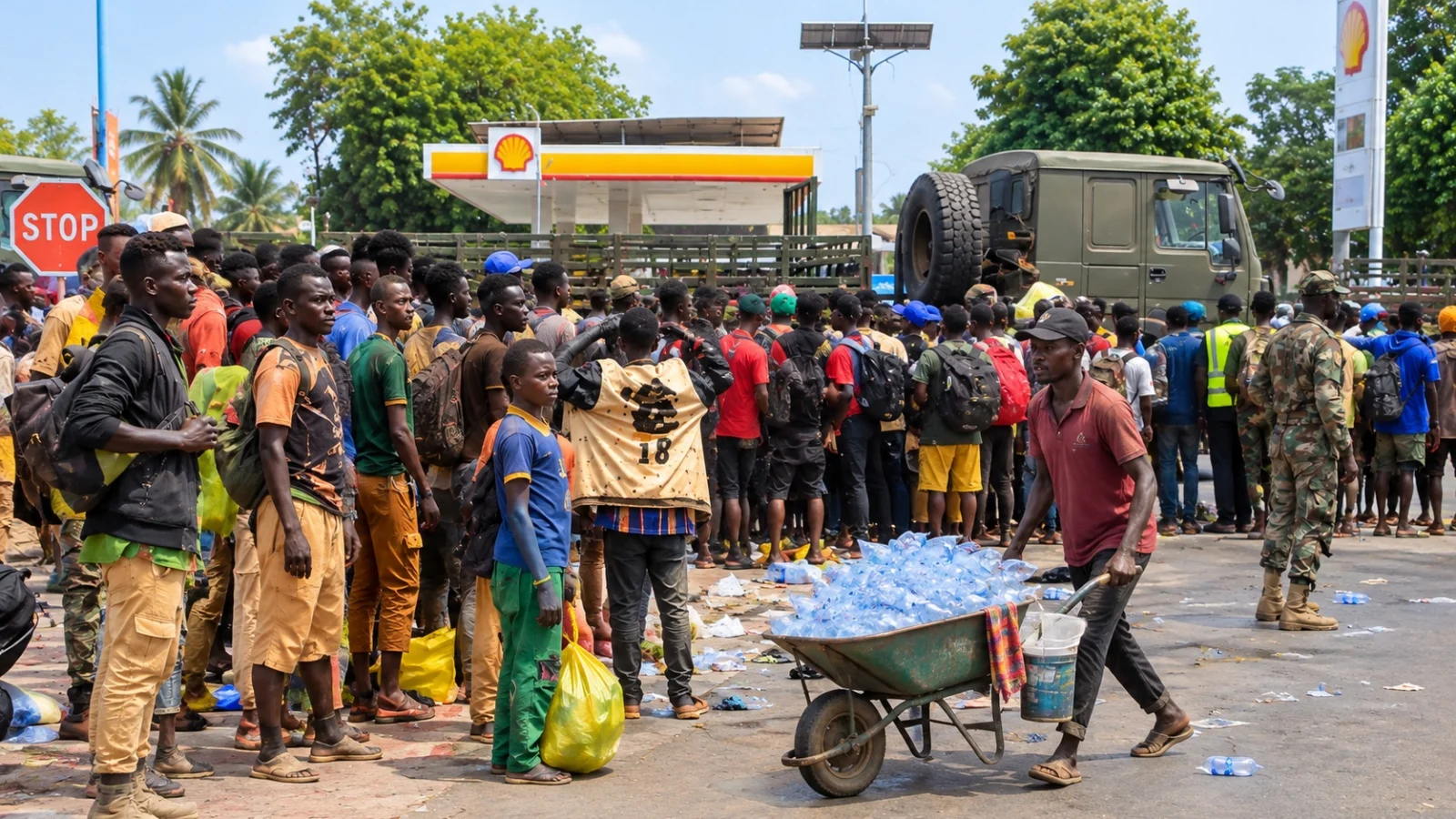
More than 1,500 West African gold miners tried and convicted in Conakry were returned to Mali, with the main reception site dismantled on 18 November, days after the group crossed at Kourémalé.
The transfer of the 1,557 miners on 14 November was coordinated with the diplomatic missions concerned, according to the arrangements described. The group had been judged and sentenced in the Guinean capital before their release and onward movement.
The movement followed deadly clashes at Balato. In a statement issued on 12 November, the Guinean government gave a provisional toll of 10 dead and 13 injured in fighting the previous day.
Guinean judicial authorities were seized of the matter after those confrontations.
On the Malian side, the reception effort drew on both state-linked and humanitarian structures. The CECOGEC recorded 467 people at the Maison des jeunes in Ouinzindougou and 20 Burkinabè nationals at Kourémalé.
The Malian Red Cross and the ICRC, in an operational note dated 12 November, said they organised a response combining food, water, medical care and the restoration of family links.
Between 5 and 12 November, Malian Red Cross volunteers distributed more than 16,000 hot meals in Bamako and its surroundings.
A sector larger than the headlines suggest
An ODHD/LCP study relayed by INSTAT estimates artisanal gold production at 15.99 tonnes for the 2024-2025 campaign, with a market value of 698 billion CFA francs.
The same study found that 77.9 percent of the sites examined used toxic substances. That figure appears to describe practices at the surveyed sites rather than the sector as a whole.
The legal framework around the activity has been tightening. Mali’s 2023 mining code reserves artisanal exploitation permits to Malian nationals and to nationals of countries that grant reciprocity to Malians.
In March 2025, the Malian head of state ordered the suspension of artisanal exploitation permits granted to foreign nationals. The facts do not record how many permits were affected, nor how the suspension has been applied in practice.
Questions the record leaves open
Several elements of the sequence remain undocumented in the available account. It is not stated how long the 1,557 returnees had been held in Conakry, what sentences they received, or whether the convictions were linked to the Balato clashes.
Nor is it recorded how the returnees were distributed after the Kourémalé crossing, or what share of them were Malian nationals as opposed to citizens of other West African states.
The presence of 20 Burkinabè nationals at Kourémalé, recorded by the CECOGEC, indicates the group was not exclusively Malian.
The relationship between the Balato fighting and the judicial proceedings in Conakry is likewise not spelled out.
The Guinean government’s statement of 12 November gave a casualty toll; the referral to judicial authorities was recorded separately, without a stated link to the transfer.
The facts establish the scale of the sector and the direction of recent policy; they do not establish what effect either had on the events at Balato.
Comments