West Africa News Agency - Agence de Presse Ouest-Africaine Skip to content

West Africa News Agency

Agence de Presse Ouest-Africaine

West Africa News Agency

Agence de Presse Ouest-Africaine

Search news

Type to search stories, topics and pages.

Latest

Latest stories

West African Politics

Mali: Journalist and Activist Sentenced in Separate Cybercrime Cases, Clemency Appeal Raised

By Kabir Isa

On August 3, 2026, Mali's judiciary delivered landmark verdicts against journalist Chahana Takiou and activist Adama Diarra, signaling a decisive crackdown on speech deemed critical of state institutions under the Transition's rule-of-law agenda. Takiou received a 12-month sentence (6 months suspended) from the cybercrime unit for remarks made at a media forum, while Diarra faced charges for undermining state credit, underscoring the regime's use of legal mechanisms to police dissent. These rulings reveal a strategic convergence of cybersecurity and criminal law to enforce political stability, placing media and activism under heightened legal scrutiny. The core takeaway is that Mali's Transition is actively leveraging judicial independence to consolidate control, making it imperative for journalists and activists to recalibrate their discourse within a rapidly narrowing legal framework.
West African Politics

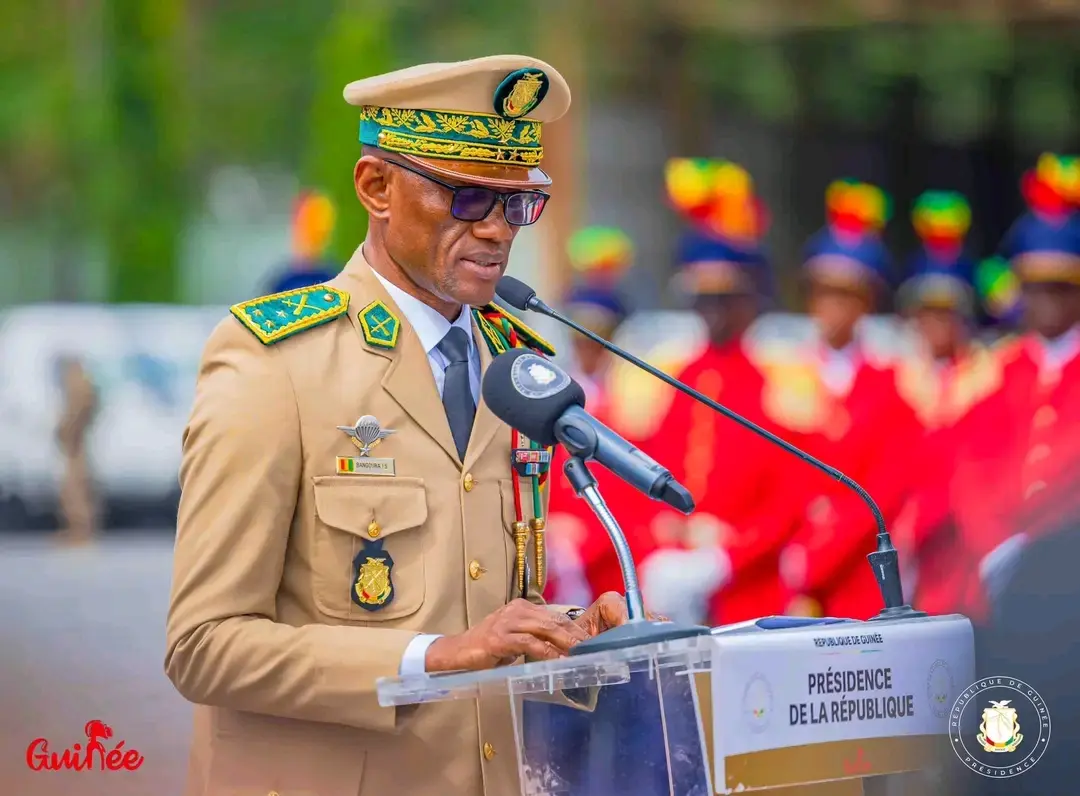
Guinea’s Military Reaffirms Support for Ailing Leader as He Departs for Leave

By Kabir Isa

The Guinean military’s public pledge of loyalty to ailing leader Mamadi Doumbouya—issued the moment he left the country—reveals a regime so fragile that its own survival depends on preemptively neutralizing rumors of a coup. The timing and theatrical nature of the broadcast signal that the junta’s primary threat is internal factionalism, not external opposition, and that power is held by a precarious consensus rather than institutional strength. For observers, the key takeaway is that succession anxiety in Conakry is acute, and any prolonged absence or health crisis at the top will trigger immediate, public power struggles. Ultimately, this episode demonstrates that in authoritarian systems, the most dangerous moment is not when the leader is present, but when he is absent and the vacuum must be filled by declaration rather than legitimacy.

Defense and Security

Nigerian Army Exhumes Remains of Slain Imo Community Leader After Suspect Confession

By Kabir Isa

Troops from the 34 Artillery Brigade, operating under Operation UDO KA and Operation EASTERN SANITY II, exhumed the remains of Chief Ibe Anyadu in Imo State after a suspect arrested for killing a soldier and stealing service weapons confessed to the murder and led troops to the burial site. This operation demonstrates the military’s shift from reactive security to intelligence-driven forensic recovery, using captured criminals to close cases and dismantle violent networks in the South-East. The key takeaway is that confession-led exhumations are becoming a critical tool for accountability, turning arrests into evidence that both resolves murders and disrupts criminal operations. For stakeholders, this signals that the military is now prioritizing the recovery of bodies and stolen weapons as a dual strategy to build legal cases and restore public trust in security forces.

Business & Economy

Mali Mining Fund Steering Committee Holds Inaugural Session on Infrastructure Investment

By Kabir Isa

Mali has launched an unprecedented financing mechanism that directly channels mining revenues into critical infrastructure, with over 109 billion CFA francs already mobilized to fund the roads, dams, and power grids essential for mining operations. This fund, established under the 2023 mining law, requires large and small mine permit holders to contribute 1% of quarterly turnover plus 10% of the ad valorem tax for the first five years, with the turnover rate rising to 2.5% thereafter. The strategic innovation lies in converting subsoil wealth into tangible national assets that boost economic competitiveness, rather than letting mining profits flow out without local structural benefit. The first steering committee meeting, chaired by the Minister of Economy and Finance, signals a decisive shift toward state-directed resource sovereignty, where mining companies are now structurally obligated to co-invest in the very infrastructure that sustains their operations.

Sports & Entertainment

Nigeria Finishes Seventh at 2026 Commonwealth Games, Tops African Nations

By Kabir Isa

Team Nigeria achieved its best-ever Commonwealth Games performance at Glasgow 2026, finishing seventh overall with 24 medals (10 gold) and establishing itself as Africa's top nation ahead of South Africa and Kenya. The athletics squad delivered historic breakthroughs, including first-ever Nigerian golds in the men's 400m (Samuel Ogazi), 400m hurdles (Ezekiel Nathaniel), and shot put (Chukwuebuka Enekwechi), alongside Ella Onojuvwevwo ending a 32-year medal drought in the women's 400m. This success signals a strategic shift toward sprint and field-event specialization, proving that targeted investment in athletics yields outsized returns on the global stage. The results also highlight a deepening talent pipeline beyond established stars like Tobi Amusan, positioning Nigeria as a rising powerhouse in Commonwealth sport.

West African Politics

Rufai Oseni: Presidential Candidates Who Avoid TV Interviews Are ‘Too Big’ for Nigerians

By Kabir Isa

Any presidential candidate who refuses television interviews or debates is signaling they are "too big" for the citizens they seek to govern, a stance that fundamentally undermines democratic accountability. This refusal to engage with the media is not a strategic choice but a critical indicator of detachment from the electorate, suggesting an inability to serve the public effectively. As Nigeria approaches the 2027 elections, with INEC already publishing candidate credentials, the public must view media engagement as a non-negotiable test of a leader's commitment to transparency and service. Ultimately, a candidate's willingness to face direct questioning is the first and most telling measure of their fitness to lead.

Climate & Environment

Mali’s Energy Crossroads: Weighing Grid Interconnection Against a Solar Future

By Kabir Isa

Mali’s chronic electricity deficits stem from its landlocked status and unreliable hydrocarbon supplies, compounded by degrading wood resources. However, the nation holds a strategic regional energy position, with its true competitive advantage lying in an immense, under-explored solar potential (5-6 kWh/m²/day with 12 hours of daily sunlight). The critical strategic choice for the country is between costly regional grid interconnections and leveraging its abundant renewable resources. The decisive insight is that Mali’s vast solar capacity represents its most viable, sovereign path to closing the demand-supply gap and powering economic growth.

General News

Palestinian Boy Wounded in Settler Raid on Family Farm Near Ramallah

By Kabir Isa

Israeli settlers shot a nine-year-old Palestinian boy in the back during a raid on his family’s farm near Ramallah, with CCTV footage capturing the attack and the child later confirming he was trying to warn his father of the settlers' arrival. The incident underscores the escalating, unchecked violence against Palestinian civilians in the West Bank, where children are increasingly direct targets of settler aggression. The key takeaway is that this is not an isolated clash but a pattern of armed raids enabled by impunity, with the child’s testimony providing rare, firsthand evidence of the settlers' intent to harm unarmed civilians. This report highlights the urgent need for international accountability and protection mechanisms for Palestinian communities facing systematic, violent displacement.

General News

After Mediterranean Tragedy, Nigeria Reinforces Warning on Desert and Sea Migration Routes

By Kabir Isa

The Nigerian government has issued a renewed, urgent warning against irregular migration following the recent drowning of 28 people in the Mediterranean, a tragedy underscored by a survivor's firsthand account of the horrific conditions on both the Sahara crossing and the sea route. The core message is that these journeys are overwhelmingly lethal, exposing migrants to extreme peril, exploitation by traffickers, and abuse in transit countries. In response, the government is pivoting from mere advisories to a multi-pronged strategy that tackles root causes by expanding economic opportunities, tightening border management, and intensifying crackdowns on smuggling networks. The ultimate takeaway is that the state is actively promoting safe and legal migration channels as the only viable alternative to these deadly, irregular paths.