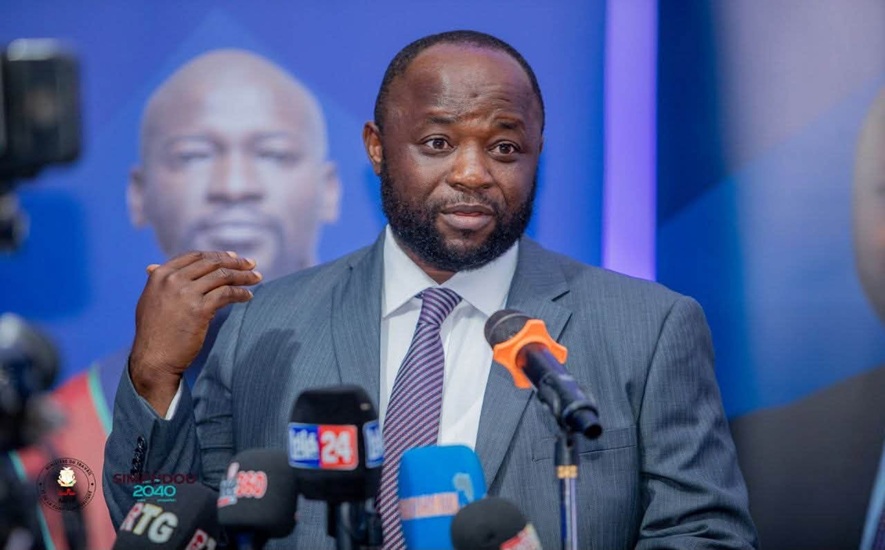
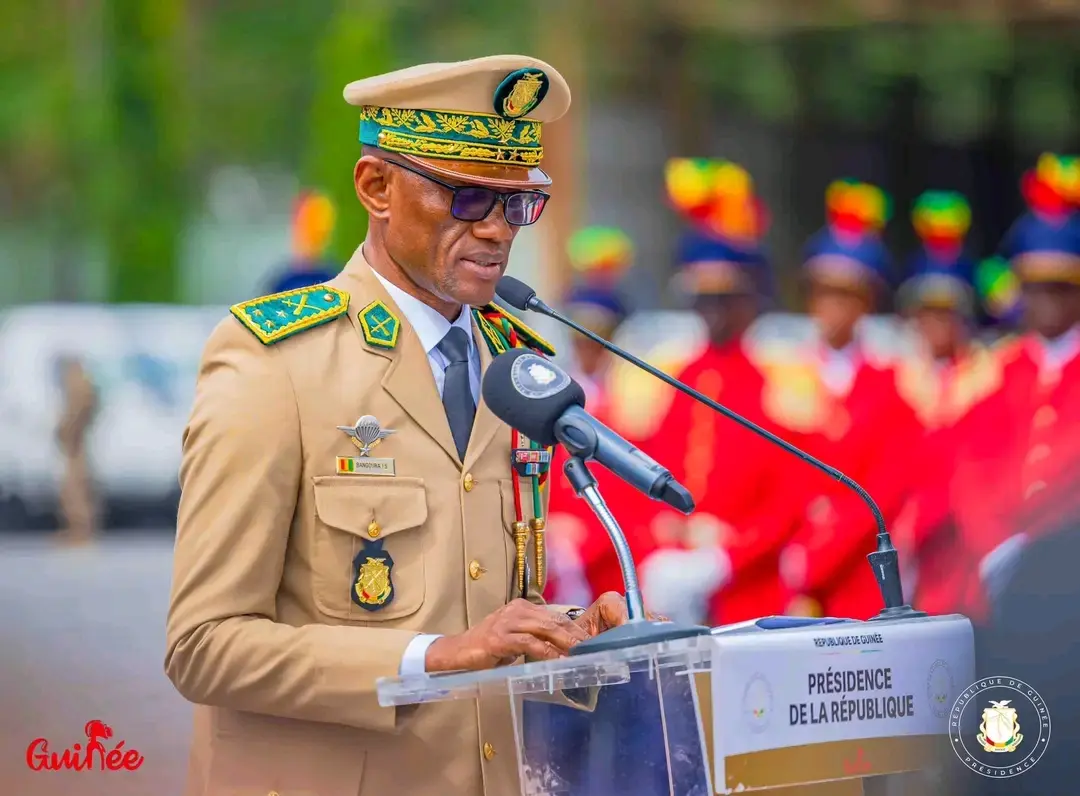
Faya François Bourouno, Guinea's Minister for the Modernization of Administration and the Civil Service, has taken on the additional role of Government Spokesperson. His appointment follows a career focused on public sector reform, including overseeing the PREMAP initiative and digital transformation efforts.
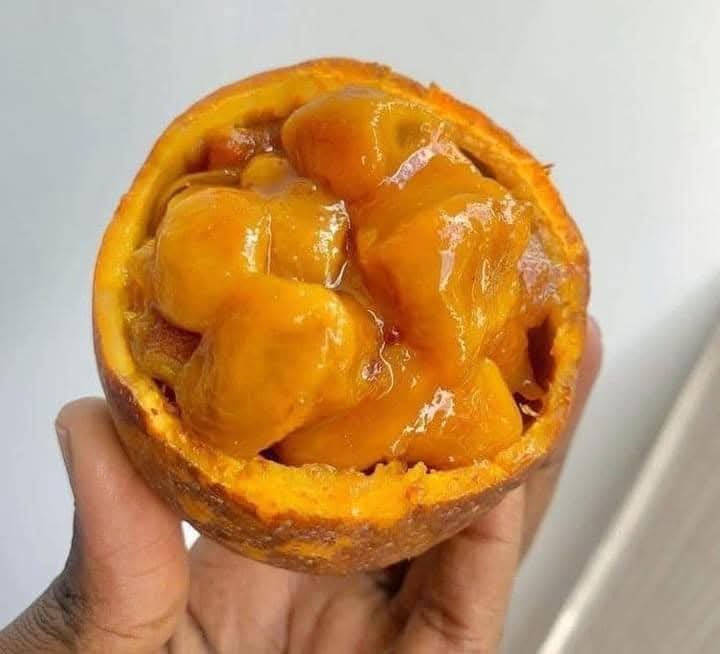
The Maad fruit (Saba senegalensis) is not merely a seasonal delicacy but a comprehensive natural pharmacy, offering a dual value proposition: its vitamin C-rich pulp bolsters immunity and digestion, while its leaves and bark deliver potent antiseptic, respiratory, and digestive remedies validated by both modern nutritionists and centuries of traditional practice. The plant's true strategic insight lies in its full-spectrum utility, providing targeted treatments for skin wounds, coughs, headaches, and even hypertension through simple preparations like poultices, inhalations, and macerations. This positions Maad as an underutilized economic and health asset for West Africa, where its wild growth and established cultural acceptance create a unique opportunity for integrated health and commercial development. The core takeaway is that Maad's value extends far beyond the market stall, representing a bridge between traditional pharmacopoeia and modern wellness that deserves formal recognition and investment.
Lucien Beindou Guilao, a former president of the Guinean Professional Football League and former Syli National international, has publicly backed Ibrahima Kalil Kaba to lead the Guinean Football Federation's next Executive Committee. His declaration, issued on August 29, 2026, comes ahead of an Extraordinary and Elective General Assembly on October 27, 2026, and cites what he calls an unprecedented institutional and sporting crisis in the sport.
On August 13, 2026, the Guinean state formalized a strategic investment in its future by selecting 28 young laureates for elite academic training in China, predicated on their formal commitment to return and apply their expertise domestically. This initiative represents a deliberate shift from a "brain drain" risk to a "brain gain" strategy, leveraging international partnerships to build national capacity. The core value proposition is a state-sponsored social contract: the government funds world-class education in exchange for a guaranteed contribution to Guinea's development upon completion. This model offers a replicable blueprint for developing nations seeking to cultivate high-level human capital without losing their most promising talent to emigration.
The Central Bank Governor of Guinea has taken a definitive stance against adopting the proposed ECO currency, arguing that the project's foundational criteria are not yet met and that abandoning the Guinean Franc (GNF) would pose significant economic risks. The core insight is that monetary sovereignty is a strategic asset, and Guinea should prioritize domestic stability and institutional readiness over regional integration timelines. The practical takeaway for policymakers is to focus on strengthening national economic fundamentals and convergence criteria before considering any future currency union. Ultimately, the article concludes that a cautious, national-interest-first approach is superior to a rushed regional monetary experiment.
The Guinean military’s public pledge of loyalty to ailing leader Mamadi Doumbouya—issued the moment he left the country—reveals a regime so fragile that its own survival depends on preemptively neutralizing rumors of a coup. The timing and theatrical nature of the broadcast signal that the junta’s primary threat is internal factionalism, not external opposition, and that power is held by a precarious consensus rather than institutional strength. For observers, the key takeaway is that succession anxiety in Conakry is acute, and any prolonged absence or health crisis at the top will trigger immediate, public power struggles. Ultimately, this episode demonstrates that in authoritarian systems, the most dangerous moment is not when the leader is present, but when he is absent and the vacuum must be filled by declaration rather than legitimacy.
On July 27, 2026, a Guinean court acquitted Colonel Bienvenu Lamah of all charges related to the September 28, 2009 massacre, marking a pivotal moment in a case that has defined the nation's struggle for accountability. This verdict underscores the immense legal and political challenges in prosecuting state security forces for historical atrocities, as the court found the evidence insufficient to link the Colonel to the crimes. The decision highlights a critical tension between the pursuit of justice for victims and the institutional protections often afforded to military personnel in post-conflict transitions. For observers, this outcome signals that the path to accountability for the 2009 massacre remains fraught with procedural hurdles and a high burden of proof, setting a complex precedent for future cases.
A four-day sports journalism training in Conakry, organized by Guinea's Ministry of Communication and TV Media Sport, successfully equipped 60 journalists from public and private media with advanced skills in writing, commentary, interviewing, and AI content production. Participants described the program as a "turning point" that provided high-level professional exchange and a lasting impact on their daily practice. The key takeaway is the explicit commitment from attendees to apply these new competencies to elevate the credibility and public service value of sports journalism
A student in Guinea has been permanently expelled from all national schools for insulting a teacher, while her classmate received the same punishment for filming and sharing the incident on social media. This case establishes a critical precedent: in Guinea, the act of recording and disseminating a confrontation is now treated as a co-equal offense to the original misconduct. The ruling signals a zero-tolerance policy for digital disrespect toward educators, prioritizing institutional authority over student expression. The key takeaway is that students and parents must
At the 2026 Africa Road Builders forum, Guinea was awarded the prestigious Super Prize for its transformative infrastructure vision, anchored by the massive Simandou mining project. This recognition, presented alongside the African Development Bank, validates a national strategy where flagship infrastructure investments serve as the primary engine for economic integration and prosperity. The award specifically honors President Mamadi Doumbouya’s leadership in leveraging large-scale projects to drive systemic change, moving beyond symbolic progress to tangible, structural transformation. The core take