
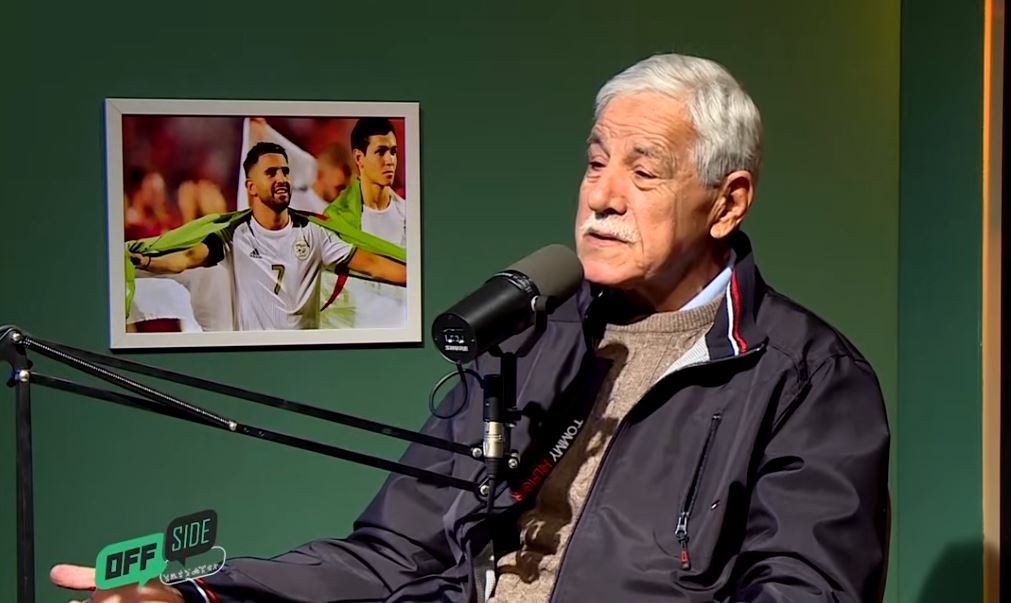
In a revealing interview, Algerian football legend Mohamed Abrouk pinpointed the attacking deficiency holding back his beloved CR Belouizdad from continental glory, while reflecting on the foundational elements that forged the club’s legendary 1970s dynasty. The former international goalkeeper, a pillar of that golden generation, offered a masterclass in how culture, talent, and mentorship converge to create enduring success.
Mohamed Abrouk’s legacy is etched into the bedrock of Algerian football. As the guardian of the goal for both CR Belcourt (now CR Belouizdad) and the national team during the 1960s and 70s, his performances were synonymous with reliability and excellence. His recent appearance on Echourouk TV’s “Offside” program was more than a nostalgia trip; it was a diagnostic session from a man who understands the DNA of winning teams.
Abrouk’s analysis of the current CR Belouizdad side is incisive. He identifies a lack of potency in attack as the critical flaw preventing the club from being a genuine contender for the CAF Champions League. This observation carries weight because it comes from a defender’s perspective—he knows what makes an attack truly fearsome and difficult to contain. He contrasts this with the balanced, formidable squads of the past, which he helped propel to numerous titles.
Regarding the national team’s prospects at the Africa Cup of Nations, Abrouk wisely refused to engage in speculation, emphasizing that “the field is what will reveal the true capabilities and ambitions of the players.” This statement underscores a veteran’s understanding that tournament football is decided by mentality, cohesion, and moment-to-moment execution, not paper predictions. His call for serious work to “honor Algerian football” is a plea for the professionalism and pride that defined his era.
Abrouk’s journey itself reveals the first secret to Belouizdad’s brilliance: organic, community-based development. He began in the crucible of neighborhood matches, a fertile ground where raw talent was honed in competitive, passionate environments. It was here he forged early bonds with future stars like Bacha, Gourman, and Rouane. This grassroots network formed a core of players who understood each other intuitively, a chemistry that cannot be purchased or manufactured. When he joined CR Belcourt, this foundation of trust and shared history was amplified by the club’s faith in him, creating a powerful feedback loop of confidence and performance.
A second, crucial factor was systematic coaching and progression. Abrouk highlights the formative role of the national youth team and coach Ibrir, illustrating a pathway that nurtured talent. This structured development, bridging the gap from street football to professional rigor, was essential in sculpting a complete footballer.
However, the true catalyst for the club’s dominance was the emergence of a “distinguished generation” of rare, complementary talent. Abrouk names the luminaries: the legendary Lalamas, Kalam, Salemi El Djilali, and Amrouche. Among these, the name Lalamas stands out as that of “a player of a rare caliber.” To understand this is to understand the final secret. A team can have a solid foundation and good coaching, but transcendent success often requires a generational talent—a playmaker, a goalscorer, a leader whose vision elevates everyone around him. Lalamas represented that X-factor. His “rare caliber” suggests not just skill, but an intangible ability to decide big moments and inspire teammates, turning a very good team into an iconic one.
In essence, Mohamed Abrouk’s testimony provides a blueprint: a winning dynasty is built on local passion, structured development, collective trust, and, ultimately, the spark of singular genius. For today’s CR Belouizdad, the lesson is clear. Building a team capable of conquering Africa requires more than solid defense; it demands recapturing that attacking alchemy and, perhaps, finding their next player of a “rare caliber.”
Watch the full content on Echourouk Online
The post This is the Secret to Belouizdad’s Brilliance in the Seventies and Lalamas, a Player of a Rare Caliber appeared first on Echourouk Online.
1 comment